
WASHINGTON, April 11 - At 12 years old, Naia Butler-Craig made a decision that would shape her education and career: she wanted to be an astronaut. The image she saw each time she entered St. Mark AME Church in Orlando, Florida - a framed photograph of Mae Jemison, the first Black woman in space - left no ambiguity about her ambition.
Sixteen years later, now a NASA aerospace engineer with a PhD in the same discipline, Butler-Craig met Victor Glover on January 17 and shook his hand. She told him she intended to follow in his footsteps. "Most people worry about making the right choice," Butler-Craig recalled Glover’s response. "Make the choice right."
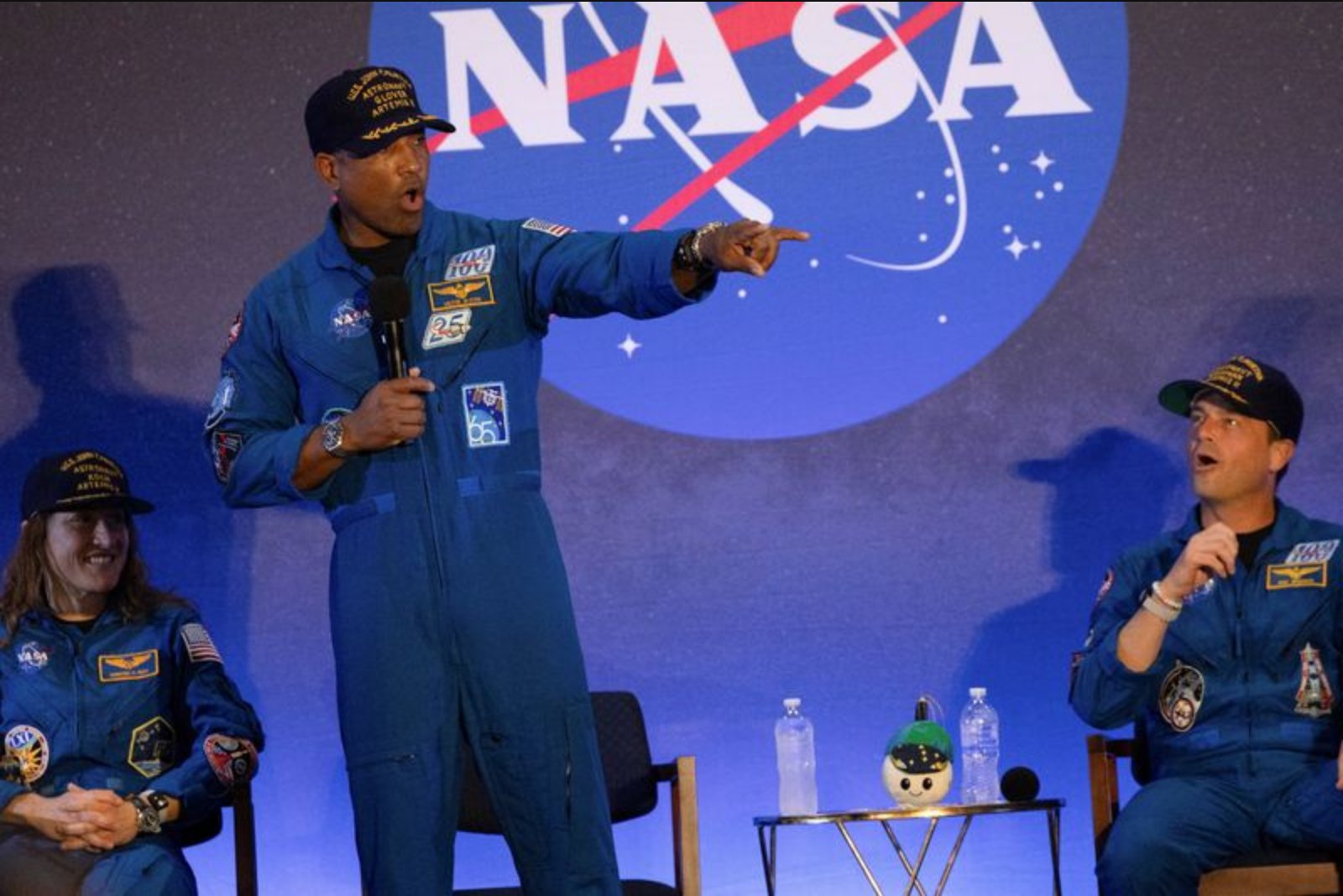
Almost three months after that meeting, Glover launched into space as part of NASA’s Artemis II mission around the moon. He became one of four people to travel farther from Earth than any human being in history in that mission. For Butler-Craig, who has worked within NASA and pursued advanced technical qualifications, Glover’s mission was more than a milestone in spaceflight; it served as confirmation that the trajectory she chose is viable and visible to millions of Black Americans who were historically excluded from the upper echelons of academic and scientific achievement because of their race.
"To see him live all of those facets of identity at the same time when that’s exactly the tension and the constant dichotomies I’m facing is incredibly validating," Butler-Craig said of Glover. "It just makes me feel like he’s paved the exact road for someone like me."
Representation and reaction
Glover’s flight drew a strong response across social media and within communities focused on increasing diversity in aerospace and aviation. The historical symbolism of his role on Artemis II resonated with many who view it as part of a long arc of Black achievement in these fields, and as tangible proof that barriers can be overcome.
At the same time, the flight took place amid political currents that have targeted diversity, equity and inclusion programs. The article noted that the administration of President Donald Trump has worked to dismantle such programs across government and parts of the private sector, a development that figures in conversations about how progress in representation is sustained.
Tennesse Garvey, a United Airlines Boeing 777 pilot who chairs the board of directors of the Organization of Black Aerospace Professionals, said the mission is "a source of pride and joy" precisely because representation remains limited in aerospace. The nonprofit organization, founded in 1976, has focused on training and encouraging minorities to pursue careers in aerospace and aviation. Garvey noted that two of Glover’s daughters attended the organization’s week-long space academy program in Houston when they were younger, and he said the flight is inspirational to young people who dream of similar careers.
Glover is among 20 Black astronauts selected by NASA since its first class of seven Mercury astronauts was announced in 1959, representing roughly 6% of all astronauts the agency has chosen. The figure underscores the relatively small share of Black representation in the astronaut corps, even as individual successes receive wide attention.
A career of operational experience
Before Artemis II, Glover logged nearly five and a half months in orbit, beginning in 2020 when he served as pilot of NASA’s Crew-1 flight, the first operational International Space Station mission using the SpaceX Crew Dragon capsule. Prior to joining NASA, he flew more than 40 different aircraft in a U.S. Navy career that included combat deployments in Iraq. His service record includes roughly 3,000 flight hours, over 400 aircraft carrier landings, and 24 combat missions.
Despite the distinction of being the first Black man to pilot a spacecraft around the moon, Glover said before the Artemis launch, "I also hope that we are pushing the other direction, that one day we don’t have to talk about these firsts." His comment places the emphasis on the longer-term objective of normalizing representation so that extraordinary milestones become routine parts of the field.
Observers drawing lines between present accomplishments and earlier generations often point to pioneers such as Lieutenant Colonel John William Mosley Jr., a member of the Tuskegee Airmen, a segregated military unit that helped open opportunities for Black Americans in military aviation. William Eric Mosley, John’s son and a former United Airlines pilot, said, "We’re all standing on the shoulders of the previous generation." He added that he believes Captain Glover would share that sentiment.
Mission outcome and personal reflections
Glover and his crew splashed down on Friday in the Pacific Ocean off the coast of San Diego, completing a mission that clears a path toward the first crewed moon landing since 1972, which is planned for 2028, and further missions beyond that. While Butler-Craig had been awaiting the crew’s safe return, she reported she would be reciting the Bible verse tattooed on her arm from James 1:12: "Blessed is the one who perseveres under trial because having stood the test, they will receive the crown of life." The line, she said, has personal significance as she navigates the professional and cultural tensions of her field.
The flight, its public reception, and the conversations it has triggered illustrate both how individual achievements can inspire wider communities and how structural issues such as representation and policy choices intersect with talent development in aerospace and aviation. Organizations that cultivate minority participation, veterans and military pathways into civilian aviation, and NASA’s selection history all figure in assessing both the immediate symbolic impact and the longer-term dynamics that will shape who participates in future missions.
Conclusion
Glover’s Artemis II flight served as a visible milestone for many aspiring professionals and for organizations that promote diversity in aerospace. For Butler-Craig and others who trace their ambitions to early role models, the mission affirmed a personal and communal belief that barriers can be overcome and that pursuing careers in space remains attainable. At the same time, the episode highlights ongoing questions about how policy choices and institutional practices will influence representation in aerospace and related sectors moving forward.