
Hook & thesis
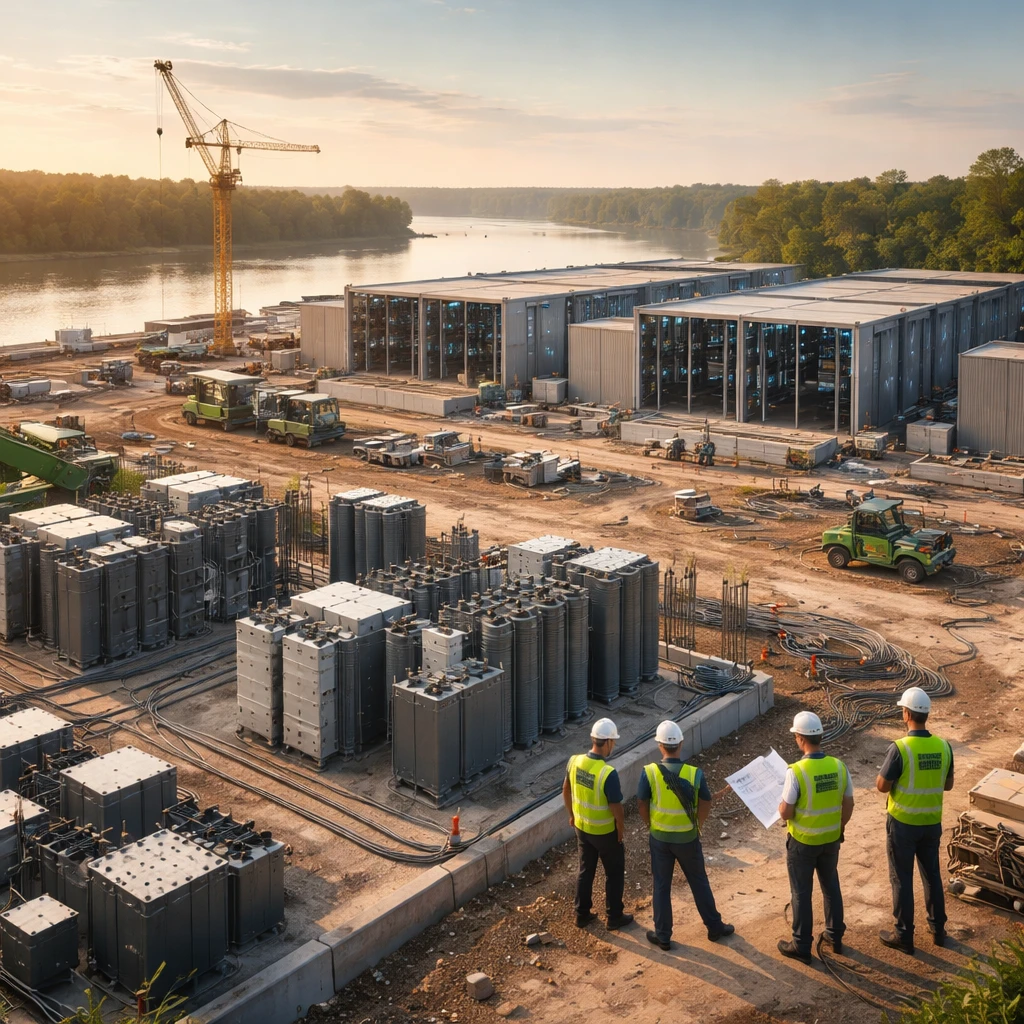
Hut 8 is no longer just a Bitcoin miner. The company’s pivot into AI data centers - the sort of high-margin, high-demand compute infrastructure that hyperscalers and AI labs need - is real and measurable. The River Bend expansion (one of multiple buildouts in Hut 8’s multi-site program) is the practical expression of that pivot: it brings incremental gigawatts of power, ready-to-rent facilities, and the potential for long-term contracted cash flows. I rate Hut 8 a buy because the market is underpricing the probability that River Bend and the broader 8.6 GW program get monetized within the next 6 months to 18 months, while the company’s balance sheet and strategic partnerships reduce downside from an execution failure.
Price action has been volatile after a parabolic move from the $10s to the $50s; today's level around $48.09 represents a chance to buy exposure to AI compute infrastructure on a company with a $5.33 billion market cap, meaningful Bitcoin reserves, and modest leverage. The trade I outline below sizes for asymmetric upside while protecting capital against the most likely execution and legal risks.
The business and why the market should care
Hut 8 operates four business segments: Power, Digital Infrastructure, Compute, and Others. The company leverages its power origination and land development expertise to build facilities designed for energy-intensive workloads - AI training, HPC, and ASIC compute - rather than focusing solely on owning and operating Bitcoin miners. That pivot matters because demand for AI infrastructure is broad, multi-year, and increasingly procurement-driven (enterprises and labs contract capacity for predictable needs).
The market cares because Hut 8 brings two scarce inputs: power-anchored land with interconnection and the project-management scale to turn that into rack-ready capacity. The company also disclosed a large partnership that effectively underpins its buildout plan: an $18 billion strategic program supporting up to 8.6 GW of capacity across several U.S. sites. If Hut 8 can monetize even a fraction of that capacity on multi-year contracts at market rates, revenue and margin trajectories could re-rate the stock materially versus today’s valuation.
What the numbers tell us
| Metric | Value |
|---|---|
| Market cap | $5.33B |
| Enterprise value | $5.70B |
| Price/sales | 22.69x |
| EV/sales | 24.24x |
| EPS (TTM) | -2.04 |
| Free cash flow | -$356.2M |
| Debt/equity | 0.29 |
| Cash ratio | 1.16 |
These numbers show an expensive valuation on traditional multiples (P/S, EV/S), reflecting the market’s expectation that Hut 8 will translate capacity into outsized revenue growth. The company is still loss-making (EPS -$2.04) and producing negative free cash flow (-$356M), which is normal for capital-intensive buildouts. Offsetting those negatives: reported minimal leverage (debt/equity ~0.29), a current ratio of ~1.16, and a sizeable crypto treasury the company has used as a liquidity buffer in past cycles. In short: Hut 8 can fund buildouts without falling off a cliff financially, but it needs successful monetization to justify multiples.
Valuation framing
At a $5.33 billion market cap and EV of $5.70 billion, the stock is priced as a high-growth infrastructure story. EV/sales of ~24x implies the market expects rapid top-line expansion and durable margins from the Digital Infrastructure and Compute segments. If River Bend and companion sites secure multi-year contracts with AI customers, that story is plausible; if capacity rolls out without contracted take-or-pay revenue, the stock is at risk of repricing down to more typical infrastructure multiples.
There’s no perfect public peer in the dataset to benchmark against, but the right valuation comparator is an asset-lite, contracted data-center operator that can convert gigawatts into recurring revenue. Hut 8 currently carries more project and operational risk than those comparables, which explains the volatile multiple. The investment case is about realizing that contraction of risk into contracted cash flows over the coming quarters.
Catalysts
- River Bend construction milestones and grid interconnection confirmations - visible progress should shift perceived execution risk materially.
- Commercial contracts or letters of intent with AI labs/cloud customers for River Bend capacity - early contracts will prove monetization.
- Quarterly updates showing revenue ramp in the Compute or Digital Infrastructure segments driven by newly operational sites.
- Continued strategic partner activity - additional commitments similar to the multi-billion dollar program already disclosed would validate Hut 8’s go-to-market.
Trade plan - actionable entry, targets, stop
Trade direction: Long
Entry price: $48.00
Stop loss: $40.00
Target price: $66.00
Time horizon: long term (180 trading days). Rationale: This trade is tied to construction-to-commercialization timelines. I expect River Bend and at least one companion site to produce meaningful contract announcements and early revenue recognition within a 3-6 month window, with full commercialization signals by 6 months to 12 months. Holding for up to 180 trading days gives the trade room for normal permitting, grid work, and the usual operational friction associated with large buildouts.
Position sizing: Treat this as a high-conviction satellite position rather than a core holding given execution and legal risk. Use the stop to limit downside to a capital level you can stomach if the market re-prices on slower-than-expected monetization or adverse legal news.
Why this trade is asymmetric
Upside: If River Bend achieves commercial readiness and Hut 8 begins to book multi-year compute contracts, the market will likely re-rate the company closer to data-center peers as recurring revenue replaces speculative growth. The $66.00 level corresponds to the recent 52-week high and is a reasonable near-term target if the market restores confidence.
Downside: Financials show losses and negative FCF; the market can punish the stock quickly if monetization lags or legal risk materializes. The stop at $40.00 limits capital loss while giving the trade room to absorb short-term volatility that typically accompanies large buildouts.
Risks & counterarguments
- Execution risk on River Bend and multi-site buildouts. Large, simultaneous construction projects frequently run into permitting, interconnection, and contractor delays. If the company misses interconnection windows or encounters cost overruns, the revenue timeline will slip and multiples can compress.
- Valuation remains elevated. EV/sales near 24x and P/S above 20x leave little room for error. If investors re-price the company to more conservative infrastructure multiples, downside could be material even if operations progress slowly.
- Legal and governance overhangs. Ongoing investigations and past allegations related to prior transactions could produce adverse findings or settlements that distract management and impose costs; investors often penalize companies for uncertain governance until matters are resolved.
- Continued net losses and negative free cash flow. The company reported negative FCF (~-$356M). If Hut 8 must raise equity to fund growth, dilution could be meaningful and pressure the share price.
- Market concentration and demand timing. AI customers often time capacity to models and spending cycles. A short-term slowdown in demand or a shift to edge/colocation alternatives could reduce uptake of Hut 8’s supply.
Counterargument: The most credible bear case is that Hut 8’s rollouts remain uncontracted and capital-intensive, forcing equity raises and steep multiple compression. That view is supported by recent insider and fund activity: some funds have trimmed positions after the run-up, signaling profit-taking and a preference to wait for clearer commercial evidence. If you prefer a lower-risk entry, waiting for a formal multi-year contract at River Bend or visible revenue recognition from newly operational capacity is a sound alternative approach.
Conclusion - clear stance and what would change my mind
I rate Hut 8 a Buy at the $48.00 entry with a stop at $40.00 and a target of $66.00. The thesis rests on River Bend serving as a visible, monetizable node in the company’s broader multi-gigawatt expansion and on the company’s balance-sheet optionality (low leverage and a sizable digital-asset treasury) that reduces the risk of distress while projects come online.
What would change my mind: evidence that River Bend is delayed materially beyond standard permitting timelines, inability to sign anchor customers for commercial capacity, or an adverse legal ruling that carries severe financial or governance consequences. Conversely, faster-than-expected contract announcements or earlier-than-expected revenue recognition from any new site would move me to increase conviction and potentially raise the target.
Key monitoring checklist
- Company updates on River Bend construction, grid interconnection, and commercial contracts.
- Quarterly revenue composition and any uptick in Digital Infrastructure or Compute bookings.
- Cash-flow trajectory and any capital-raise activity.
- Resolution or developments in any legal investigations.
Bottom line: River Bend is the kind of tangible, deliverable project that can convert Hut 8 from a growth promise into recurring revenue. The market has priced ambitious outcomes into the stock; this trade buys that outcome with defined downside and a clear timeline to reassess.