
Hook & Thesis
Lamb Weston (LW) is attractively positioned for an earnings margin recovery in 2027. The company reported a mixed Q3 FY2026 where revenue growth of $1.56B contrasted with a meaningful earnings decline, driven largely by transitory supply dynamics and the lingering impacts of a difficult ERP rollout. Investors punished the stock despite the revenue beat, pushing the price closer to 52-week lows.
We are upgrading Lamb Weston to a Buy because the pieces that constrain margins today look resolvable: management has a $250M cost-savings program underway, commodity and input cost pressure is expected to ease in 2027, and the company generates strong free cash flow ($633.8M most recently) that can bridge the transition. At a market cap of roughly $5.64B and enterprise value of about $9.48B, LW trades at an EV/EBITDA of 8.3 and a P/E near 18.7 - reasonable for a food-specialty company with durable demand and a 3.66% yield.
What the company does and why the market should care
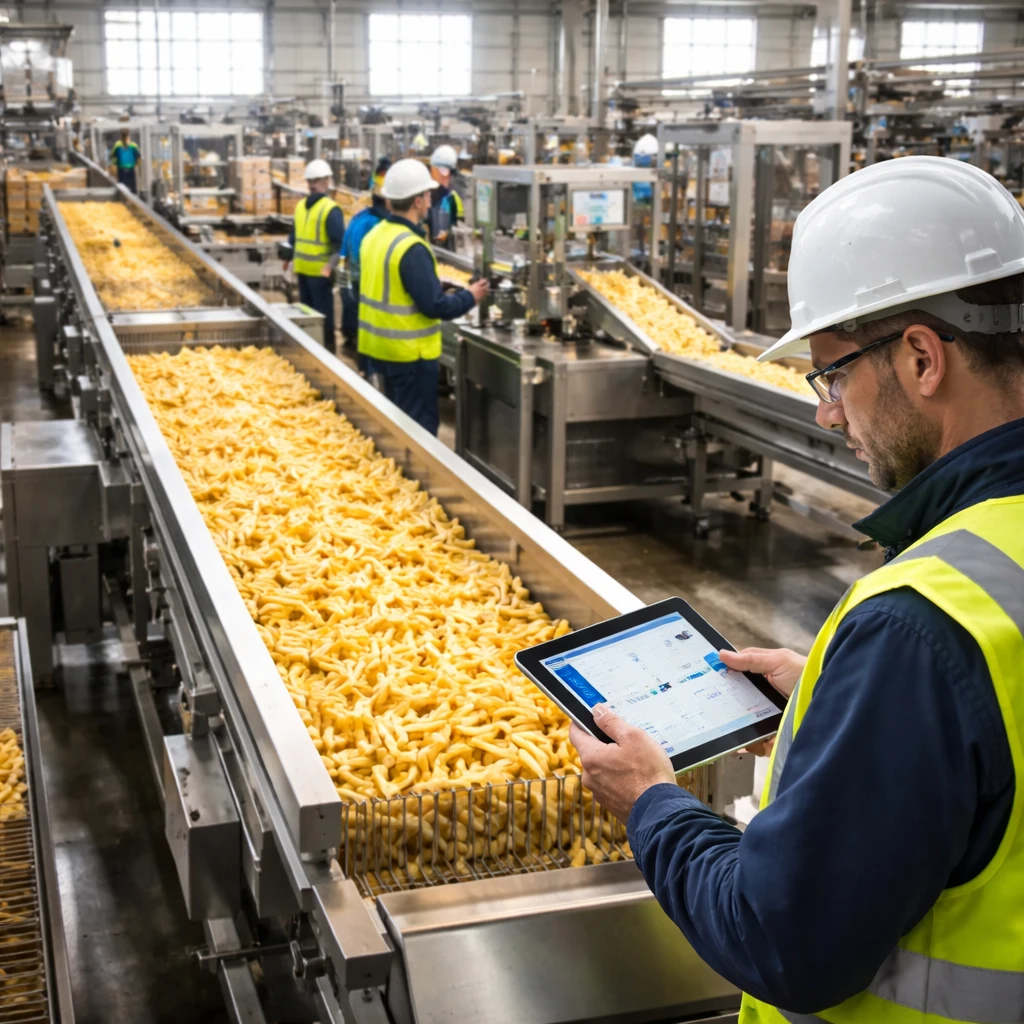
Lamb Weston produces and markets value-added frozen potato products to restaurants, distributors and retailers across North America and internationally. The business is driven by foodservice demand (QSR and full-service restaurants) and retail frozen categories. That makes Lamb Weston sensitive to foodservice volumes and the cost of key inputs (potatoes, processing, energy, transportation), but it also gives the company pricing power versus commodity-only producers due to its scale and branded customer relationships.
The market should care because Lamb Weston sits at the intersection of durable consumer demand and pronounced operating leverage. When input costs are elevated and operational execution is impaired, margins compress quickly; conversely, when input costs normalize and operational fixes stick, margins recover disproportionately. Given the company’s current valuation and healthy free cash flow generation, we view the risk-reward as favorable today if management delivers on the cost program and ERP stabilization.
Supportive numbers
- Q3 FY2026 results: revenue $1.56B and EPS $0.72 with the company beating revenue estimates, reported on 04/02/2026.
- Free cash flow: $633.8M (most recent reported), which provides balance sheet flexibility and the ability to support dividends, debt reduction or targeted buybacks.
- Valuation snapshot: market cap approximately $5.64B, enterprise value ~$9.48B, EV/EBITDA 8.33, and P/E around 18.7. Dividend yield roughly 3.66%.
- Capital structure: debt-to-equity about 2.19, implying leverage is meaningful and warrants monitoring as margins recover.
- Share count and liquidity: shares outstanding ~138.1M; average daily volumes indicate institutional liquidity and active short interest — short interest has increased into recent weakness.
Valuation framing
At roughly $5.64B market capitalization and $9.48B enterprise value, LW’s multiples are not stretched. EV/EBITDA of 8.3 is modest for a branded food producer with stable demand and a visible path to margin recovery. The company’s free cash flow of $633.8M is material relative to market cap and supports a 3.66% yield, which cushions downside while changes in margin profile play out.
Qualitatively, Lamb Weston’s earnings should re-rate if margins inflect higher as input costs slow and the $250M cost program is realized. The stock still has a sizable gap to its 52-week high of $67.07, and the recent sell-off appears driven more by execution noise (ERP disruption, one-off lost sales) and index shuffling than by secular demand deterioration.
Catalysts
- Cost-savings program execution - the $250M initiative, if delivered, will improve margins and provide a visible path to higher EPS in 2027.
- Lower input costs in 2027 - analysts and management commentary point to easing commodity and freight pressure next year, which should flow almost directly to the bottom line.
- Normalization after ERP disruptions - management disclosed ERP-related lost sales of about $135M in mid-2025; evidence of normalized ordering and fulfillment would reduce one-off margin noise.
- Better-than-expected quarterly results - successive beats on revenue and margins would force re-rating versus peers and increase the probability of index inclusion or positive institutional flows.
Trade plan (actionable)
We initiate a tactical long with the following parameters:
- Entry: $41.00
- Stop loss: $36.00
- Primary target (mid-term): $48.00 - intended for a mid-term hold of 45 trading days (mid term: 45 trading days). This reflects partial realization of cost saves and initial input-cost tailwinds.
- Secondary target (long-term): $56.00 - intended for a long-term hold of 180 trading days (long term: 180 trading days). This assumes successful execution of the $250M program and visible margin expansion into 2027.
Rationale for horizons: we expect the first evidence of margin recovery in quarterly results that arrive over the next 45 trading days, but full-cycle margin improvement tied to commodity normalization and completed cost initiatives will likely require multiple quarters - hence the 180 trading day target. A short-term trader could use the entry and target $48.00 with a tighter stop, but our recommendation is oriented toward the long-term horizon given operational fixes need time to flow through P&L.
Risks and counterarguments
- Execution risk on the cost program: The $250M initiative is sizable; failure to hit targets or delays would keep margins depressed and could pressure the stock further.
- ERP and customer disruption risk: Past ERP missteps caused roughly $135M of lost sales and materially depressed earnings. Any further fulfillment issues or unexpected residual impacts would be negative for revenue and margins.
- Leverage risk: Debt-to-equity around 2.19 means elevated leverage. If cash generation weakens, the balance sheet could constrain strategic options and amplify downside.
- Demand / pricing risk: Continued pricing concessions to large customers or sustained weakness in foodservice volumes would blunt margin recovery even if input costs ease.
- Index and flow risk: Recent removal from the S&P 500 and outflows can magnify volatility and keep the stock rangebound until institutional buying returns.
Counterargument
A legitimate counterargument is that the market has already priced in prolonged margin pressure, and the company’s ERP issues exposed deeper operational fragility that won’t be solved quickly. If management cannot demonstrate consistent sequential improvement in margins within the next two quarters, the multiple will likely compress further and capital allocation priorities (debt pay-down vs buybacks) could shift, reducing shareholder upside.
How we would change our view
We would become more cautious if any of the following emerge: (1) Management pushes back on the timing or size of the $250M cost program; (2) ERP-related issues continue to generate lost sales beyond what was disclosed earlier (additional hits >$50M sequentially); (3) free cash flow declines meaningfully from the recent $633.8M level; or (4) sequential quarterly results show worsening gross margins despite anticipated input cost tails. Conversely, continued quarter-over-quarter margin improvement, debt reduction, or a return to S&P 500 eligibility would strengthen our conviction and warrant raising the target.
Conclusion
We are upgrading Lamb Weston to Buy. The company combines durable end markets with a clear pathway toward margin recovery driven by a $250M cost-savings program and expected easing of input-cost pressure in 2027. At current prices (trading around $40.82), the stock offers an attractive entry point with an EV/EBITDA of ~8.3, a P/E near 18.7, and a 3.66% yield that provides a degree of cushion. Our trade is structured to capture margin reacceleration while defending against operational setbacks via a $36.00 stop. Monitor quarterly results for concrete evidence of cost-program execution and ERP stabilization - those are the two items that will decide whether the thesis plays out.
Quick table - key metrics
| Metric | Value |
|---|---|
| Current price | $40.82 |
| Market cap | $5.64B |
| Enterprise value | $9.48B |
| EV/EBITDA | 8.33 |
| P/E | ~18.7 |
| Free cash flow | $633.8M |
| Dividend yield | ~3.66% |
Trade note: Enter at $41.00, stop $36.00, targets $48.00 (mid-term - 45 trading days) and $56.00 (long-term - 180 trading days). Position sizing should reflect leverage sensitivity and the risk of additional operational noise; consider scaling into the position rather than full-size at once.