
Hook & thesis
Crocs today feels like the classic cash-generating consumer name that the market has briefly forgotten. The company is turning robust free cash flow into shareholder value through buybacks while executing product initiatives that create recurring, sticky demand. With the stock trading at about $83.66 and a market cap near $4.2 billion, the underlying business economics - $659 million in free cash flow and an EV/EBITDA of ~5.5x - argue for materially higher equity value if execution holds.
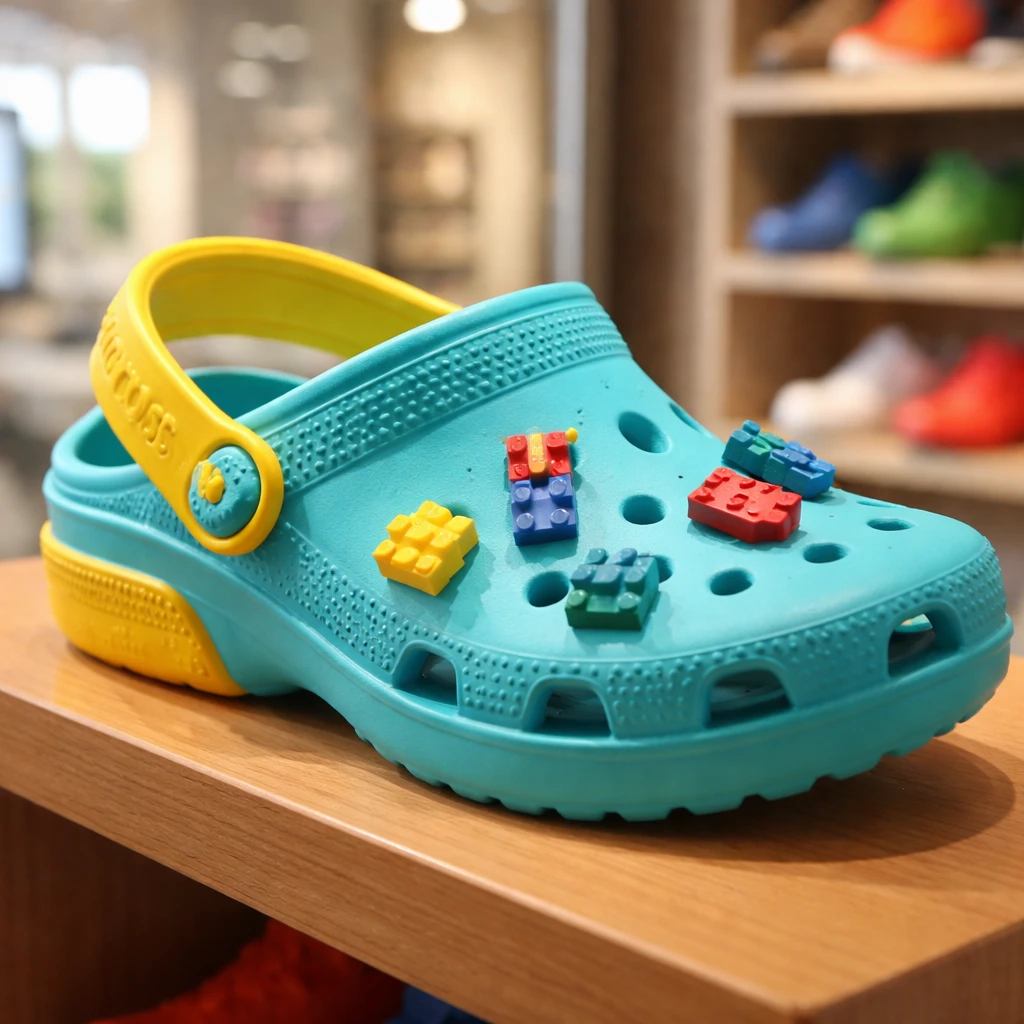
Put simply: you’re buying a cash machine at a cheap multiple with management returning capital aggressively and launching product hooks (think branded customizations and lifestyle collaborations) that act like a LEGO-driven flywheel - one new limited-edition tie-in attracts new customers, who then buy accessories and more pairs. For traders who can tolerate a bit of consumer cyclicality, this is a smart buy opportunity.
What Crocs does and why the market should care
Crocs, Inc. designs, manufactures and sells lifestyle footwear and accessories across two segments: the Crocs Brand (global footprint) and the HEYDUDE Brand (focused on the U.S.). The economics are simple: low-cost, high-margin core product sold at scale, supplemented by collaborations, Jibbitz-style customizations and DTC expansion. The company’s brand-first approach creates repeat buyers and premium attachment products that raise lifetime value.
Why should investors care? Because Crocs is turning strong cash flow into shareholder-friendly capital allocation while still funding growth initiatives. Free cash flow of $659.2 million is not trivia for a company with a $4.2 billion market cap - that FCF alone covers a meaningful portion of the valuation and gives management optionality to buy back stock when multiples are low.
Supporting numbers
| Metric | Value |
|---|---|
| Current price | $83.66 |
| Market cap | $4.20B |
| Enterprise value | $5.30B |
| Free cash flow (trailing) | $659.2M |
| Price / Free cash flow | ~6.38x |
| EV / EBITDA | ~5.48x |
| 52-week range | $73.21 - $122.84 |
Those multiples are cheap for a consumer brand that still enjoys global distribution scale. Price-to-free-cash-flow around 6.4x and EV/EBITDA under 6x imply the market is either pricing significant margin deterioration or persistent top-line weakness. Management’s actions suggest the former is unlikely: they are returning capital and cleaning up underperforming inventory where needed, which preserves margins and protects FCF.
Valuation framing
Valuation looks straightforward. At a market cap of roughly $4.2B and trailing free cash flow of $659M, Crocs trades at a single-digit multiple to cash generation. If Crocs merely sustains $650M of FCF in coming years, a 10x FCF multiple would imply an enterprise value north of $6.5B and equity value comfortably above $100 per share. Even with conservative assumptions (slight FCF decline or higher net debt), the current price nests a favorable margin of safety.
Put differently: the stock is priced for disappointment. That creates an asymmetric payoff if Crocs stabilizes growth, maintains margins, and continues buybacks.
Catalysts
- Brand tie-ins and collaborations - limited-edition collaborations and product customizations act like a flywheel: they drive headline demand, increase attachment sales (accessories and Jibbitz-style items) and deepen brand engagement.
- Capital allocation - ongoing share repurchases materially reduce share count and increase per-share FCF. Hedge fund activity (e.g., a $53.7M purchase disclosed on 02/27/2026) signals institutional conviction and puts a valuation floor.
- International expansion and DTC growth - continued strength in international markets and expanding DTC footprints will lift gross margins and reduce dependence on wholesale channels.
- Inventory clean-up at HEYDUDE and marketing re-focus - management has outlined steps to correct HEYDUDE performance, which could unlock incremental margin recovery in H2 2026 and beyond.
Technicals and market context
Technically, Crocs looks constructive. The 10- and 20-day SMAs sit near $80.5 and $80.6 respectively, with the 50-day SMA around $85.65. Momentum indicators are neutral-to-positive: RSI about 52.7 and a bullish MACD histogram indicate room to run without being overbought. Short interest has been declining recently (days-to-cover down to ~2.82 on the 03/13/2026 settlement), which reduces one form of downside pressure, though short-volume data shows active shorting on certain days - a reminder that volatility can spike.
Trade plan (actionable)
Thesis: Buy Crocs for a long-term trade that captures multiple expansion and continued buyback-driven EPS/FCF per-share improvement.
- Entry: $83.66 (current price)
- Stop loss: $72.00 (just below the 52-week low of $73.21 to give some technical margin)
- Target: $115.00 (reflects >35% upside; consistent with modest multiple expansion toward a 10x FCF/EV recovery)
- Horizon: long term (180 trading days) - allow time for headline collaborations to drive seasonal demand, HEYDUDE remediation to start showing through, and buybacks to compress share count.
Why 180 trading days? Brand and inventory cycles for footwear move slower than internet names. Give Crocs two seasons (spring/summer and back-to-school) and time for buyback effects to become visible in per-share metrics.
Risks and counterarguments
Any investment in consumer discretionary carries execution and cyclical risk. Here are concrete ways this trade can break:
- Demand shock - A wider macro slowdown could compress discretionary footwear purchases and hurt both volume and ASPs.
- HEYDUDE turnaround stalls - If HEYDUDE’s issues persist beyond H2 2026, incremental markdowns and marketing spend could erode margins and FCF.
- Margin pressure from freight or input costs - Unexpected spikes in raw materials, freight, or FX headwinds in key markets could compress EBITDA.
- Overreliance on collaborations - If branded tie-ins and product drops cannibalize full-price sales or become less effective, the flywheel slows.
- Liquidity/valuation risk - While buybacks are shareholder-friendly, overly aggressive repurchases financed by balance sheet leverage could increase financial risk (debt-to-equity near 0.95 already).
Counterargument: The skeptics will point to the trailing negative EPS and prior missteps on acquisitions as reasons to avoid the stock. That’s fair: past execution (notably HEYDUDE) has been uneven, and negative GAAP EPS raises legitimate concerns. But the cash flow story is distinct - Crocs produces substantial FCF and has the balance sheet and earnings power to buy back stock and fund marketing. If management converts FCF into per-share value (and they have shown willingness to do so), that can outweigh headline EPS volatility.
What would change my mind
I will revisit this trade thesis if any of the following occur:
- Free cash flow drops materially below $400M on a sustained basis - that would impair the buyback story and compress valuation.
- Management abandons buybacks in favor of large, value-destroying M&A without clear integration logic.
- HEYDUDE problems meaningfully worsen and require multi-quarter heavy markdowns that push inventory/SKU rationalization beyond the current guidance window.
Conclusion
Crocs is not a momentum growth darling, and you’re not buying this name for a perfect earnings surprise. You’re buying a durable consumer brand with a sizable free cash flow engine trading at single-digit cash multiples and run by a team that is returning capital. That creates an asymmetric risk/reward: downside is cushioned by valuation and buybacks, while upside comes from normalized top-line growth, margin recovery, and multiple expansion.
For traders comfortable with consumer cyclicality and willing to hold through seasonal demand cycles, initiate a long position at $83.66 with a $72 stop and $115 target over the next 180 trading days. Monitor FCF trends, buyback cadence, and HEYDUDE recovery as the primary read-throughs for whether this cheap, cash-flow story becomes a sustained value unlock.
Key near-term triggers to watch: Q2/H2 international sales cadence, HEYDUDE inventory progress, and quarterly buyback disclosures (institutional buying, including the sizable stake reported 02/27/2026, is a positive sign).