
Hook & thesis
Ingles Markets has bounced hard: the stock recently tagged a 52-week high around $95.62 and sits near $94 today. That pop feels headline-worthy, but it doesn't erase what remains a relatively cheap regional grocer by several traditional valuation measures. The core idea here is simple - the rally has narrowed the gap to fair value but hasn't eliminated it. There's an opportunity to buy a disciplined dip with clear risk controls and a mid-term (45 trading days) target that assumes modest re-rating and steady operational performance.
I'll lay out why the business still deserves investor attention, the concrete numbers that support the valuation case, specific catalysts that could drive the next leg higher, and a trade plan that respects the stock's short-term momentum risk.
What Ingles does and why the market should care
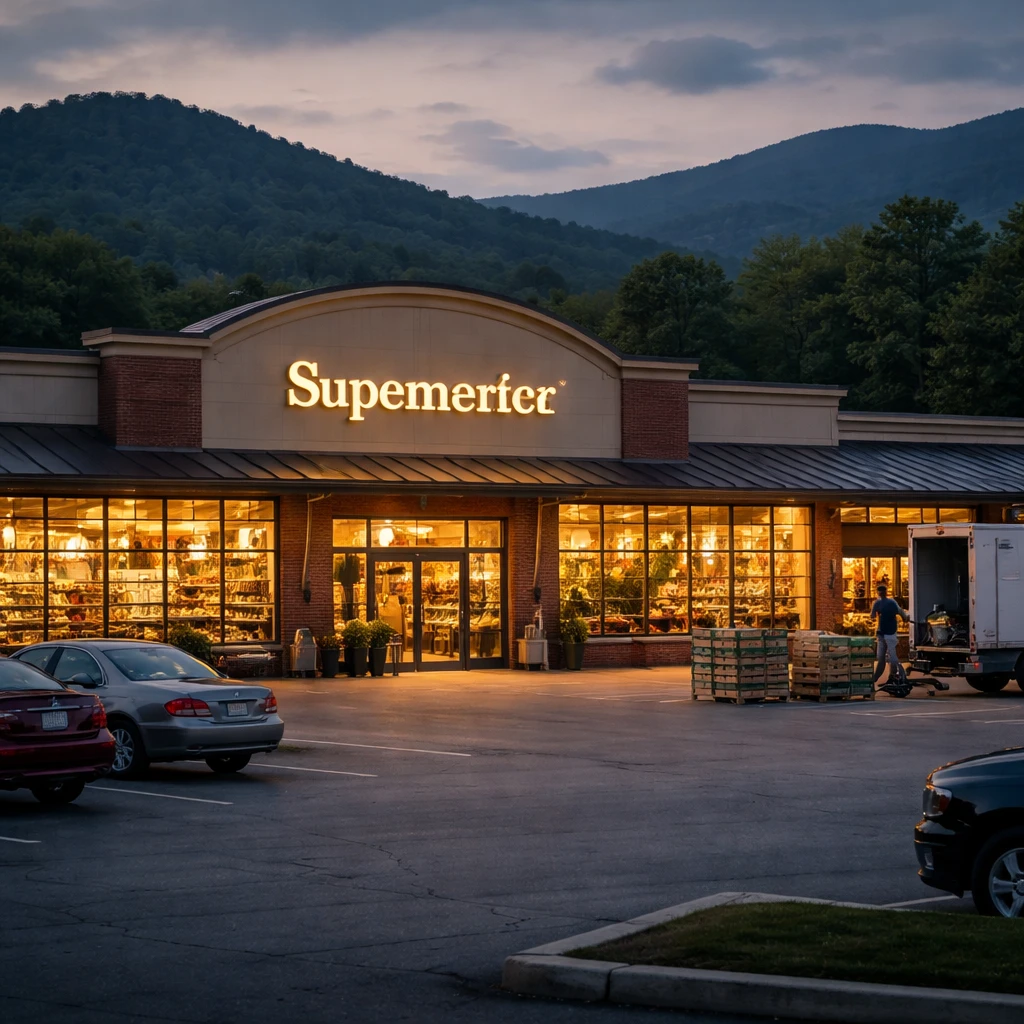
Ingles Markets operates a family-run supermarket chain across the Southeast. The company mixes grocery, perishables and non-food items and also owns shopping-center real estate and a fluid-dairy business. As of the last public update, Ingles runs close to 197 supermarkets in six states and has resilient cash flows tied to essential consumer spending.
Why investors should care: groceries are recession-resistant and cash-generative; Ingles also carries tangible balance-sheet optionality through property ownership and low leverage compared with many retailers. Those two features - predictable cash conversion and asset backing - matter when larger grocers compress or when interest-rate volatility increases.
Key fundamental read-throughs and concrete numbers
The valuation and financial profile give the most direct support to the buy-on-weakness thesis:
- Market capitalization sits roughly around $1.74 billion.
- Reported free cash flow is approximately $123.1 million, giving the business meaningful internal funding for dividends, capex and potential share buybacks.
- EV is about $1.94 billion with EV/EBITDA near 8.6x - not expensive for a stable food retailer with predictable margins.
- Price-to-sales is about 0.33x and price-to-book around 1.09x, signaling the market is assigning modest growth expectations.
- Reported EPS is about $3.92; the current market price implies a P/E near 24x on that EPS - reasonable for a grocer with limited net leverage (debt-to-equity ~0.31) but not a screaming bargain on earnings alone.
- Dividend income is modest (around a 0.69% yield), but the company has paid steady quarterly cash dividends in the past and announced $0.165 per Class A share in 2025.
The numbers paint a coherent picture: solid cash generation, modest leverage, and conservative multiples versus the broader market. The stock's 52-week low was $59.09 - the swing higher to $95 shows strong demand, but relative valuation metrics still suggest the market expects only middling growth from core operations.
Technical and sentiment context
Momentum is positive: the 10/20/50-day moving averages (roughly $91.90, $88.97 and $86.44 respectively) show a clear uptrend and the MACD is signaling bullish momentum. That said, RSI sits near 69, which is closer to overbought territory and argues for caution on an immediate all-in. Short interest is notable (~975k shares, roughly 6.7 days to cover), which can create short squeezes in volatile sessions but also adds to pullback risk when momentum cools.
Valuation framing
Don't fixate on a single multiple. Ingles trades at roughly 0.33x sales and 8.6x EV/EBITDA with solid FCF of $123 million — multiples typically associated with defensive, cash-generative businesses. If you believe grocery fundamentals remain stable and that the company can monetize or better utilize its real estate, a re-rating to 10-11x EV/EBITDA or modest lift in price-to-sales is credible within a few quarters. Put another way, the current market price embeds conservative growth and leaves room for upside if margins stabilize or real-estate optionality is realized.
Trade plan (actionable)
Primary trade: enter at $90.00, stop loss $84.00, target $110.00. This is a mid-term trade: mid term (45 trading days). The plan is to buy a measured dip after the recent run, give the position time to benefit from any re-rating and operational tailwinds, and use a tight monetary stop to limit downside risk.
Why this entry and stop? Price near $90 is below recent short-term support levels (10-day SMA ~$91.9). Buying at $90 lowers the basis compared with the $94 current price and gives room for the stock to mean-revert without abandoning the fundamental valuation thesis. The $84 stop caps losses to a size that keeps the risk/reward favorable relative to the $110 target.
Expect this trade to last about 45 trading days because re-ratings and visible operating improvements typically manifest over several reporting cycles or as catalysts (see below). For traders prioritizing shorter windows, a tight intraday strategy could focus on a pullback to $92 with a stop near $88, but that is higher-frequency and carries more slippage.
Catalysts (what could drive the trade)
- Better-than-expected same-store sales or margin stabilization that signals cost pressures are easing.
- Announcements related to real-estate monetization, lease renewals, or shopping-center asset sales that unlock hidden value.
- Corporate actions such as increased dividend, a buyback, or clearer capital-return plans funded by steady FCF.
- Macro tailwinds - lower transport/fuel costs or easing grocery inflation that expands margins.
Risks and counterarguments
- Competition and margin pressure: Large national grocers and discounters continue to push on price and services. That competition can compress Ingles' margins and limit re-rating potential.
- Execution on real estate optionality: The upside case relies in part on asset monetization. If management delays or fails to extract meaningful value from property holdings, the valuation gap narrows.
- Macro and inflation risk: Sticky labor or transportation inflation could erode operating margin despite stable sales, undercutting free cash flow generation.
- Momentum reversal risk: With RSI near 69 and the stock at a fresh high, a short-term mean reversion could produce a rapid downside move that tests and breaks the $84 level on heavy volume.
- Low incremental returns: Return on equity (~4.54%) and return on assets (~2.9%) are modest. If management cannot lift returns, the market may continue to apply conservative multiples.
Counterargument: The recent rally could be the start of a sustained re-rating driven by improving grocery fundamentals or investor rotation into defensive retail names. If margins and same-store sales accelerate and management deploys FCF into buybacks or higher dividends, the stock could clear $120+ quickly. That outcome would make a buy-on-dip approach too slow and argue for a more aggressive entry above current prices.
What would change my mind
What would make me abandon this long-on-dip stance: a clear and sustained decline in same-store sales, a material margin contraction, or a management statement that rules out monetizing real-estate assets. Conversely, strong same-store sales prints, a sustained rise in free cash flow conversion, or explicit capital-return programs would reinforce the bullish view and justify increasing the position.
Valuation snapshot table
| Metric | Value |
|---|---|
| Market cap | $1.74B |
| EV | $1.94B |
| EV/EBITDA | 8.6x |
| Price / Sales | 0.33x |
| Free cash flow | $123.1M |
| Debt / Equity | 0.31 |
Final verdict
Ingles' recent run is legitimate, driven by steady grocery demand and investor interest in defensive, cash-generative names. But the run doesn't erase attractive valuation metrics: low P/S and reasonable EV/EBITDA present a measured buying opportunity on weakness. The recommended trade is a mid-term long: enter $90.00, stop $84.00, target $110.00, horizon mid term (45 trading days). Risk is medium - protect capital with the stop and re-evaluate on any signs of sustained margin weakness or a management pivot away from capital returns.
Key monitoring checklist while holding:
- Same-store sales and margin trajectory in upcoming reports.
- Any announcements on property sales, leases or center monetization.
- Changes to dividend or buyback policy.
- Daily volume patterns and short-interest developments that could amplify volatility.
Stick to the plan: this is a disciplined buy-the-dip idea that acknowledges momentum and protects against near-term reversals while keeping an eye on the structural value drivers that justify a mid-term re-rating.