
Hook / Thesis
Buy Advantage Energy (AAVVF) on signs that Glacier operations are returning to production. The stock is priced for disappointment: market capitalization sits at roughly $1.37 billion, price-to-book is about 0.65, and the technical setup shows an oversold reading with an RSI under 30. If Glacier - one of the company's core producing areas - resumes flows, the combination of a tight float relative to typical volume, low valuation and a short book that has been active creates room for a pronounced recovery into the low-to-mid $8s over a mid-term window.
My base-case trade assumes a restart and initial stable production profile that reassures the market. This is a tactical swing: the objective is to capture an earnings/production re-rating and short-covering into renewed investor interest rather than to hold through a full-cycle operational recovery.
Business overview - what the market should care about
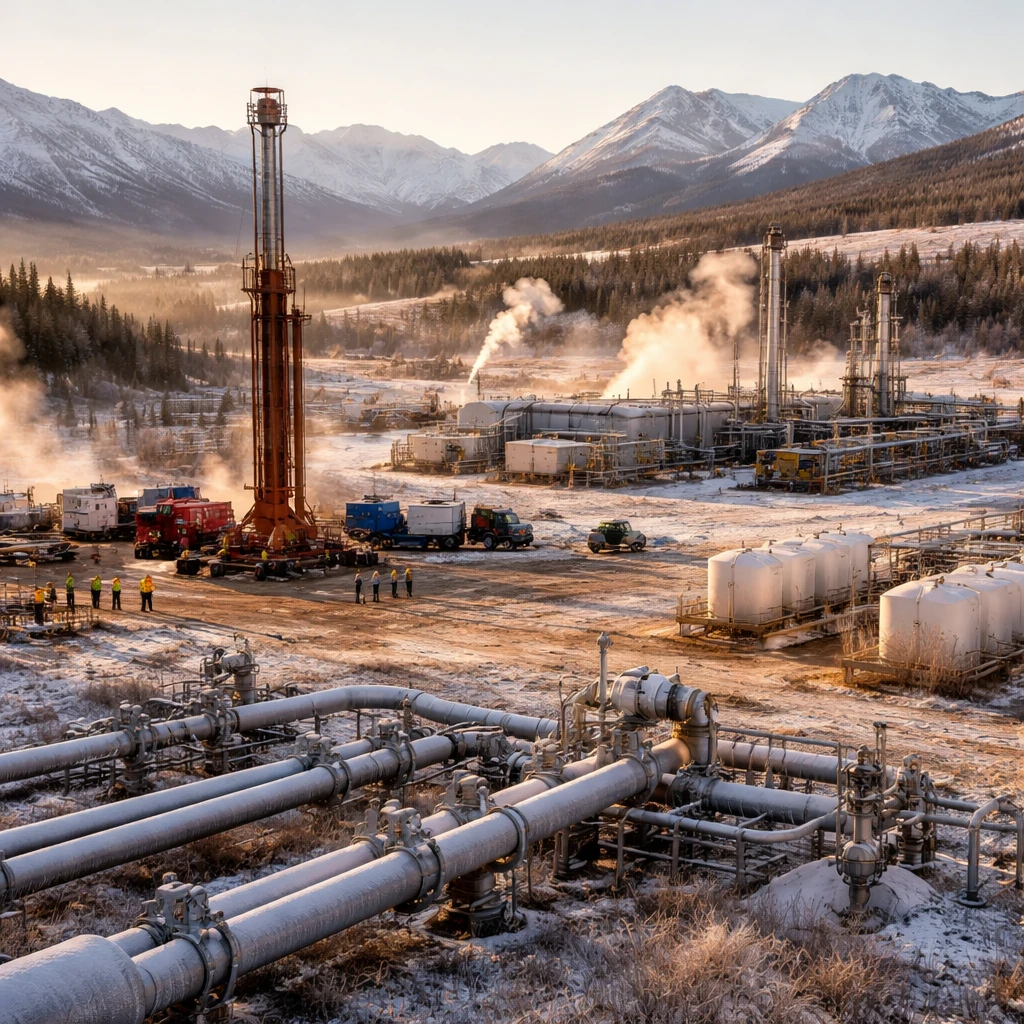
Advantage Oil & Gas Ltd., traded as Advantage Energy in U.S. markets under AAVVF, is a Calgary-headquartered oil & gas producer focused on natural gas and liquids in Alberta: key areas include Glacier, Wembley, Valhalla and Progress. The company runs with a relatively small team (reported headcount 39) and a concentrated asset base where individual field outages or restarts can meaningfully move production and cash flow.
The reason the market pays attention to Glacier is straightforward: it's a core operating area where production interruptions compress near-term free cash flow. When operations restart and volumes stabilize, earnings visibility improves quickly for a company of this size - and for AAVVF that change can translate into a sharp re-rating because the stock is trading below replacement/book-value multiples and on lower investor expectations.
Supporting datapoints
- Market capitalization: $1,372,102,323 (approx). That’s modest for a producer with multiple productive areas and gives a basis to think a 20-30% recovery is feasible without dramatic multiple expansion.
- Shares outstanding: ~193.53 million; float: ~185.91 million. The float-to-outstanding ratio suggests most shares are available to the market, but daily average volume (~26,355 shares over two weeks) is low relative to the float, which can amplify moves on positive operational news.
- Valuation: Price-to-book ~0.65, indicating the market values the company below its book equity. For an asset-heavy energy producer, that points to a depressed multiple that could re-rate if production and cash flow normalize.
- Technicals: 52-week high sits at $7.09 (current intraday high), 52-week low $1.03. The RSI is 29.9, signalling oversold conditions. Short-term moving averages (10/20/50-day SMAs and EMAs) sit above current price, but a reversal is likely to accelerate if operational news is constructive.
- Short interest and short-volume dynamics: short interest has fluctuated materially over the last several months (e.g., 537,019 shares as of 03/13/2026). Recent short-volume prints show episodic heavy short activity on certain days, which increases the likelihood of short-covering rallies when positive catalysts appear.
Valuation framing
At roughly $1.37B market cap and with a reported price-to-book around 0.65, Advantage trades like a company priced for downside risk rather than recovery. That’s not an uncommon posture for smaller producers exposed to single-field operational risk. The market is effectively discounting either prolonged downtime at Glacier or a structural decline in realized prices/volumes.
Compare this logic qualitatively: if Glacier resumes and baseline production is demonstrably stable, investors are likely to revalue the company closer to book - even a move from PB 0.65 to PB ~0.8-1.0 would imply a material uplift in share price without stretching multiples. Given the current share count and float dynamics, that re-rating can be accelerated by renewed analyst attention and short-covering. I’m not relying on a long-term commodity rally; I’m banking on operational certainty and sentiment shift.
Catalysts (2-5)
- Operational restart at Glacier and the first public update showing stable flows and uptime - this is the primary trigger.
- Quarterly or operational update confirming production guidance for Glacier and other areas (Wembley, Valhalla, Progress).
- Improvement in realized gas/natural gas liquids pricing, which would expand cash flow and reduce market risk premium.
- Short-covering days following any positive release; the history of short-volume spikes suggests the stock is sensitive to squeeze dynamics.
Trade plan - actionable entry, stops, targets
This is a mid-term swing trade intended to play the operational restart and subsequent sentiment re-rating. Horizon: mid term (45 trading days). The goal is to capture the bulk of the recovery that should occur once Glacier proves stable; I expect most of the move to occur within 6-8 weeks of a positive operational update.
| Entry | Target | Stop | Time horizon |
|---|---|---|---|
| $7.09 | $8.50 | $6.00 | mid term (45 trading days) |
Rationale: Entering at $7.09 captures the current market price with a stop below recent intraday support ($6.00) to limit downside on a failed restart or negative surprises. The $8.50 target is sized to reflect a ~20%–25% upside that can be realized through a combination of operational reassurance and short-covering; it does not require a sustained commodity rally or long-term multiple expansion to hit this band.
Position sizing and risk management
Given the stock’s volatility and episodic short activity, use disciplined position sizing. Consider risking 1-2% of portfolio equity on the trade and trailing the stop to breakeven once the trade is up 50% of the distance to target. If Glacier posts a multi-week ramp and guidance is raised, convert to partial take-profit at $8.50 and let a smaller core position run to reassess for a longer-term hold.
Risks and counterarguments
- Restart delay or failure: If Glacier does not restart on schedule or recommissioning reveals reservoir/operational issues, the stock can fall through the stop quickly. This is the primary execution risk.
- Commodity price pressure: A material drop in natural gas and liquids prices would compress cash flow and make any recovery at the share level harder to achieve, even with operations resumed.
- High short interest and volatility: while short interest can fuel a squeeze on positive news, it can also amplify downward moves on negative headlines. Expect larger intraday moves in both directions.
- Liquidity and market structure: Average daily volume is modest (~26k) making the stock vulnerable to slippage on entry/exit; partial fills and wider spreads are possible, particularly on news days.
- Counterargument: One could reasonably argue that restarting Glacier is already partially priced in; recent price action near the 52-week high suggests the market has already anticipated a restart. If that’s true, the upside to $8.50 may be limited and the risk of a sell-the-news event increases. For that reason, watch the detail of the operational update - specifically sustained flow rates, uptime percentage and any one-off repair costs - before committing full size.
What would change my mind
I will abandon this trade idea if the operational update from Glacier shows subpar flow rates that are materially below guidance or if management gives a timeline that extends beyond 3 months for stable production. Additionally, a sharp, sustained drop in realized gas pricing would force a reassessment of the trade because it would materially reduce the odds of a re-rating in the mid-term window.
Conclusion
Advantage Energy is a tactical buy here based on an identifiable catalyst (Glacier restart), depressed valuation (PB ~0.65) and oversold technicals (RSI ~30). The mid-term swing targets a $8.50 level from an entry around $7.09 with a hard stop at $6.00 to control downside. This is not a blind value play; it’s a catalyst-driven trade that assumes a prompt and clean restart at Glacier and that the market re-appraises the company on improved cash flows. If operational updates disappoint or commodity markets deteriorate, the trade plan provides a clear stop to limit loss.
Key monitoring checklist
- Management update or press release confirming Glacier flow rates and uptime.
- Any revisions to production guidance or CAPEX tied to Glacier.
- Unusual short-volume spikes or rapid increase in average daily volume that could presage a squeeze or accelerated selling.
- Movement in natural gas and NGL price realizations that affect near-term free cash flow.
Trade plan recap: Buy $7.09, target $8.50, stop $6.00, mid term (45 trading days). Adjust sizing for volatility and move stops to breakeven once the trade is comfortably in profit.