
Overview
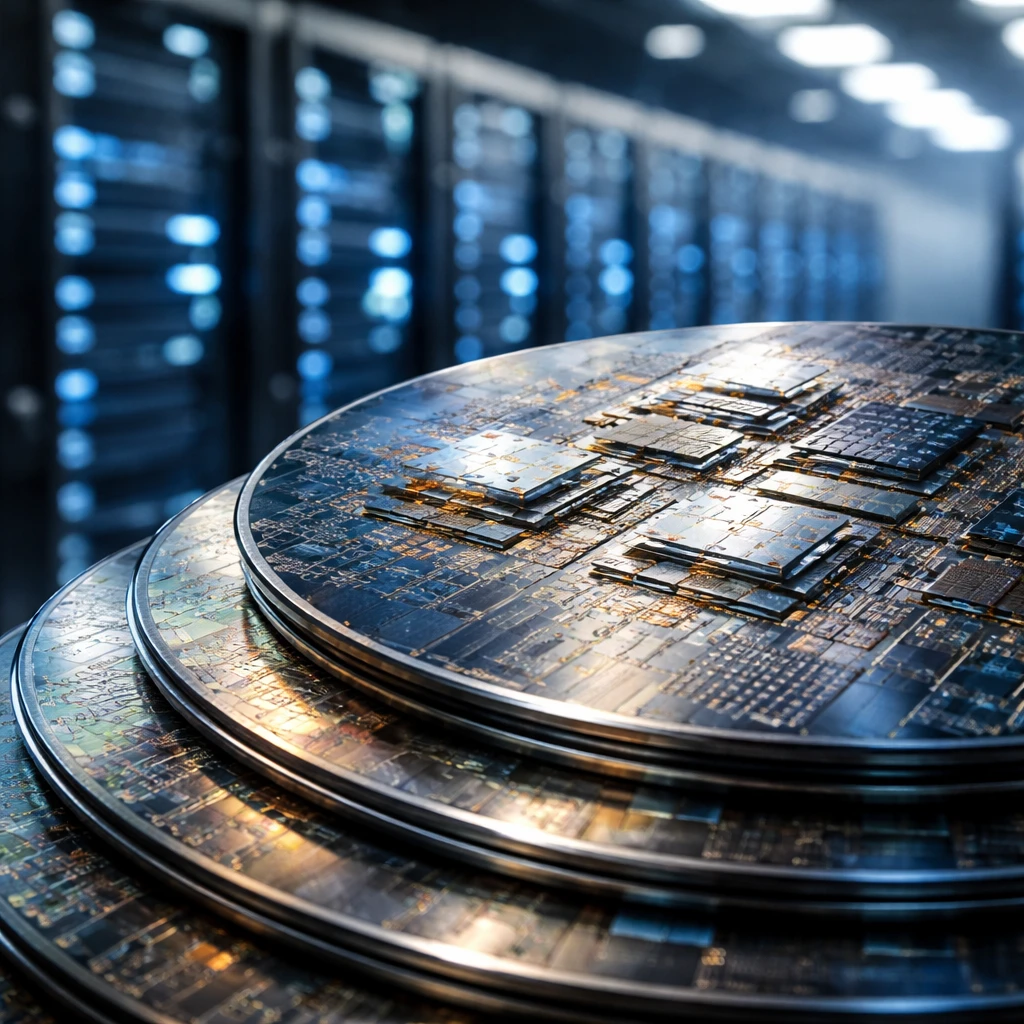
Apple is committing significant production volume to TSMC’s advanced 3D chip packaging technology, System on Integrated Circuit (SoIC), as it scales infrastructure for its artificial intelligence initiatives. SoIC is TSMC’s platform for high-performance chiplet designs that enables densely integrated, 3D stacked packages.
What SoIC is and who has used it
SoIC is an advanced 3D packaging approach from TSMC designed to support high-performance chiplet architectures. Until recently, a major user of this technology was AMD, which deployed SoIC across its MI-series AI GPUs and in some of its premium gaming processors. That prior adoption established SoIC as a production-proven option for demanding compute workloads.
Apple’s wafer commitments and scale
According to analysis from Morgan Stanley, Apple has placed orders with TSMC equivalent to 36,000 wafers for 2026 and 60,000 wafers for 2027. Those totals are sizable by industry standards and suggest these allocations are intended for a substantial program rather than modest product upgrades. The magnitude of these reservations has prompted market observers to look beyond Apple’s current Mac product line for the primary end use.
Why the Mac lineup is unlikely to consume that capacity
Apple shipped roughly 80,000 Mac Pro and Studio units powered by M2 and M3 Ultra processors in 2025. Using an estimated yield of 50 Ultra processors per wafer, those shipments would correspond to about 1,600 wafers of SoIC demand. That figure represents only a small fraction of Apple’s reserved SoIC wafer allocations, indicating the bulk of capacity is likely committed to applications other than these Mac models.
Analyst interpretation and the Baltra ASIC
Morgan Stanley analyst Erik Woodring has interpreted the wafer bookings as evidence that most of the SoIC capacity will be used for Apple’s 3nm AI ASIC for Private Cloud Compute. Internally, Apple has reportedly referred to this in-house accelerator as "Baltra." Woodring suggests the chip is intended to replace the M-series Ultra processors currently deployed in Private Cloud Compute to improve AI inference performance and efficiency. He also noted reports of a multi-year collaboration between Apple and Broadcom, which align with the direction of this internal development.
Private Cloud Compute and Apple Intelligence
Private Cloud Compute acts as the server-side backbone for Apple Intelligence, the suite of AI features Apple has introduced for its devices. By developing a proprietary AI ASIC for these servers, Apple would move away from dependence on external cloud providers for certain inferencing workloads, aiming for tighter vertical integration and potentially greater control over costs and performance.
Scale comparison and remaining unknowns
To provide context, Morgan Stanley notes that AMD’s allocation of 42,000 SoIC wafers in 2026 is expected to produce nearly 800,000 MI-series AI GPUs. Apple’s 36,000 wafer allotment in 2026, growing to 60,000 in 2027, is therefore substantial if applied primarily to Private Cloud Compute infrastructure. Despite the apparent strategic clarity, Woodring cautions that the performance and efficiency of Apple’s AI ASIC at scale remain key unknowns.
Capitalization and potential cost effects
The analyst further observes that Apple’s expenditures for this infrastructure appear more likely to be recorded as capital expenditure rather than ongoing operating costs. That accounting treatment could be more cost-efficient over time, though the full financial and operational implications will depend on chip performance, deployment scale, and integration with Apple’s server environment.
Note: The article summarizes reported wafer commitments and analyst commentary without asserting outcomes beyond the evidence presented.