
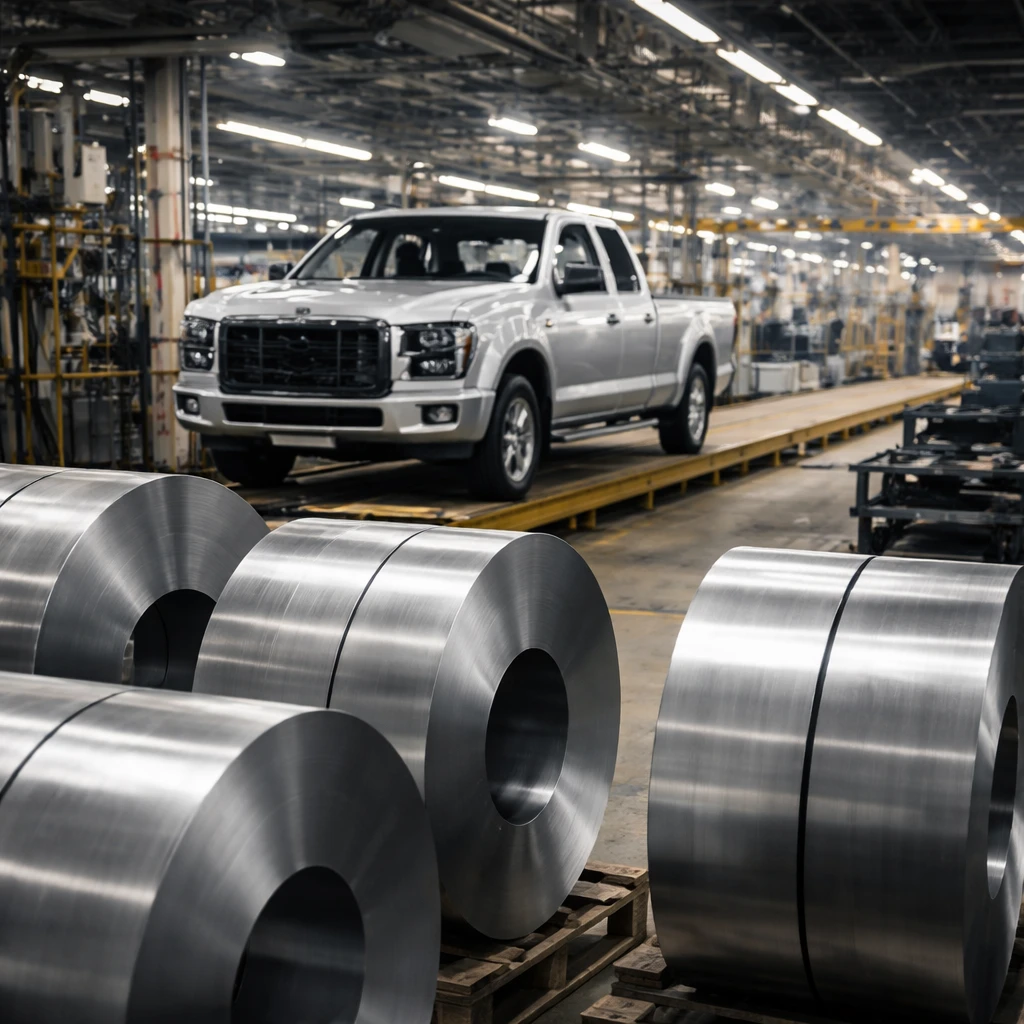
The Donald Trump administration has rejected requests from Ford Motor Company and other U.S. automakers seeking temporary relief from tariffs on aluminum imports.
Automakers made the appeals after two fires at a major U.S. aluminum rolling plant created supply bottlenecks that affected production of several vehicles, notably the aluminum-bodied F-150 pickup. The constraint in raw material availability intensified pressure on manufacturers that rely on aluminum for vehicle exteriors.
The shortage has been traced to two fires at the Novelis aluminum rolling plant in Oswego in 2025. Those incidents halted production at what is described as the largest U.S. aluminum supplier, and the plant remained offline until at least June 2026.
In recent weeks, Ford formally asked the administration for assistance, seeking a suspension or relief from duties applicable to imported aluminum at least until the key U.S. plant comes back online. The aim of that request was to alleviate immediate sourcing challenges while domestic output remained constrained.
To date, the White House has not granted the relief Ford and other automakers requested. Officials have engaged in discussions, but the administration has so far not moved to lift or modify the tariff measures that apply to aluminum imports.
The situation highlights a tight interplay between industrial incidents at a single part of the metals supply chain and near-term production capabilities at major U.S. automakers. For Ford, the disruption has been especially acute because of the F-150's aluminum exterior, which makes the truck more directly exposed to aluminum shortages than models that use other materials.
As talks remain in process between industry representatives and government officials, automakers face a continuing period of uncertainty about material access and cost, while the timing for restoration of full domestic aluminum production hinges on the Novelis plant returning to operation.
Summary
Ford and other U.S. automakers sought temporary relief from aluminum import tariffs after fires at a major Novelis rolling plant in Oswego in 2025 disrupted supplies. The Trump administration has so far refused to provide tariff relief, and discussions between the industry and government are ongoing.
- Key points:
- Tariff relief requests from Ford and other U.S. automakers were denied by the Trump administration.
- Two fires at the Novelis aluminum rolling plant in Oswego in 2025 halted production at a major U.S. supplier until at least June 2026, creating shortages that affected vehicles including the aluminum-bodied F-150.
- Discussions between automakers and the White House continue, but no policy change has been announced.
- Risks and uncertainties:
- Ongoing limited access to aluminum could prolong production disruptions at automakers that rely on aluminum exteriors, affecting automotive manufacturing and related supply chains.
- If the Novelis plant remains offline longer than currently expected, pressure on aluminum availability and prices could persist for manufacturers dependent on that supply.
- Without temporary tariff relief, automakers may face higher input costs while sourcing alternative aluminum supplies, potentially impacting margins in the automotive sector.