
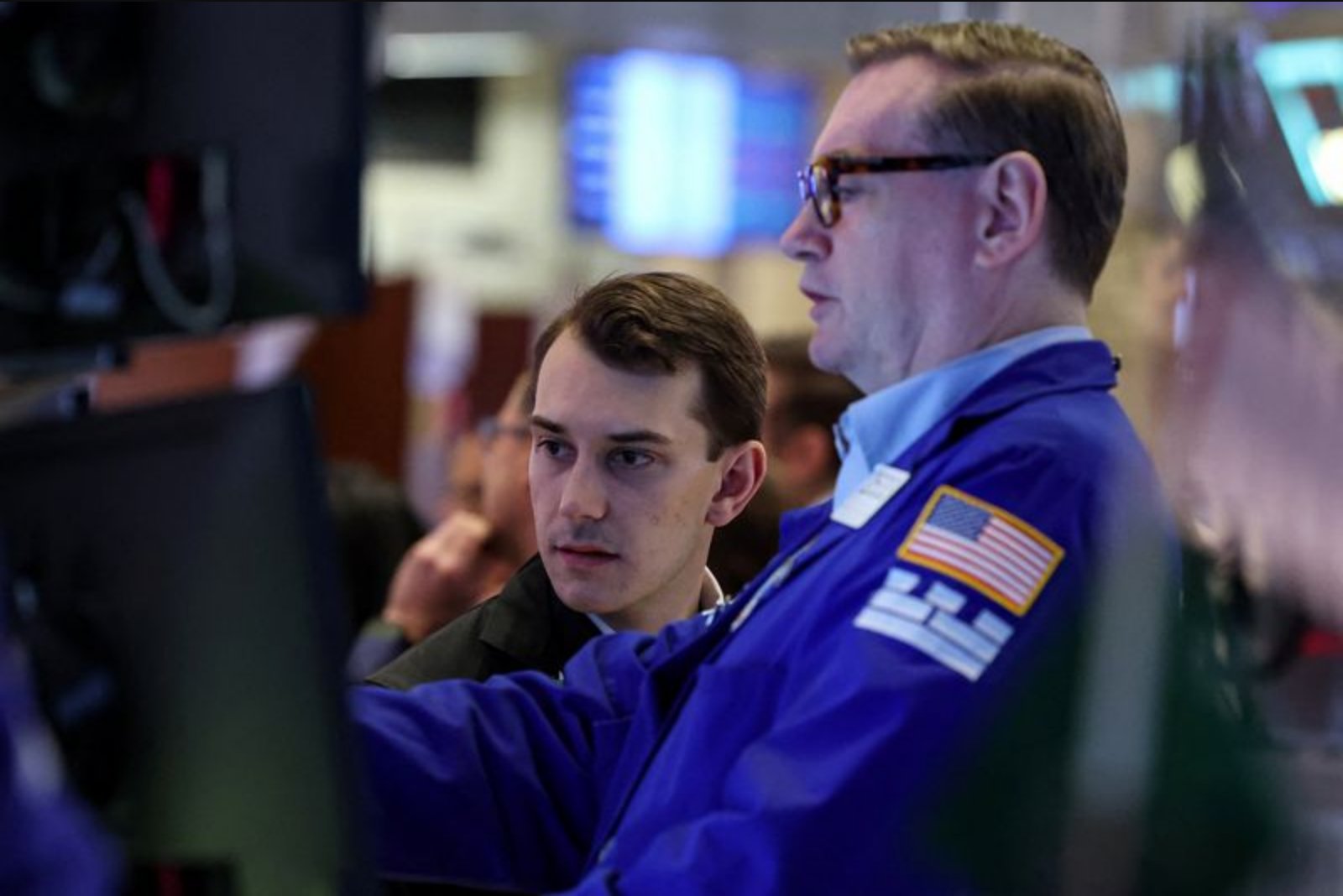
U.S. stocks pushed the S&P 500 and Nasdaq Composite to record closing levels on Wednesday, lifted by an indefinite extension of a ceasefire with Iran and a solid start to the corporate earnings season.
President Donald Trump said the ceasefire had been extended indefinitely following a request from Pakistani mediators. Despite the extension, the U.S. Navy retained its blockade of Iranian ports, and Iran seized two ships in the Strait of Hormuz. The status of the waterway - which handles about 20% of global oil supply - remains unclear and has been a point of contention in the negotiations.
Mohammad Baqer Qalibaf, Iran's parliament speaker and top negotiator, stated that a full ceasefire only made sense if the blockade was lifted.
Market participants have bid up equities in recent weeks on hopes that a peace agreement could be reached. The Nasdaq had ended a run of 13 straight daily gains on Monday.
"Everyone’s kind of sick of it... clearly, the market is looking for a beneficial outcome or some kind of decent outcome here," said Stephen Massocca, senior vice president at Wedbush Securities in San Francisco. "Earnings have been good - now, will they continue to be good if we continue to be at war - it’s going to lose a little bit of its oomph. That said, in my world, there’s still tremendous value, there’s a lot of really cheap stuff out there."
Major benchmarks finished higher: the Dow Jones Industrial Average rose 340.65 points, or 0.69%, to 49,490.03; the S&P 500 gained 73.89 points, or 1.05%, to 7,137.90; and the Nasdaq Composite added 397.60 points, or 1.64%, to 24,657.57.
First-quarter corporate earnings growth is tracking at about 14%, according to LSEG data, providing an earnings tailwind for markets even as inflation risks persist. Oil prices remained near the $100-a-barrel level and could move higher, a development that keeps inflationary pressure and energy costs front of mind for investors.
Technology led the advance among S&P sectors. The S&P 500 technology index climbed roughly 2.31% and outperformed the other 10 major sectors, bolstered by gains in chip stocks. Micron Technology surged 8.48% to close at a record $487.48.
The tech index has risen in 15 of the past 16 sessions. The Philadelphia SE Semiconductor Index reached an intraday record for an 11th straight session and recorded its 16th consecutive day of gains - the longest streak in its history.
Data storage company Seagate rose 3.57% after Barclays upgraded the firm to an "overweight" rating.
Earnings activity and company moves
Market sentiment received an additional boost from company-specific results and guidance. S&P 500 earnings-per-share estimates for 2026 and 2027 have risen by 4% since late January, based on data from Goldman Sachs.
GE Vernova was the best performer on the benchmark S&P index, jumping 13.75% after raising its annual revenue forecast. Medical device maker Boston Scientific climbed 8.99% on the back of first-quarter results.
Boeing advanced 5.53% after reporting a smaller-than-expected quarterly loss, and the stock was the largest contributor to gains in the Dow. United Airlines, by contrast, dropped 5.58% after forecasting second-quarter and full-year profits below Wall Street estimates, with higher jet fuel prices squeezing margins and clouding the airline's near-term outlook.
After the market close, Tesla rose 4.6% following a surprise positive free cash flow print for the first quarter.
Shares of Spirit Airlines, which trade over the counter, more than doubled to $1.50 after a Wall Street Journal report said the Trump administration was close to a deal to rescue the low-cost carrier.
Market breadth and volume
Advancing issues outnumbered decliners by a 1.61-to-1 ratio on the New York Stock Exchange and by a 1.81-to-1 ratio on the Nasdaq. The S&P 500 posted 31 new 52-week highs and five new lows, while the Nasdaq Composite recorded 118 new highs and 57 new lows.
Trading volume on U.S. exchanges totaled 16.08 billion shares, below the 20-day full-session average of 18.3 billion shares.
The close at record levels reflected a combination of diplomatic developments, solid corporate results and notable strength in technology and semiconductors, though energy prices and the unresolved issue of the Iranian port blockade continue to present clear market risks.