
Stock Markets April 6, 2026

JBS Greeley Workers End Three-Week Strike; Morgan Stanley Sees Beef Spreads Easing as Plant Restarts

Return-to-work agreement and resumption of talks expected to lift plant output, putting near-term pressure on beef profitability gains

By Jordan Park MBRFY
JBS Greeley Workers End Three-Week Strike; Morgan Stanley Sees Beef Spreads Easing as Plant Restarts
MBRFY

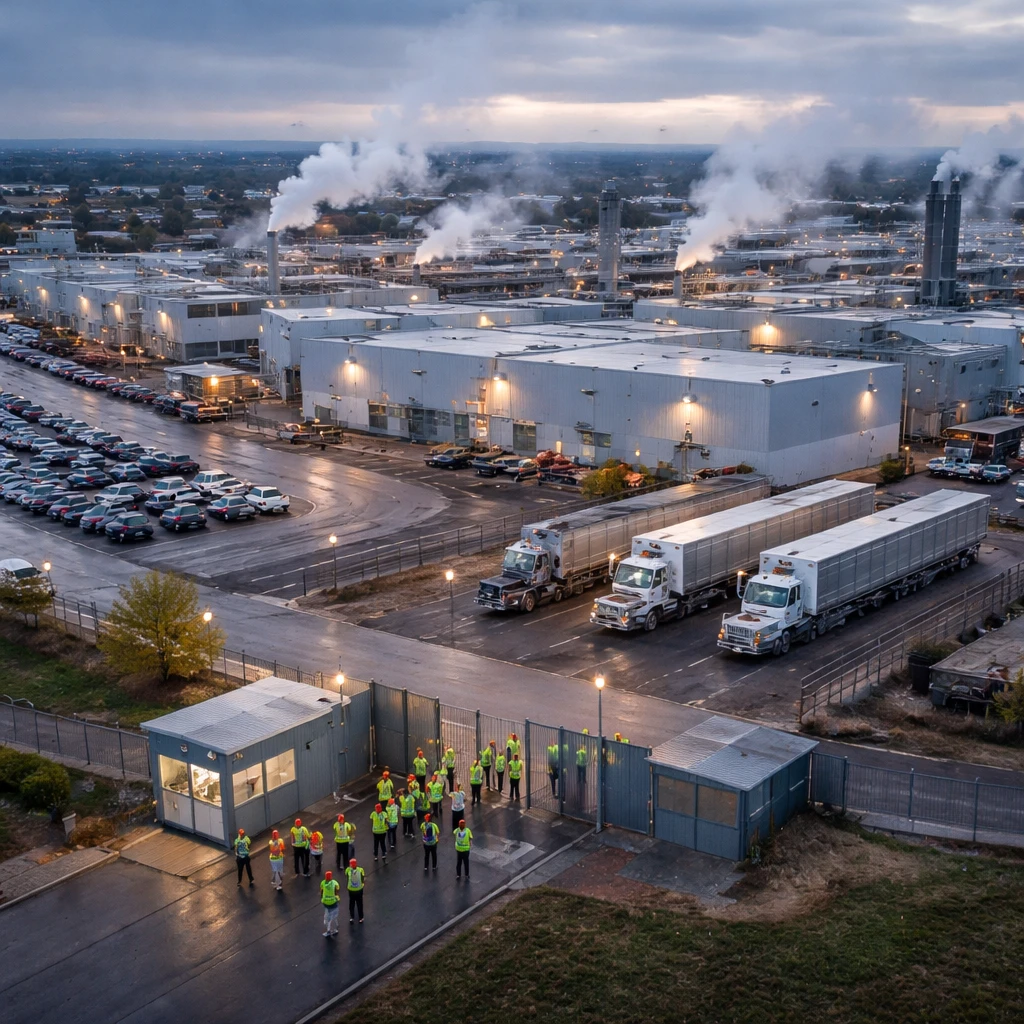
Workers at JBS's Greeley, Colorado beef processing facility have agreed to cease a three-week strike and are scheduled to return to the plant after the company committed to resume contract negotiations. Morgan Stanley analysts anticipate that as the plant ramps up capacity, U.S. beef spreads will partially retreat, a development that would weigh on short-term margins for major processors.

Key Points

  • JBS and UFCW7 agreed to end a three-week strike at the Greeley plant; employees are expected back on Tuesday and talks resume midweek.
  • Morgan Stanley forecasts a partial pullback in U.S. beef spreads as Greeley incrementally restores capacity, with outcomes tied to negotiation results.
  • The Greeley facility handles about 5,000 head per day, roughly 5% of industry capacity; the strike materially contributed to improved beef profitability by tightening supply.

Union representatives at UFCW7 said in a press release that employees at JBS's beef processing plant in Greeley, Colorado agreed to end a three-week strike and will return to work on Tuesday, after the company pledged to restart contract discussions. Negotiations between JBS and the workers' representatives are slated to recommence on Wednesday and Thursday.

JBS, through a company representative, indicated it would not revise the initial proposal it submitted to the union and intends to keep that original offer as its final position in the talks.

Morgan Stanley analysts expect the gradual resumption of production at the Greeley plant to prompt a partial pullback in U.S. beef spreads. The analysts emphasized that the ultimate impact will hinge on the outcome of the negotiations later in the week.

The financial picture for U.S. beef spreads has shifted notably this year. From a low of negative $140 per head in mid-February, spreads improved to roughly $390 per head at their peak, with readings near $250 per head last week. Morgan Stanley noted several contributors to the improvement, including typical seasonal patterns and producers cutting slaughter rates after suffering negative margins in January and February. During those months, average beef spreads were negative $45 per head.

The analysts highlighted the strike at the Greeley facility as the most significant factor behind the recent improvement in profitability. The plant processes about 5,000 head per day, which Morgan Stanley estimates represents roughly 5% of industry capacity. The strike likely reduced demand for slaughter, placing downward pressure on cattle prices, while lower availability of beef pushed cutout prices higher.

As capacity utilization at the Greeley plant ramps up, Morgan Stanley expects some reversal of the spread gains, forecasting a partial pullback on U.S. beef spreads in the near term. That development would be a negative for short-term margins at large processors, including JBS and Marfrig.


Key details remain dependent on the course of the resumed bargaining sessions, and market participants will monitor both production throughput at Greeley and any substantive movement in the company-union negotiations.

Risks

  • Negotiation outcome uncertainty - The near-term direction of beef spreads depends on results of contract talks this week, which could alter production plans and margins for processors.
  • Capacity ramp risk - How quickly the Greeley plant restores utilization will influence cattle demand and beef prices, affecting meatpackers and livestock producers.
  • Margin exposure for processors - A partial pullback in beef spreads would negatively affect short-term margins at major processors, including JBS and Marfrig.

More from Stock Markets

Casablanca Market Inches Higher as Moroccan All Shares Reaches One-Month Peak Apr 6, 2026 AI Tools Adopted by Majority of U.S. Retail Investors, Survey Finds Apr 6, 2026 Goldman Sachs Urges Investors to Favor Large-Cap Petrochemical Names as Middle East Shock Spreads Apr 6, 2026 Barings Private Credit Fund Restricts Redemptions After Surge in Requests Apr 6, 2026 Morgan Stanley Sees Coal India, JSW Steel Set to Outperform; Jindal Steel Lagging Apr 6, 2026