
Israel's military reported it struck Iran-aligned Hezbollah positions in Lebanon on Friday, a development that risks undermining hopes for a longer-term U.S.-Iran ceasefire and complicates planned diplomatic meetings expected over the weekend.
Officials in Tehran have signaled potential nonattendance at peace negotiations set to begin in Pakistan on Saturday if Israeli strikes on Hezbollah persist. A spokesman for Iran's foreign ministry suggested that continuing Israeli operations in Lebanon could lead Iranian representatives to skip the talks.
American and Iranian officials have differed over whether Lebanon was included in the ceasefire agreement reached earlier this week. That disagreement has added to uncertainty about how broadly the truce applies across fronts where tensions have flared.
On Thursday, Israeli Prime Minister Benjamin Netanyahu said he had instructed his government to initiate discussions with the Lebanese government about a possible disarmament of Hezbollah. Netanyahu also emphasized that, despite those diplomatic overtures, there was "no ceasefire" in Lebanon.
Lebanese authorities reported that more than 300 people were killed by Israeli strikes on Thursday, according to a widely cited media account. Casualty figures and the intensity of operations in Lebanon have been central to dispute over whether the truce can be expanded or maintained.
In Washington, U.S. President Donald Trump told Israeli leaders he had urged restraint in strikes on Lebanon, seeking to prevent the fragile two-week ceasefire with Iran from unraveling. The White House outreach underscores the diplomatic balancing act between supporting Israel and preserving the ceasefire framework with Tehran.
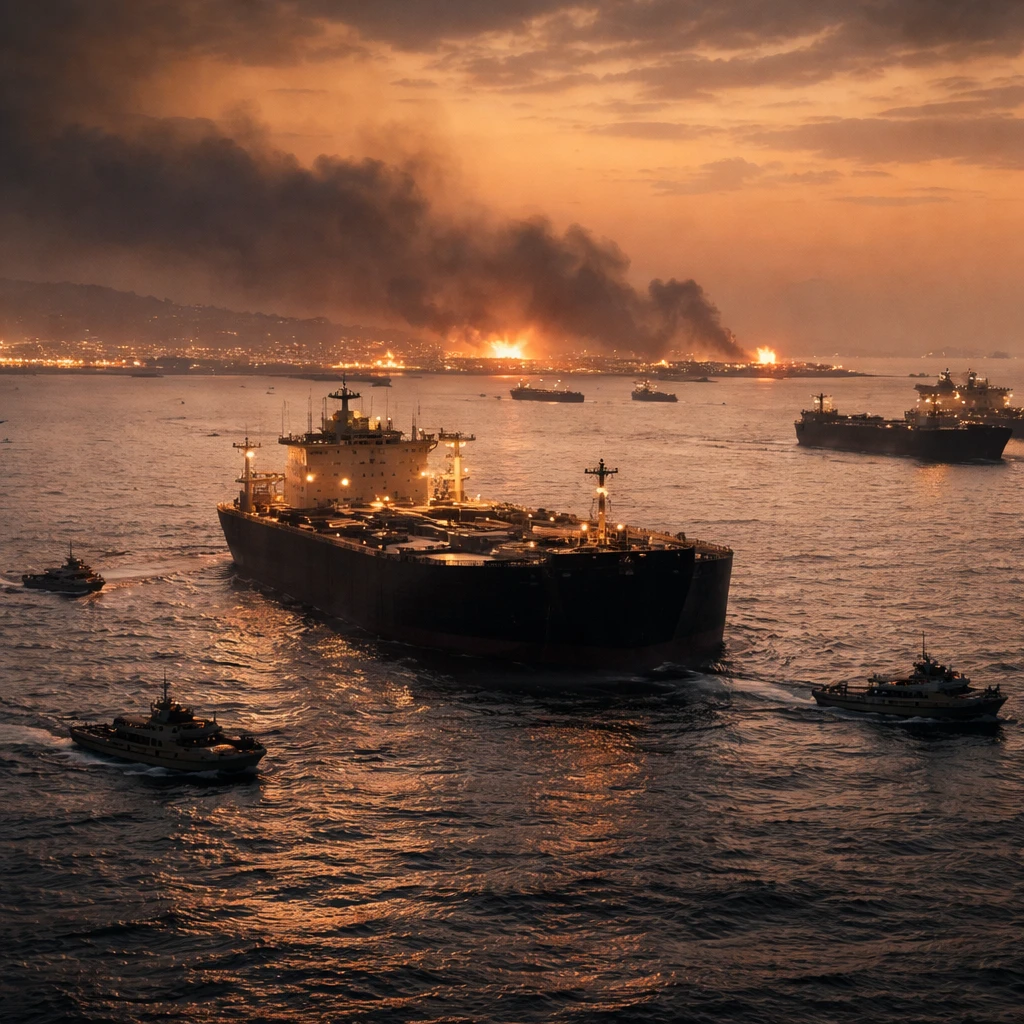
Meanwhile, tanker traffic through the Strait of Hormuz remains at a near standstill despite the ceasefire. Reuters reported that shipping through the narrow passage off Iran's southern coast was below 10% of normal volumes on Thursday. Iran has instructed vessels transiting the strait to remain within its territorial waters while sailing.
The strait is a critical artery for global energy flows, carrying roughly a fifth of the world's oil, and its de facto closure has immediate market consequences. Several Asian countries rely heavily on crude and refined products that pass through the waterway, while European consumers depend on natural gas supplied by Persian Gulf nations that have been targeted in recent Iranian attacks.
Separately, bombings of Saudi energy facilities have materially reduced the kingdom's production capacity. Saudi state media reported that oil output capacity was cut by about 600,000 barrels per day and throughput on the East-West Pipeline was reduced by roughly 700,000 barrels per day.
The combined effect of constrained shipping through the Strait of Hormuz and diminished Saudi Arabian output has pushed oil prices higher as market participants price in supply disruption risks.
President Trump criticized Iran's handling of shipping in the strait, saying Tehran was "doing a very poor job" of allowing oil to transit and warning Iran against collecting fees from vessels. The Wall Street Journal, citing an Iranian lawmaker, reported that the country had been collecting about $2 million from tolls charged on some ships.