
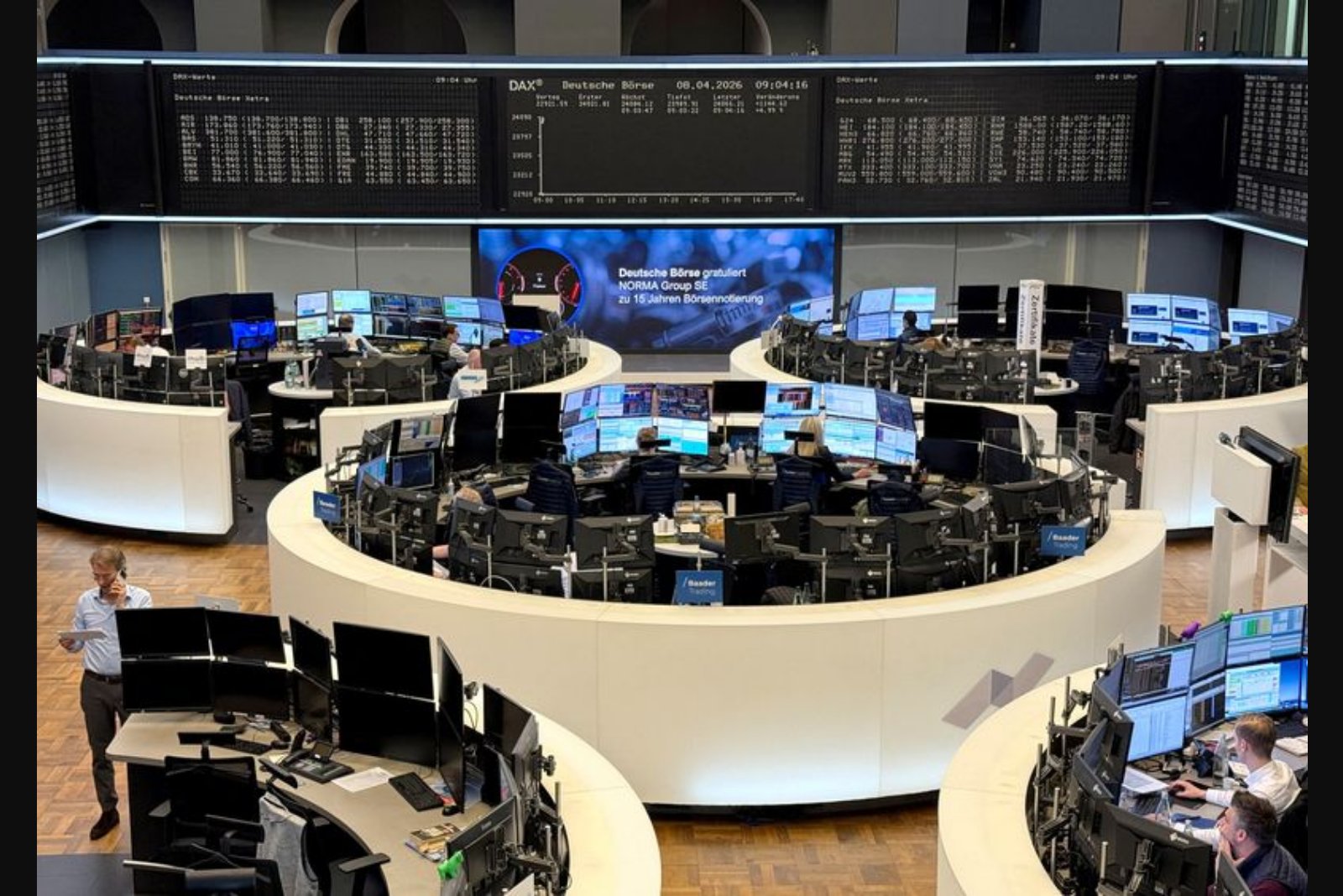
April 8 - European share prices rallied sharply on Wednesday as markets reacted to a two-week ceasefire in the Middle East, sparking hopes of a reduction in regional disruptions to oil flows. The pan-European STOXX 600 advanced 3.6% to 611.73 points as of 0713 GMT, putting it on track for its strongest session in a year if the momentum held.
Major regional bourses followed the rebound. Germany's DAX rose 4.6%, while London's FTSE 100 increased 2.3%. The move came after U.S. President Donald Trump agreed to a two-week ceasefire with Iran, a development announced less than two hours before his stated deadline for Tehran to reopen the Strait of Hormuz, where roughly 20% of the world's oil transits, or face devastating attacks on its civilian infrastructure.
Markets responded rapidly to the truce. Brent crude futures dropped sharply, falling 15% below the $100 a barrel mark, easing a key source of recent upward pressure on energy costs. The decline in crude helped lift sectors that are typically sensitive to energy prices and to shifts in bond yields.
Sectors linked to travel, industrials, and banking recorded some of the largest gains, each advancing between 5% and 7% as investors priced in lower energy-related costs and the prospect of easing financial conditions. In contrast, the energy sector itself fell 4.2% amid the tumble in crude oil prices.
European equities had come under heavy pressure since the U.S.-Israel military campaign against Iran began on February 28, in part because much of the continent relies on oil imports that transit the largely obstructed Strait of Hormuz. The ceasefire raised immediate relief, but market participants remain attentive to whether the pause will create room for a longer-term settlement.
Looking ahead, investors are set to monitor upcoming euro zone economic releases, including retail sales and producer price data scheduled for later in the day. Those reports could shed further light on how recent volatility in energy markets is influencing demand and inflationary pressures across the region.
Summary
European equity markets rallied after a two-week Middle East ceasefire reduced fears of prolonged supply disruption through the Strait of Hormuz. Major indexes including the STOXX 600, DAX and FTSE 100 rose, energy prices dropped, and sectors such as travel, industrials and banking benefited.
Key points
- STOXX 600 was up 3.6% at 611.73 points as of 0713 GMT, marking a potential best session in a year.
- Germany's DAX climbed 4.6% and the FTSE 100 rose 2.3% following the ceasefire announcement.
- Brent crude futures fell 15% below $100 a barrel; travel, industrials and banking advanced 5-7%, while energy lost 4.2%.
Risks and uncertainties
- Durability of the ceasefire - markets are waiting to see if the two-week pause can lead to a lasting resolution that would permanently ease oil-route risks; this affects energy and import-dependent sectors.
- Ongoing economic data - near-term euro zone retail sales and producer price readings could alter market perceptions of inflation and demand, impacting cyclicals and banks.
- Regional military dynamics - equities had been pressured since the military campaign that began on February 28, highlighting persistent geopolitical risk to energy supply and trade routes.