
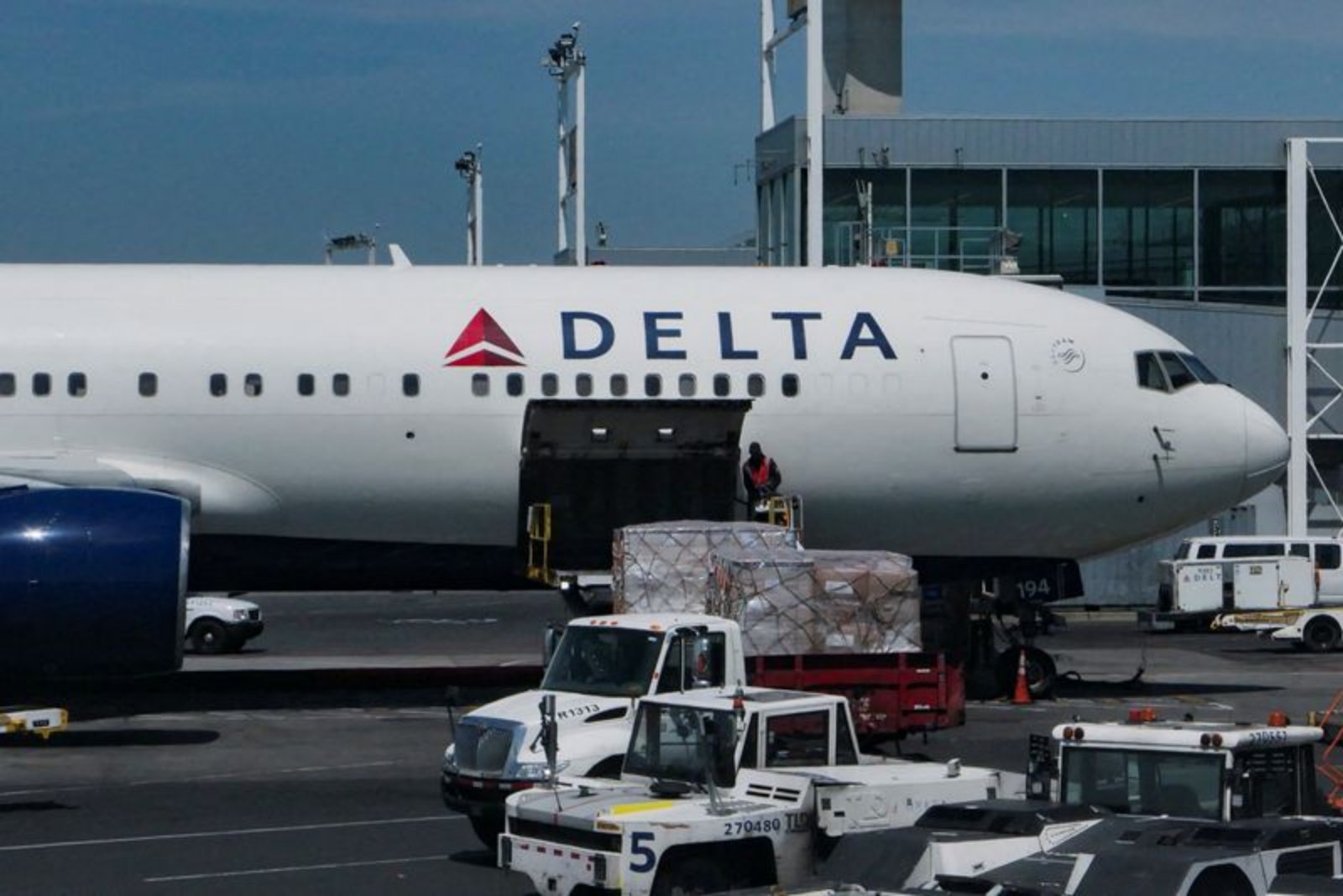
April 7 - Delta Air Lines announced on Tuesday a rise in fees for checked luggage on domestic flights and certain short-haul international services, a step the carrier said is intended to help offset soaring jet fuel costs tied to escalating tensions in the Middle East.
The change represents Delta's first increase to domestic checked-bag charges in two years and echoes recent moves by peers United Airlines and JetBlue Airways. Airlines globally have faced sharply higher fuel expenses that have elevated operating costs and squeezed profit margins after disruptions to the Strait of Hormuz, a vital oil shipping corridor.
Delta said fees for the first and second checked bags on bookings made on or after Wednesday will rise by $10 each, while the charge for a third checked bag will increase by $50. That will bring the fee for a first checked bag to $45, a second checked bag to $55, and a third to $200.
Delta noted that benefits tied to its frequent-flyer programs, premium fares and co-branded credit cards will remain unchanged, and there will be no modification to baggage fees on long-haul international routes.
The airline emphasized that, unlike some rivals, it has an owned-refinery buffer: a subsidiary-operated facility in Pennsylvania with capacity of about 190,000 barrels per day that provides nearly three-quarters of Delta's fuel needs. Despite that internal supply, the company remains exposed to spikes in crude oil prices.
The price environment for jet fuel has shifted dramatically. Jet fuel, which had averaged about $85 to $90 a barrel before U.S. and Israeli strikes on Iran in February, has climbed to around $209 per barrel globally, according to the International Air Transport Association. Those increases are linked in the airline industry to interruptions in shipments through the Strait of Hormuz.
Delta's fee adjustments come as carriers seek additional revenue levers to manage an operating-cost backdrop that has tightened margins across the industry. The carrier's specific baggage-fee increases mirror a broader pattern of airlines responding to elevated energy prices and the resulting cost pressures.
Impacted sectors: Airlines, travel services, and energy