
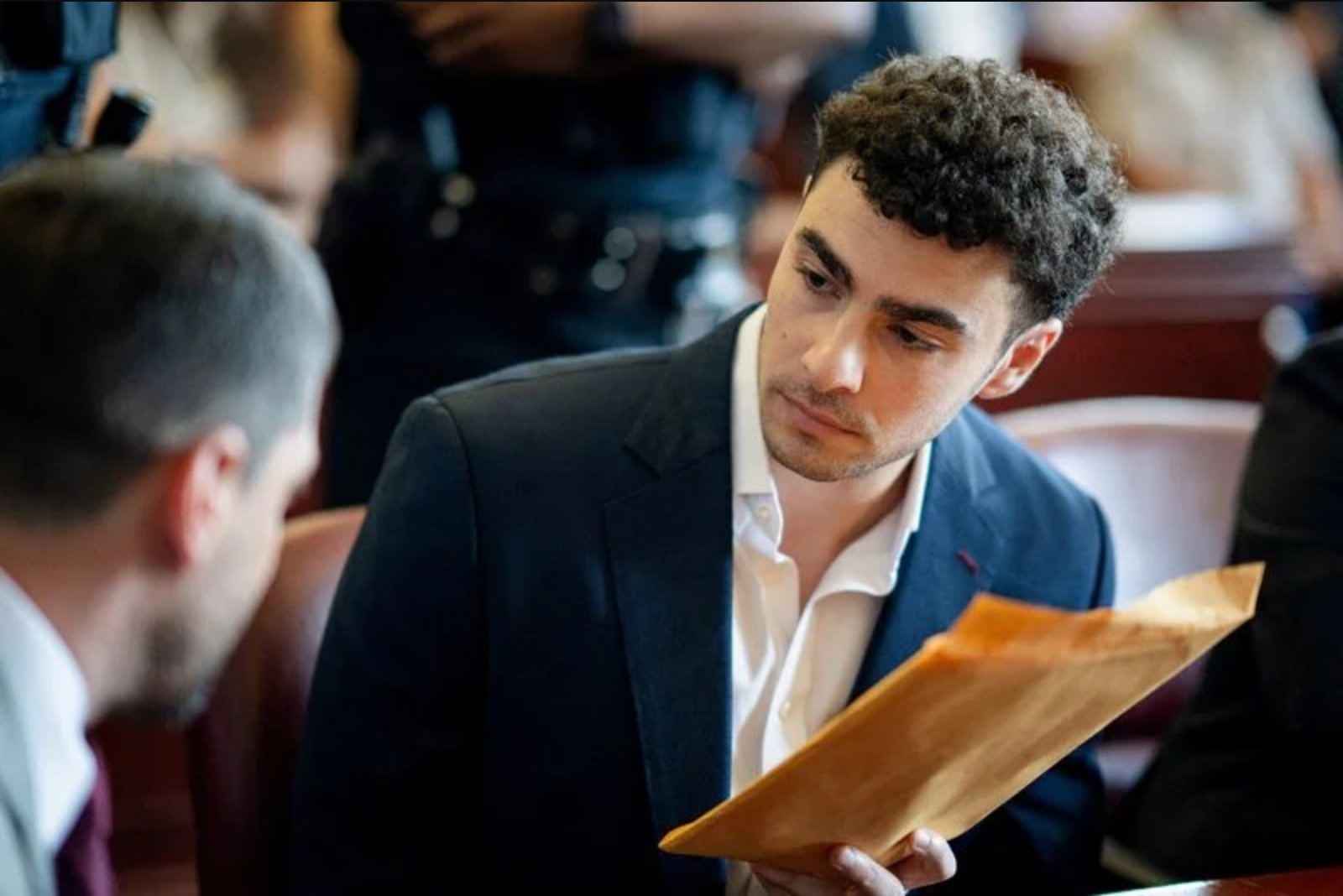
Luigi Mangione, who faces state murder, weapons and forgery charges over the December 2024 killing of UnitedHealthcare CEO Brian Thompson outside a Midtown hotel, is set to pursue a legal strategy that could lessen his exposure if jurors find he acted under an "extreme emotional disturbance," according to court filings and commentary from legal experts.
Defense attorneys signaled on Wednesday that they intend to seek a manslaughter instruction under New York law - a pathway that can allow jurors to reduce murder charges when a defendant is found to have lost control of their actions because of an extreme emotional state. But former Manhattan prosecutor Gary Galperin and others say the factual record disclosed to date may make that argument difficult to sustain before a jury.
Prosecutors contend Mangione executed the killing with careful preparation, including steps to disguise his identity, and that he led law enforcement on a five-day manhunt following the shooting. Those allegations, Galperin said, could undercut any claim that Mangione was not acting with deliberation.
"This is a strategic choice on his part to limit his exposure on conviction, and while legally viable, I think factually he has a high hurdle to convince a jury," Galperin said.
Mangione has pleaded not guilty to the state charges. His legal team and Manhattan District Attorney Alvin Bragg's office declined to comment on the unfolding defense strategy. A trial date is expected in September.
The killing drew broad condemnation from public officials and was widely discussed in public debate about rising healthcare costs and insurance industry practices. Prosecutors report they recovered a notebook from Mangione that contained criticism of the health insurance sector and a notation about "wack(ing)" an executive. Friends and social media posts cited in court filings describe Mangione as suffering from chronic back pain.
Under New York law, the extreme emotional disturbance defense differs from an insanity defense. The insanity standard requires a psychiatric diagnosis and proof that a defendant did not understand the nature or wrongfulness of their actions. By contrast, the emotional disturbance defense does not demand a full psychiatric diagnosis nor an admission of the act, but it does require evidence that the defendant acted out of an overwhelming emotional state and that there was a "reasonable explanation or excuse" for that state.
Legal precedent shows the emotional disturbance defense has succeeded in cases where defendants reacted to intense emotions such as sudden passion or trauma. Conversely, it has been rejected when evidence indicates planning and a calm, calculated demeanor, which legal analysts say appears to be the crux of the prosecution's case against Mangione.
New York Law School professor Anna Cominsky said Mangione's lawyers could try to convince jurors that the period immediately before the alleged shooting represented a sharp departure from his normal behavior, portraying it as an extended mental health crisis.
"They could argue this isn't normally what he did: sit around and talk about how corrupt the insurance industry is," Cominsky said.
Judge will decide whether to instruct jurors on the lesser manslaughter charge by first determining if Mangione has produced sufficient evidence for jurors to consider extreme emotional disturbance. If the judge permits that instruction and jurors accept the defense, a manslaughter verdict could spare Mangione a potential life sentence that a murder conviction would carry.
Observers note that public sentiment toward health insurers - often critical because of denied claims and perceived stubbornness on coverage - could influence juror sympathies. Galperin cautioned, however, that shared frustration with health insurance companies does not automatically translate into a legal justification for violence.
"Almost any one of us can relate to struggling with a health insurance company - who can't cite an example?" Galperin said. "But then the question becomes: would it be reasonable for you to lose self-control and go out and do what he's charged with doing?"
Court process and next steps
- A judge will first evaluate whether Mangione has met the evidentiary threshold for jurors to consider the extreme emotional disturbance defense.
- If the judge finds the threshold met, jurors could be instructed that they may reduce a murder charge to manslaughter if they find Mangione acted under an extreme emotional disturbance and that such disturbance had a reasonable explanation or excuse.
- Mangione remains charged with state murder, weapons and forgery counts and has pleaded not guilty; trial is expected to begin in September.
The factual issues the court will weigh include the alleged planning of the killing, steps taken to conceal identity, the five-day period before his capture, the notebook recovered by prosecutors, and personal history including reported chronic back pain. How jurors interpret those elements against the legal standard for extreme emotional disturbance will determine whether the defense has traction at trial.