
SpaceX has set its sights on a staggering $1.75 trillion valuation in a prospective initial public offering that could, if completed at the target, raise upwards of $75 billion. That headline number immediately raises questions about how such a price can be reconciled with standard market metrics, and what investors would be implicitly buying.
Under conventional Wall Street yardsticks, a $1.75 trillion market capitalization would catapult SpaceX into the top tier of U.S.-listed companies in terms of value. It would surpass long-established names such as Meta Platforms and Berkshire Hathaway and would sit close to the largest public companies by capitalization. The enthusiasm for an allocation of SpaceX stock, however, is apparent long before listing: private and secondary markets have been absorbing large sums and tolerating complex, opaque arrangements to secure shares ahead of the IPO.
At the center of the valuation case is Starlink, SpaceX’s low-Earth orbit satellite internet network, which company executives and investors describe as both profitable and rapidly expanding. Public figures cited indicate Starlink serves more than 10 million subscribers, and investors attribute roughly half to four-fifths of SpaceX’s revenue to the unit. Coupled with that is a launch business that, according to industry observers, has materially changed access to orbit thanks to reusable rockets and rapid cadence.
The operational scale is notable. Falcon 9, the reusable launcher that first achieved a controlled recovery in December 2015, completed 165 launches in 2025, marking a new annual record. That tempo places SpaceX in a unique position relative to rivals and customers that face constrained launch capacity.
Investors and analysts also point to the founder’s track record and the optionality embedded in other divisions as rationale for the premium. Elon Musk’s history of building disruptive enterprises gives some market participants confidence that nascent or loss-making initiatives like the Starship heavy-lift program, an AI-focused business branded xAI, and plans for a large constellation of data-center satellites could prove valuable in time.
"It has almost no comparable listed peer to benchmark a valuation off of and would likely come at a significant premium to anything else that is listed in the space tech sector, given its size and market leadership," said Samuel Kerr, global head of equity capital markets at Mergermarket. Another investor who has exposure echoed the mix of proven cash-generating businesses and optionality: "The launch business and the Starlink business are proven, here and now. xAI is about optionality," said Daniel Hanson, a portfolio manager at Neuberger’s Quality Equity Fund, which is an existing investor.
But when the math is applied, the multiples implied by a $1.75 trillion market value look elevated even under relatively conservative modelling. Reuters reported that SpaceX posted approximately $8 billion in EBITDA and roughly $15 billion to $16 billion in revenue for 2025. Public company comparators typically trade on price-to-revenue and price-to-EBITDA multiples, so a simple exercise is to apply standard multiples to the privately reported results.
To construct a comparison and intentionally bias the multiples toward the low side, Reuters assumed that cash flow and revenue would double in 2026 relative to the reported 2025 figures. Even with that aggressive growth assumption, a $1.75 trillion valuation translates to a price-to-revenue multiple near 56 and a price-to-EBITDA multiple near 109. Those are dramatic ratios by the standards of most fast-growing technology and industrial names.
For context, Tesla - another Musk-led company and often referenced for comparative valuation - is priced at roughly 12 times expected revenue and 79 times EBITDA in the same framework. Palantir, which has seen its shares rally in recent years on optimism around AI, sits at about 43 times revenue and 75 times EBITDA after a strong run. The implication is that at $1.75 trillion, SpaceX would be materially more richly priced on these traditional metrics than even the highest multiple listed peers.
Market strategists point out the sensitivity of those multiples to revenue trajectory. "Starlink is the only reason this valuation is defensible," said Shay Boloor, chief market strategist at Futurum Equities, noting that subscriber momentum is the critical pillar underpinning any defense of such high multiples.
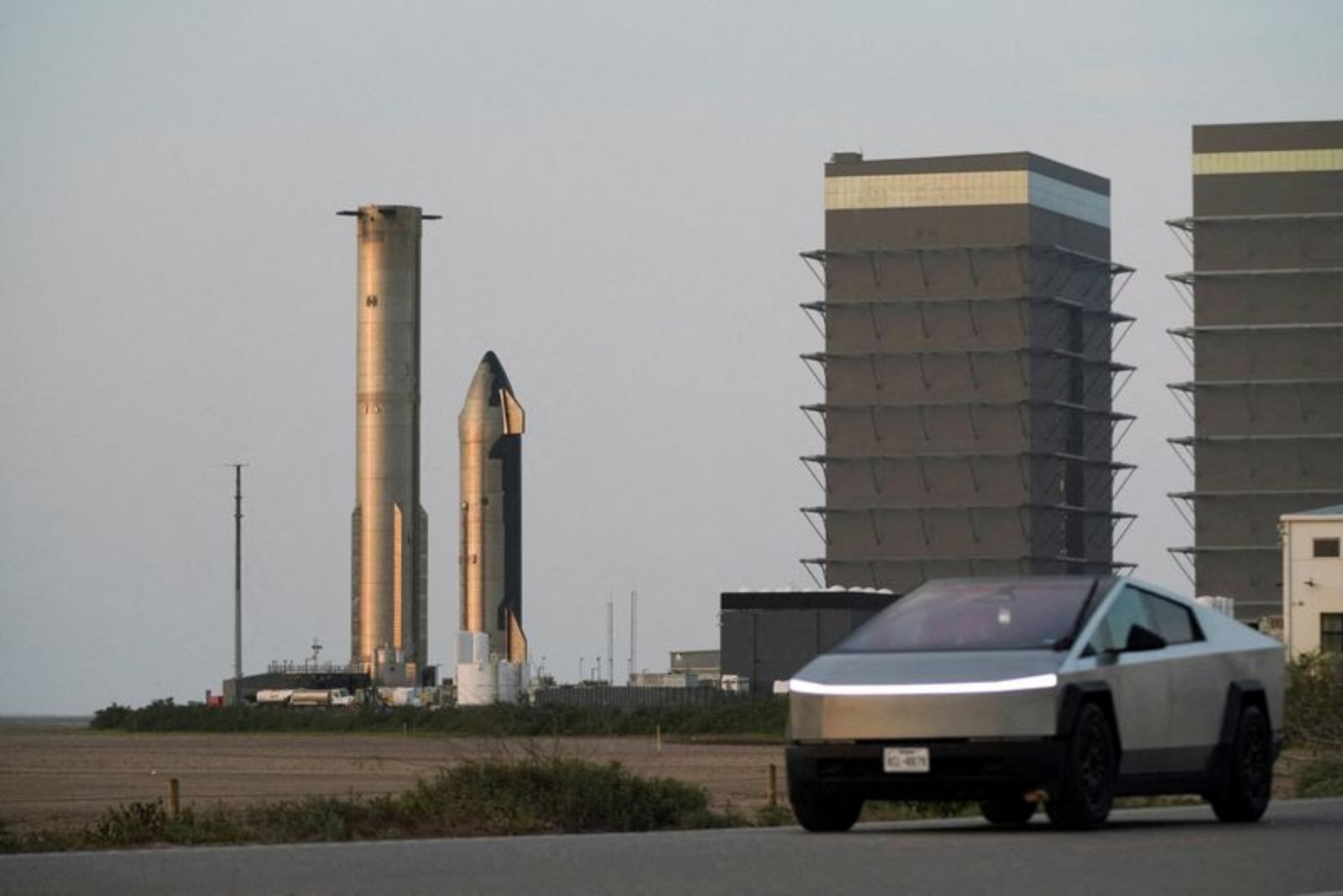
There are also notable execution risks and unanswered timing questions embedded in the headline valuation. Several of SpaceX’s most ambitious plans remain incomplete or loss-making. The Starship heavy-launch vehicle, intended for deep-space missions including Moon and Mars trajectories, is delayed and not yet a revenue-producing product. Plans to deploy as many as one million data-center satellites and to expand Starlink services directly to cellphones are stated goals; market watchers emphasize the need for observable progress on those fronts.
PitchBook analyst Franco Granda summed up the gating items succinctly: to justify a valuation at the levels being discussed, "investors will need to keep strict tabs on the timing of Starship coming to market and on the ramp-up of Starlink service direct to cellphones." Those milestones, if achieved on timetable, would materially affect the revenue and cash-flow outlook. If they are delayed or do not scale as expected, the valuation will remain harder to defend.
The private market provides at least one recent valuation anchor. In the February merger between SpaceX and xAI, the combined implicit valuations placed SpaceX at $1 trillion and the Grok chatbot developer at $250 billion. That transaction has given investors a precedent for valuing the combined group, and trading in secondary venues offers an interim market signal. One private trading venue currently values SpaceX at about $1.54 trillion on its platform.
Demand dynamics in private trading have been intense. "SpaceX is consistently one of the most actively traded names on our platform because there’s nothing else like it in the private markets today," said Greg Martin, co-founder at Rainmaker Securities, a platform for trading pre-IPO shares. He added that demand frequently outstrips supply, even when broader secondary-market activity softens.
For market participants considering the public listing, the bottom line is that the valuation debate will hinge on a few observable metrics: Starlink subscriber growth and profitability, the cadence and economics of launches, and the pace at which higher-risk ventures such as Starship and data-center satellites convert into scalable, revenue-producing operations. Until those developments are clearer, the multiples implied by a $1.75 trillion price tag will remain at odds with typical listed-company comparators.
Investors who plan to assess the potential IPO will be weighing a mix of currently profitable businesses and speculative long-term bets, all priced at levels that assume substantial execution and expansion. How the market ultimately prices that mix will determine whether the larger valuation proves sustainable over time.