
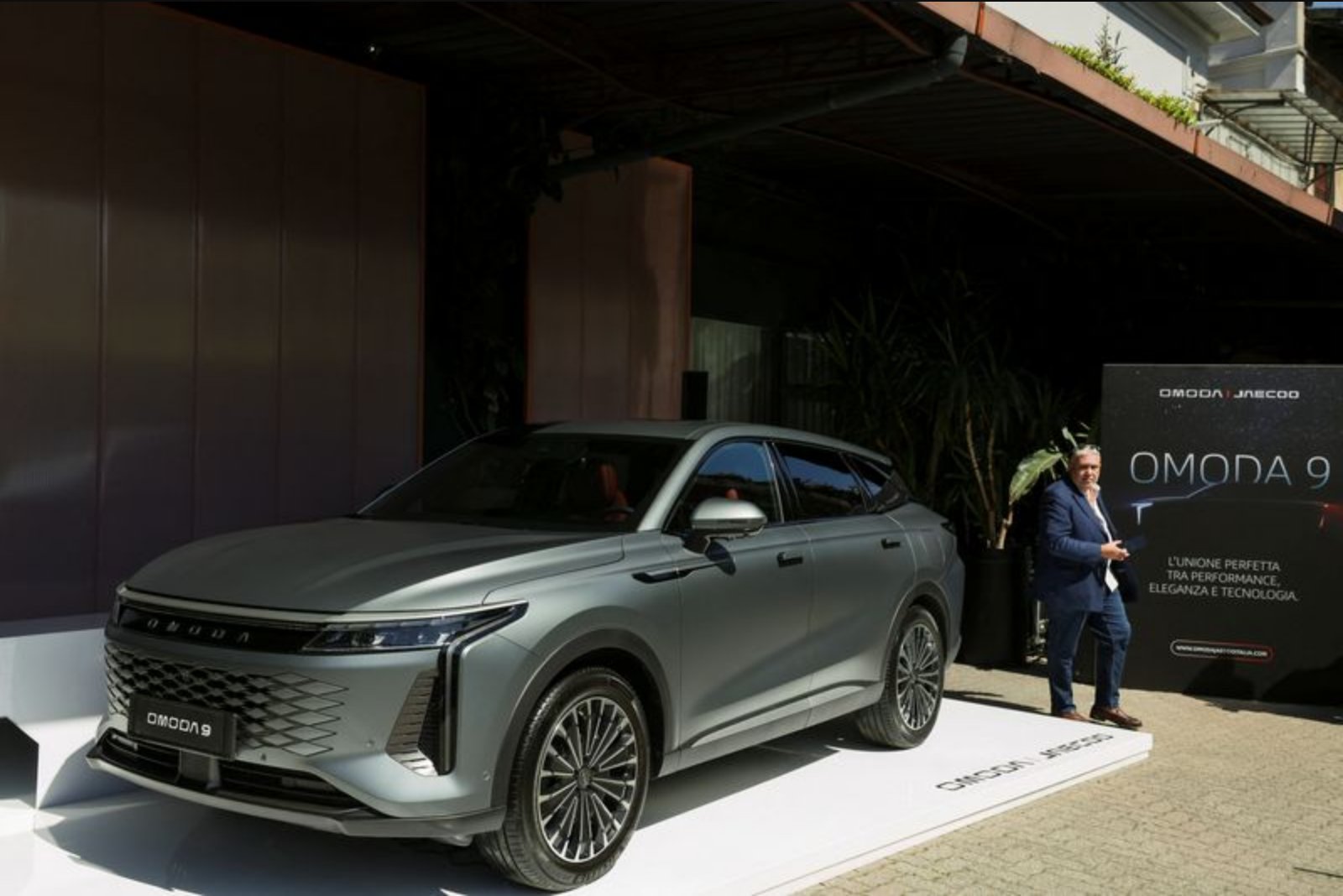
PARIS, April 12 - Chery Automobile is seeking to broaden its manufacturing footprint in Europe by using production capacity already in place at partner factories, senior company executives said on the sidelines of a product launch in Paris.
"The company is looking for other production capacities in Europe," Lionel French Keogh, Chery's chief commercial officer for France, told reporters at the launch of the Omoda and Jaecoo brands late on Friday.
Chery Chairman Yin Tongyue said the automaker prefers accessing existing assembly capacity rather than committing to the construction of a new plant. "These processes require time and dedication but mainly setting up the right local partnerships," Yin said. "I really hope we will have news to share with you in the coming months." He declined to identify which automakers the company is in talks with or how many countries are under consideration, although he confirmed France is among the potential locations.
Chery has expanded rapidly since beginning European sales in 2023, mirroring growth seen by other Chinese competitors in the market. According to data cited by the company, European sales rose to 120,147 vehicles last year from 17,035 in 2024, an almost six-fold increase.
The automaker has already made a tangible investment on the continent. Through a joint venture with Ebro, Chery has invested in a former Nissan assembly plant in Barcelona. The company expects that facility to reach an annual production level of 200,000 units by 2029.
Executives said the Barcelona plant's output will not be sufficient to cover the company's projected European demand, nor will it alone address European Union tariffs on Chinese electric vehicles or comply fully with evolving European local-content requirements. Those factors are driving Chery's strategy to secure additional capacity via partnerships with existing manufacturers.
France remains one of the last major European markets where Chery is rolling out new models. The Jaecoo and Omoda ranges are being introduced there, and the company plans to launch a model under its Chery brand in the fourth quarter. Executives also said Chery may bring a small electric SUV to France by the end of the year. Separately, the company has announced plans to introduce its Lepas brand in Europe.
On a global scale, Chery reported almost 7% growth in worldwide sales last year to reach 2.8 million vehicles, with markets outside China accounting for more than 47% of total sales.
Summary
Chery is actively seeking existing manufacturing capacity across Europe through partnerships with other automakers in order to expand production without building new plants. The company has invested in a Barcelona facility with a 200,000-unit annual target by 2029 but says that additional local capacity will be required to meet demand and regulatory requirements in Europe. France is among the countries being considered, and product rollouts there will continue through the year.
Key points
- Chery prefers to use existing European production capacity via partnerships rather than build a new assembly plant - impact on automotive manufacturing and supply chains.
- Barcelona JV with Ebro targets 200,000 units annually by 2029, but executives say more capacity will be needed to meet demand and local-content rules - impact on manufacturing, trade, and logistics.
- Model launches in France include Jaecoo and Omoda, with an additional Chery-branded model slated for Q4 and a possible small electric SUV by year-end - impact on European auto retail and EV markets.
Risks and uncertainties
- Negotiations and partner selection remain unresolved - Chery declined to name automakers it is speaking with, creating uncertainty about the timing and scale of any new European production arrangements; this affects the automotive manufacturing sector.
- Existing Barcelona capacity will not fully meet projected demand nor resolve issues tied to EU tariffs and local-content requirements - trade policy and regulatory risks for automakers operating in Europe.
- Execution timelines for setting up local partnerships and converting capacity are unclear - potential impacts on supply chains, production ramp-up, and dealer inventory levels in European markets.