
Overview
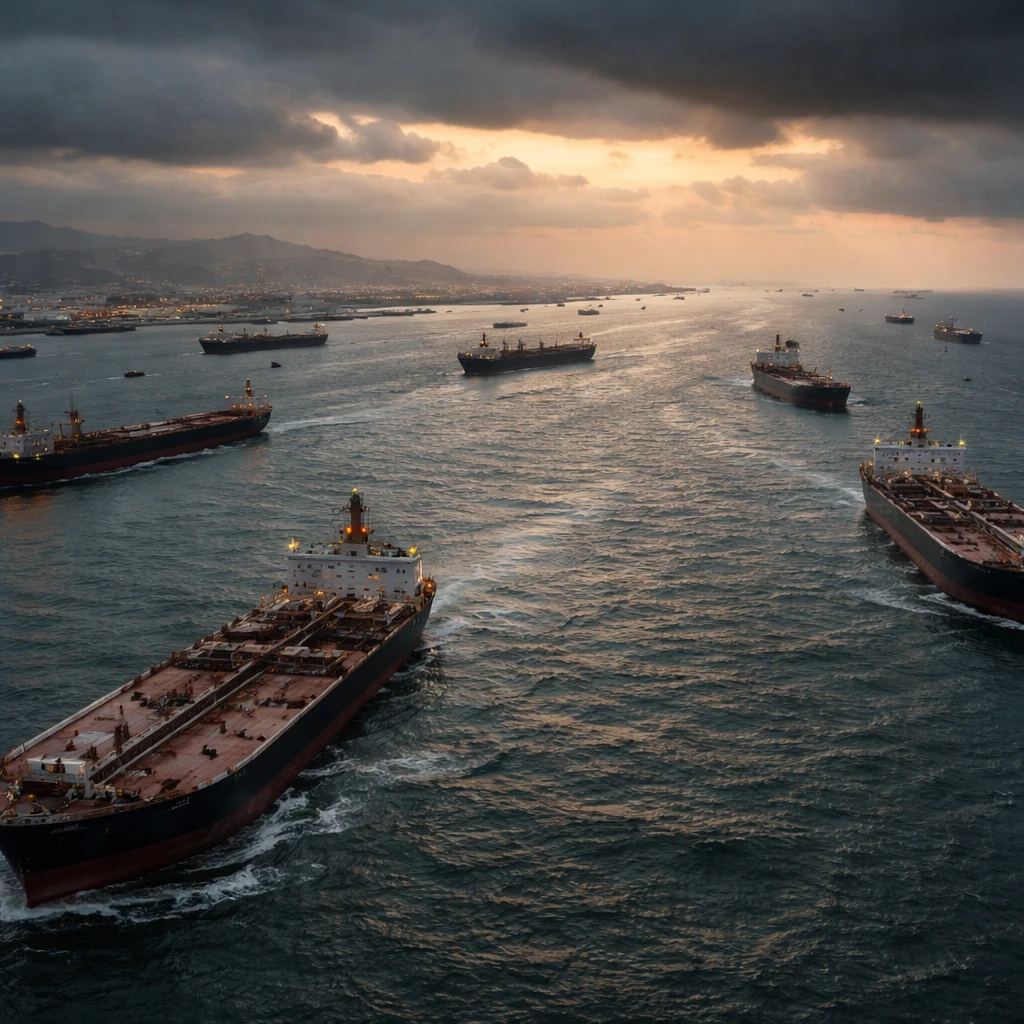
Barclays reports that oil exports transiting the Strait of Hormuz have fallen to 0.4 million barrels per day on a four-week average as of March 30, a decline of 17.2 mb/d year-over-year. The strait previously accounted for roughly 25% of global seaborne oil trade in the prior year. As the Iran conflict endures, flows through this key chokepoint have been reduced to minimal levels.
On-ship inventories and week-to-week movement
There are approximately 175 million barrels of oil and refined products currently sitting on ships in the Middle East Gulf, a figure Barclays says is down 10 mb/d on a week-over-week basis. For context, before the conflict escalated, exports moving through the Strait of Hormuz were measured at 18.7 mb/d on February 22, representing an increase of 1.2 mb/d year-over-year at that time.
Alternative routes and net disruption
Shipments using alternative ports that bypass the strait have increased. Combined exports from Yanbu and Fujairah reached 6 mb/d on a four-week average basis as of March 30, up 2.7 mb/d year-over-year, compared with 3.3 mb/d on February 22. Taking these rerouted flows into account, Barclays calculates a net disruption of roughly 14.5 mb/d.
Market reaction
The tightened supply picture has had an immediate effect on futures markets. Barclays notes the prompt 3-month calendar spread on the WTI futures curve rose to slightly over 100% on a three-day moving average basis at the end of last week. That level exceeds the roughly 45% spike recorded immediately after Russia's invasion of Ukraine, according to the bank's data.
Forward pricing and scenarios
Forward-implied pricing also reflects elevated risk. The forwards-implied 2026 Brent average was at $88 per barrel at the end of last week, while Barclays' $85 per barrel base case assumes that the Strait of Hormuz returns to normal operations by early April. Barclays cautions that if normalization is delayed until the end of May, the market could reprice to $110 per barrel.
Geopolitical context
Several US allies are advocating for a ceasefire, but Barclays observes that public rhetoric linked to the conflict remains elevated. The bank's calculations and price scenarios incorporate the current state of trade flows, on-ship inventories, and forward pricing without assuming further developments beyond what is already reflected in the data.
Data points and calculations in this report follow Barclays' assessments of export flows, on-ship inventories, rerouted shipments, and futures pricing as of the dates cited above.