
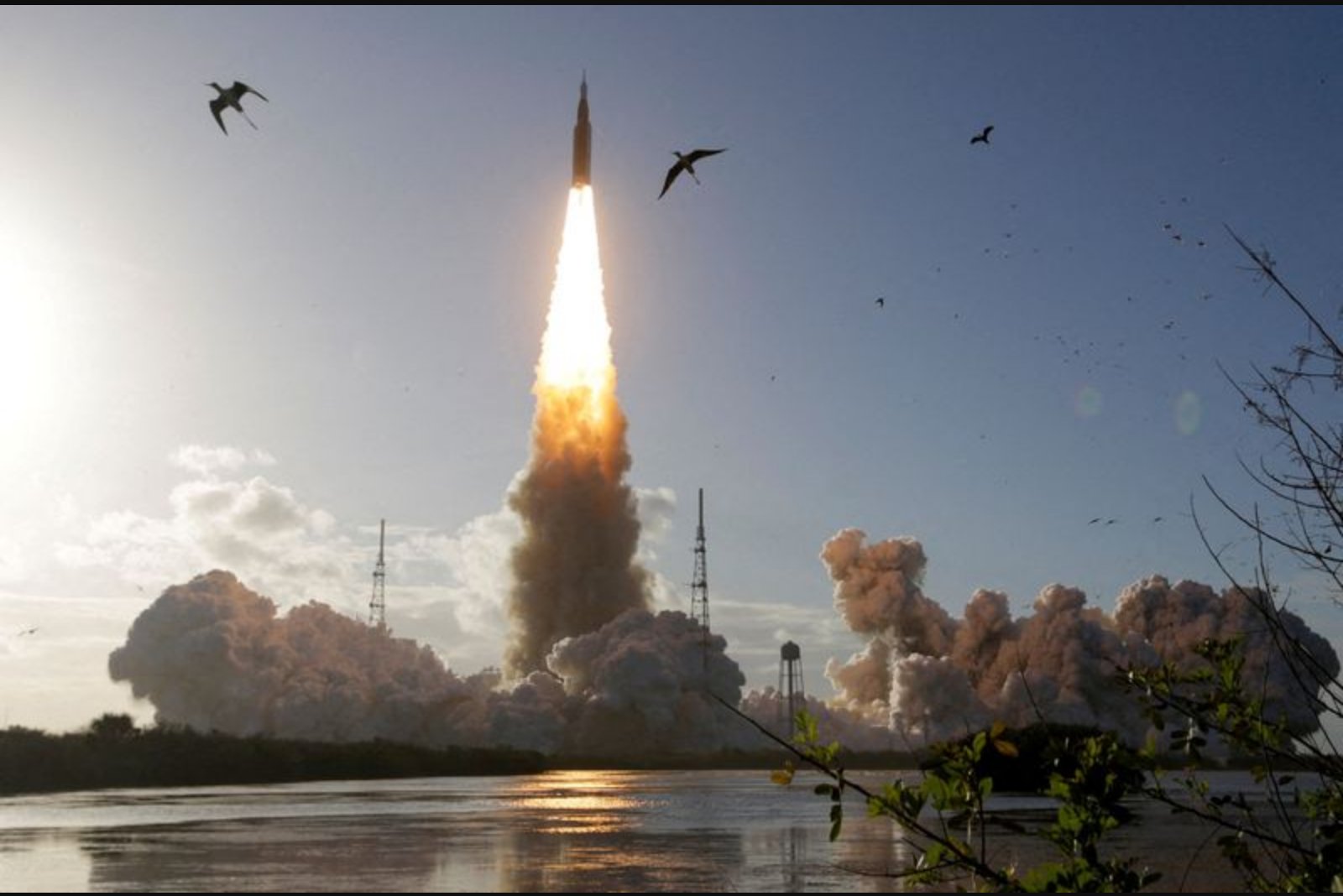
NASA’s Artemis II mission - the first crewed trip to the moon in more than fifty years - has captured the attention of Americans from a wide range of political backgrounds, producing a rare shared reaction of wonder and pride. The mission’s 10-day flight, intended as a key dress rehearsal for a planned attempt later this decade to return astronauts to the lunar surface for the first time since Apollo 17 in late 1972, is drawing intense public and media interest as it approaches its scheduled conclusion with a Pacific Ocean splashdown off California.
Public fascination with the four astronauts who traveled to the far side of the moon has manifested in numerous ways. There have been rocket-launch watch parties in communities across the country, special lesson plans in classrooms, increased attendance at planetariums, and a noticeable uptick in consumer demand for NASA- and Artemis-branded apparel and novelty items. The crew’s return to Earth is expected to command attention similar to that paid to the April 1 launch of the Orion capsule atop the Space Launch System rocket from Cape Canaveral, Florida.
Crowds, classrooms and collective attention
At Chicago’s Adler Planetarium, senior astronomer Gaza Gyuk said hundreds of visitors came to see the launch and learn more about the mission. "Everyone can be excited about humans extending their capabilities, learning new things, and doing so in a positive, peaceful way," he said, describing how the display of human achievement resonated across different audiences.
Educators have been weaving Artemis into curricula. At the STEM Lab public school in Northglenn, Colorado, engineering teacher Erin Brabant lined a hallway with visuals of the SLS rocket, images of the astronauts and a mission timeline, and tasked students with constructing models of lunar landers. Brabant observed a tangible change in classroom focus when Artemis was discussed: students who had been distracted stopped their side conversations and began asking questions.
In Pilot Mountain, North Carolina, a group of 15 Girl Scouts aged 5 to 11 watched the launch live during a troop meeting. Their leader, Heather Willard, said the girls were enthralled, noting that the launch drew attention to mission specialist Christina Koch, a former Girl Scout. The visibility of the crew members has also carried symbolic significance. Pilot Victor Glover is identified as the first Black astronaut and Christina Koch as the first woman ever sent to the moon, a composition that educators say has particular resonance for students of color and for girls considering engineering careers.
Community viewing and shared moments
Local launch gatherings have offered brief respites from broader national concerns. In the Philadelphia suburb of Elkins Park, astronomy enthusiast Hector Ybe, 38, organized an Artemis launch party that attracted about 225 people, including families and multi-generational attendees. Ybe noted that for the duration of the viewing, conversations centered on space rather than on events elsewhere, and participants represented a wide range of ethnic, religious and racial backgrounds. He described scenes of young children in spacesuit outfits marveling at the rocket lift-off while older attendees recalled watching the first moon landing in 1969.
Retail response and fan-created goods
Merchandise tied to the mission has appeared across official and independent channels. Retailers and creators have been offering a selection of Artemis-related products, from officially licensed apparel to custom accessories that reinterpret mission imagery. One business, Rock 'Em Socks, listed Artemis II socks for $14.99 a pair, featuring the SLS rocket set against a starry sky. NASA’s own merchandising included items such as an "I AM ARTEMIS" baseball hat, a mission pin, a women’s bomber jacket and playing cards.
On the online marketplace Etsy, independent sellers promoted keychains, posters and canvas art inspired by Artemis II, as well as a made-to-order, 3D-printed pair of "dangle and drop" earrings based on the gumdrop-shaped Orion capsule priced at $135. These products reflect a natural merchandising response to heightened public engagement with the mission.
Public opinion and the search for shared narratives
Polling conducted during the mission indicates broad support. A three-day Reuters/Ipsos poll carried out while Artemis II was underway found that roughly 69% of Americans said they get excited about space exploration, and about 80% held a favorable view of NASA. The poll also showed that 69% of respondents considered it important to return astronauts to the moon. These majority views included large shares of both major U.S. political parties.
The mission has taken place amid political and social upheaval and a U.S. military conflict that the article says has proven unpopular domestically. That context helps explain why Artemis has attracted attention as both a distraction from contentious news and an affirmation of scientific and technical accomplishment.
Gyuk pointed to images of Earth taken by the Artemis crew that show oceans and continents without visible boundaries, noting that such views can reinforce a sense of shared human experience. He said these visuals help people "realize that we’re all in this together," a sentiment that the mission appears to have fostered among diverse audiences.
What the mission represents now
As a rehearsal flight, Artemis II is not the final step in the agency’s lunar ambitions but a preparatory mission toward future operations. Its immediate impact has been cultural and educational as much as technical, producing moments of civic togetherness, renewed classroom engagement with STEM subjects and a short-term retail response. Whether those effects persist beyond the mission’s conclusion is not determined here; the immediate outcome is a wave of public interest that crosses familiar political and generational lines.
Across planetariums, schools, community events and online marketplaces, Artemis II has prompted people to gather, learn and shop in ways that underscore curiosity about human spaceflight and the technological efforts behind it. For now, the mission’s return to Earth is set to close a chapter that has briefly united a politically divided public in wonder and attention.