
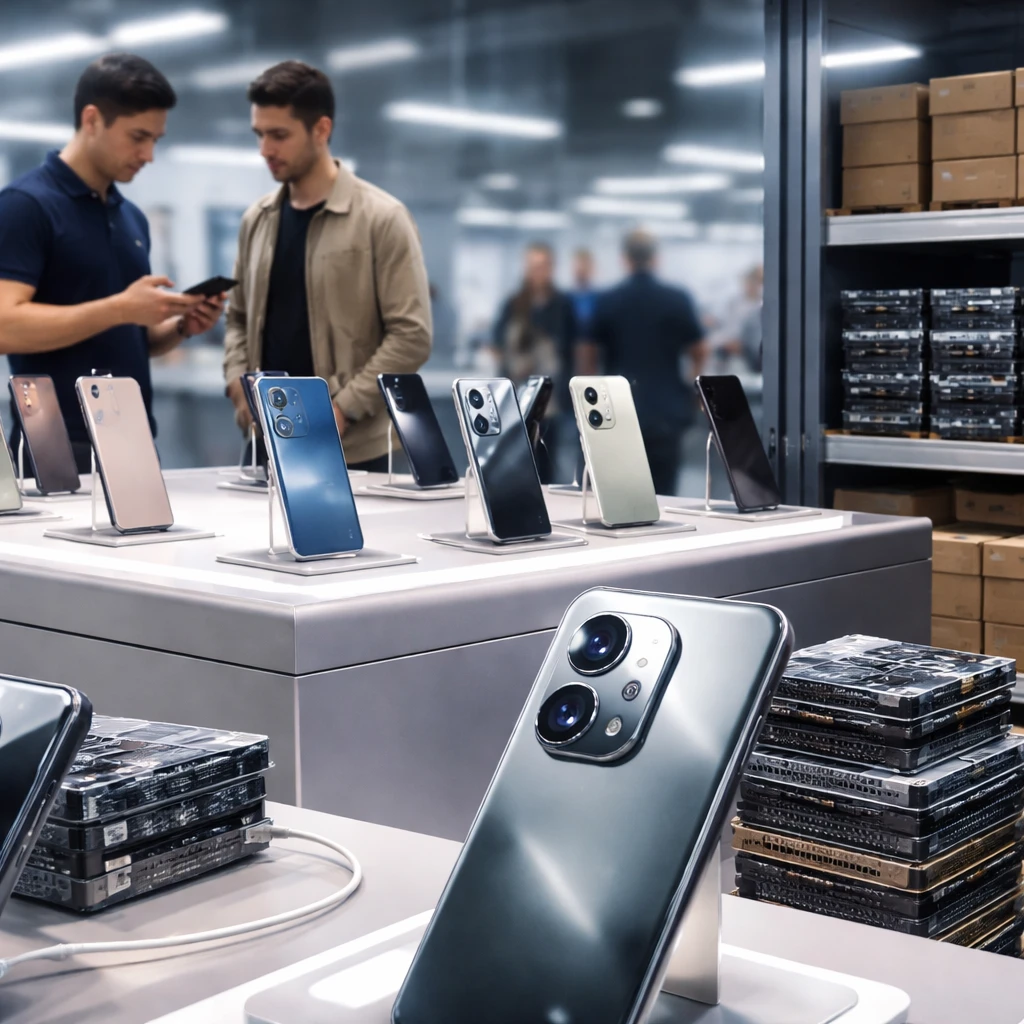
Global smartphone shipments fell 6% year-over-year in the first quarter of 2026, according to preliminary estimates from Counterpoint Research’s Market Monitor. The research group attributed the decline to shortages of DRAM and NAND memory components, which disrupted supply chains and pushed up manufacturing costs.
Apple rose to first place in the quarterly ranking for the first time, taking 21% of the market and posting 5% shipment growth versus the same period a year earlier. The company’s performance was underpinned by strong demand for the iPhone 17 series, an expanded trade-in push and tighter supply chain management. Apple’s gains were notably stronger in China, India and Japan.
Samsung remained in close contention with 20% market share, but its shipments fell 6% in the quarter. The company delayed the Galaxy S26 launch, and continued weakness in entry-level devices weighed on overall volumes. Early demand for the S26 line was encouraging, particularly for the Ultra variant, which registered the highest interest among the new models. In response to market conditions, Samsung trimmed its entry-level lineup and increased starting prices.
Xiaomi retained third place with 13% of the market, but its shipments dropped 13%. The firm’s exposure to the price-sensitive entry-level segment made it vulnerable to rising memory costs, which had a disproportionate impact on lower-priced models. Still, the Xiaomi 17 series performed well in China’s premium tier.
OPPO and vivo held the fourth and fifth positions with 11% and 8% market share, respectively. Vivo posted a 2% decline but maintained a leadership position in India through a focused mid-range portfolio, while OPPO saw solid traction in the entry-level segment from its A5 series.
Two smaller players stood out for growth: Google’s shipments rose 14% and Nothing grew 25%. Counterpoint cited expanding distribution footprints and product differentiation as drivers. Google’s Pixel series gained share in mature markets by emphasizing AI-enabled features and computational photography, and Nothing’s Phone (4a) drew a strong consumer response.
"This decline in shipments is primarily driven by memory players prioritizing AI data centers over consumer electronics, leaving OEMs with compressed margins and forcing them to pass increased Bills of Material costs directly to the consumer," said Senior Analyst Shilpi Jain at Counterpoint Research.
Beyond component shortages, rising energy bills, higher logistics costs and tensions in the Middle East contributed to subdued consumer demand and increased interest in refurbished devices. Counterpoint noted that price-sensitive segments suffered the most from the memory shortage and rising component prices, while premium manufacturers showed relative resilience.
Looking ahead, Counterpoint’s preliminary outlook for 2026 is subdued. The memory shortfall could extend until late 2027, the research group warned, prompting manufacturers to favor value over volume. Expected responses include eliminating low-margin models and shifting emphasis toward software and services as key growth levers rather than relying solely on hardware volume.
Market implications
- Memory suppliers shifting capacity to AI data centers has tightened availability for consumer electronics, compressing OEM margins.
- Price-sensitive segments face the steepest impact; premium-tier devices remain more insulated.
- Manufacturers are likely to reweight portfolios toward higher-margin models and software-anchored revenue streams.