
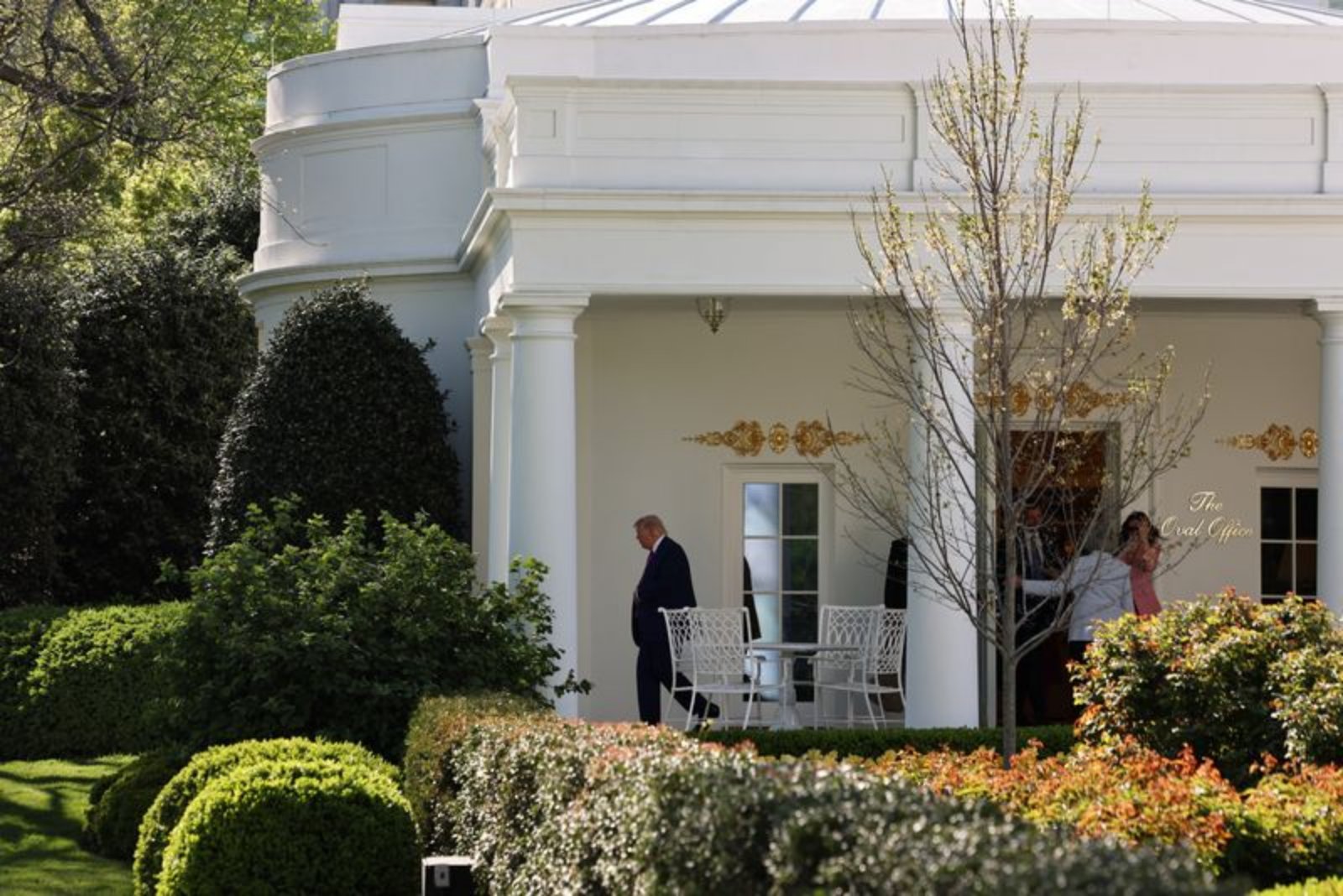
President Donald Trump’s profanity-laced threats to wipe out Iran’s civilization have prompted some Democratic lawmakers to raise the possibility of invoking the 25th Amendment to the U.S. Constitution as a means of removing him from the presidency. That course of action faces significant procedural requirements and political obstacles, particularly given Republican control of both chambers of Congress and strong support for the president among GOP voters.
What the amendment is and why it exists
The 25th Amendment was ratified in 1967 to provide clarity on presidential succession and to ensure continuity of executive leadership. It was adopted following the shock of President John F. Kennedy’s assassination in 1963, and it addressed gaps in the Constitution’s original succession provisions, including how to handle a vacancy in the vice presidency. According to the Congressional Research Service, between 1789 and 1967 the vice presidency was vacant for more than 37 years cumulatively because of death, resignation, or succession to the presidency.
Sections and past use
The amendment contains several sections. Section 3, which allows a president to temporarily transfer power if he is unable to discharge his duties, has been used in practice. Presidents have invoked Section 3 for planned medical procedures; the article notes the example in 2021 when then-President Joe Biden underwent a colonoscopy.
By contrast, Section 4 - which provides for the involuntary removal of a president from the powers and duties of the office - has never been invoked. Section 4 permits the vice president and a majority of the president’s cabinet, or alternatively the vice president and a majority of another body that Congress may designate, to declare the president unable to perform the office’s responsibilities. If the president disputes that declaration, Congress must convene within 48 hours to decide the matter, and two-thirds majorities in both the Senate and the House of Representatives must affirm that the president is incapable. If those supermajorities are not achieved, the president resumes their duties.
Attempts or calls to use the amendment
Calls to use the amendment are not new. After the January 6, 2021 attack on the U.S. Capitol, some Democrats including then-Senate Democratic Leader Chuck Schumer and then-House Speaker Nancy Pelosi urged then-Vice President Mike Pence to invoke the 25th Amendment. Those calls did not result in action.
Separately, Trump was impeached twice by the Democratic-majority House of Representatives - first over charges related to withholding aid to Ukraine, and later over the Capitol riot - but those impeachments did not produce convictions in the Republican-led Senate because too few Republican senators voted to convict on either occasion.
The article notes that Trump was elected to a second term in November 2024, winning 312 Electoral College votes compared with 226 for Biden’s vice president, Kamala Harris.
Practical and political barriers
Experts cited in the piece emphasize the difficulty of using the 25th Amendment to remove a sitting president without major defections within the president’s own party. Scott Anderson, a senior fellow at the Brookings Institution, is quoted as saying an attempt to use the amendment would fail without a massive Republican defection because the measure ultimately requires the approval of two-thirds majorities in both chambers of Congress. "It’s a political no-go," he said. The article also notes that Republicans hold slim majorities in both the Senate and the House, underscoring the scale of defections that would be necessary.
Political calculations for Democrats
The debate has political risks for Democrats as well. Some 82% of Republicans are reported to be satisfied with the president’s performance overall, and efforts to remove him could carry potential political peril for Democrats who previously pursued two impeachments that did not lead to convictions. House Democrats scheduled a members-only briefing on Friday focused on "Trump administration accountability" and the 25th Amendment, even as they aim to direct public attention toward policy issues in advance of the midterm elections, such as promoting job growth, addressing inflation, and expanding childcare availability.
Representative Madeleine Dean of Pennsylvania is quoted at a news conference saying: "We are in the minority. So bringing forward impeachment right now, while he is guilty of a litany of high crimes and misdemeanors, I don’t think is the best use of our time."
Republican House Speaker Mike Johnson, described in the article as a close Trump ally, criticized Democrats’ focus on the issue in a statement. He said: "Congressional Democrats have no message, no vision, and no leadership, and they are offering nothing to the American people except an irrational hatred of President Donald Trump," Johnson said.
Where things stand
In short, while recent statements by the president have prompted renewed discussion about the constitutional mechanism for removing a president on grounds of incapacity or inability to discharge the office’s duties, the procedural path for involuntary removal under Section 4 of the 25th Amendment has never been tested and would require extraordinary bipartisan defections and supermajority votes in Congress to succeed.
Note: This article presents the facts and statements reported regarding the 25th Amendment and related political developments as described above.