
Markets at a glance
Futures tied to the major U.S. equity benchmarks traded higher on Thursday as investors parsed a Federal Reserve rate decision delivered under the leadership of newly appointed Chair Kevin Warsh and digested the signing of an agreement intended to end the conflict between the United States and Iran. By 03:01 ET (07:01 GMT), contracts on the Dow were up about 298 points, or 0.6%, S&P 500 futures were higher by 63 points, or 0.8%, and Nasdaq 100 futures advanced roughly 412 points, or 1.4%.
Those early gains came after Wall Street's main indexes fell in the prior session, pressured by a rise in government bond yields following the Fed's policy announcement. On Wednesday, the Dow Jones Industrial Average dropped 507 points, or 1.0%, the S&P 500 fell 92 points, or 1.2%, and the Nasdaq Composite declined 355 points, or 1.3%. In individual equity moves, shares of SpaceX fell 4.95%, pausing a sharp rally that followed its record-breaking public debut last week.
1. Futures and recent market moves
Stock index futures opened with modest gains as market participants evaluated the Fed's messaging and the unexpected diplomatic development that would end the U.S.-Iran war. The reversal in oil-market sentiment following the signing of a memorandum of understanding between Washington and Tehran appeared to relieve some of the immediate energy-driven inflationary pressure that had been weighing on sentiment.
Still, the prior session's declines reflected investor caution after yields on government debt ticked up in the wake of the Fed's statement. The combination of higher yields and a less dovish central bank posture contributed to the pullback across large-cap and technology-heavy indexes.
2. Warsh outlines operational changes, Fed keeps rates steady
At his first policy meeting as chair, Kevin Warsh announced that interest rates would remain unchanged. Alongside that decision, he unveiled plans to reorganize aspects of the Fed's work, announcing five task forces that will review areas ranging from the bank's communications strategy and its approach to inflation to the quality and role of data sources and employment analysis.
The policy statement released with the decision was markedly shorter than recent versions. The document totaled 132 words - a reduction of more than 300 words compared with the April statement - and struck a markedly different tone by concentrating on the Fed's objective to "deliver price stability." The revised language omitted any explicit reference to pursuing maximum employment as an equal and explicit goal in the statement's wording.
That narrowing of the policy statement, together with the Fed's updated projection -- a so-called dot plot showing nine officials forecasting at least one rate increase this year, compared with none in March's projection -- led market participants to interpret the message as a tilt toward combating inflation. The shift also appeared to temper expectations that the Fed under Warsh would move quickly to lower borrowing costs, despite public comments from President Donald Trump suggesting he expected the chair to cut rates.
Some economists and strategists read the combination of shorter guidance and the dot plot as an opening for sooner-than-previously-anticipated tightening. Stephen Brown, Chief North America Economist at Capital Economics, said in a note that the Fed had left the possibility of a "hike as soon as September."
3. U.S.-Iran memorandum of understanding and energy market effects
Fueling the Fed's shift toward a somewhat more hawkish stance had been the extended U.S.-Iran hostilities, which included a joint U.S.-Israeli campaign and an effective closure of the Strait of Hormuz at the peak of the conflict. That waterway had been a principal route for crude oil and liquefied natural gas, accounting for roughly a fifth of global oil and LNG flows before the war began in late February. Its operational disruption produced supply shortages and pushed energy prices higher, raising concerns about rising inflation.
Those inflationary concerns eased after officials from Washington and Tehran signed a memorandum of understanding that would halt the fighting, according to media reports that cited U.S. readings of the accord. The deal also contemplates the reopening of the Strait of Hormuz once the U.S. lifts sanctions on Iranian oil exports.
The agreement was signed by President Donald Trump at a dinner in France's Versailles palace on Wednesday; Iran's President Masoud Pezeshkian signed on behalf of Tehran, the state-run IRNA news agency reported. Trump framed the move as an effort to avoid what he described as an "economic catastrophe," and said he wanted to prevent comparisons to former President Herbert Hoover. The signing took place ahead of a planned formal ceremony in Switzerland that had been scheduled for Friday, the timing of which is now uncertain. A U.S. official told reporters that nuclear negotiations would take place in Switzerland from Friday to Sunday.
Despite the ceasefire accord, outstanding issues remain, particularly around Iran's nuclear program, which the article noted still needs to be resolved. The U.S. president also warned that the United States could resume attacks, an element that underscores remaining tensions even as the memorandum aims to halt active hostilities.
4. Oil prices retreat but remain elevated
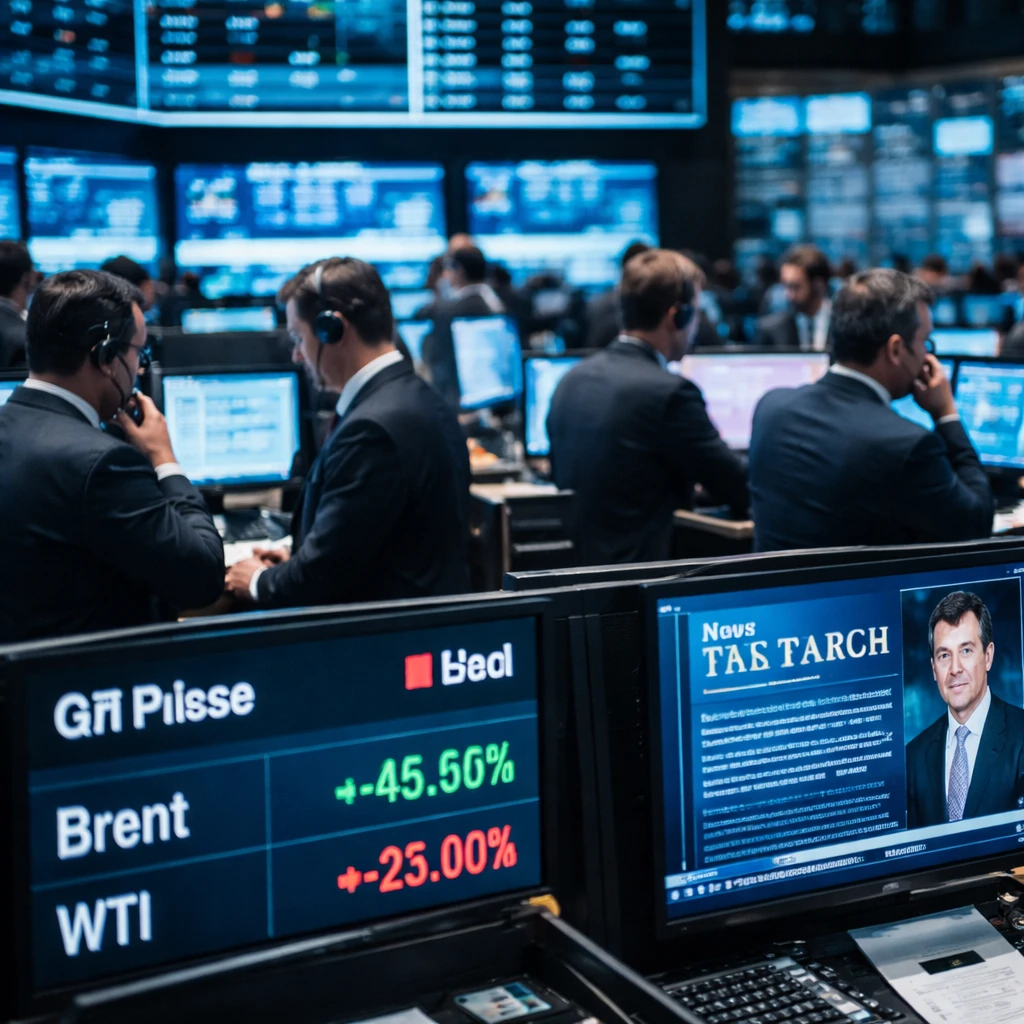
After the announcement of the memorandum, crude prices moved lower from wartime peaks, trending closer to pre-conflict levels. At 03:38 ET, Brent crude futures were down about 2% at $77.97 a barrel, while U.S. West Texas Intermediate futures fell around 2.1% to $75.15 per barrel. Although these moves represent a meaningful pullback from the highest prices seen during the hostilities, benchmarks remained above their levels before the war's onset.
Analysts cautioned that oil may stay elevated for a period as flows through the Strait of Hormuz could take time to return to prior levels. ING analysts noted that Iran expects a rapid lifting of U.S. oil sanctions to support a return of exports, but highlighted persistent uncertainty over how quickly shipping and production operations can normalize. The timeline for a full ramp-up will depend on operational, logistical and sanction-related adjustments.
5. Apple signals planned price increases
Beyond central bank policy and geopolitics, corporate cost pressures remained in focus. The Wall Street Journal reported that Apple intends to raise prices on certain products as it contends with rising costs for memory and storage chips. In an interview with the Journal, CEO Tim Cook said, "Unfortunately, price increases are unavoidable," adding that the company was "doing our best to mitigate the huge increases that are being passed to us [...] but the situation has become unsustainable."
The report said Macs and iPads would be among the first products to see higher price tags, a trajectory consistent with Apple's decision to raise the starting price of its Mac Mini in May. The timing and scope of any broader price increases remain unclear, and the full list of products that might be affected was not disclosed in the report.
Conclusion
The combination of a Fed under new leadership emphasizing price stability, a limiting of public-facing guidance, and an unexpected diplomatic breakthrough between the U.S. and Iran produced a complex market reaction: equity futures moved higher on the easing of an immediate energy shock while the Fed's message and projections left the possibility of future rate increases on the table. Oil markets reacted to the prospect of restored flows through the Strait of Hormuz, yet analysts warned that normalization could be gradual. Meanwhile, corporate cost pressures continue to filter through to prospective pricing decisions at major technology companies.