
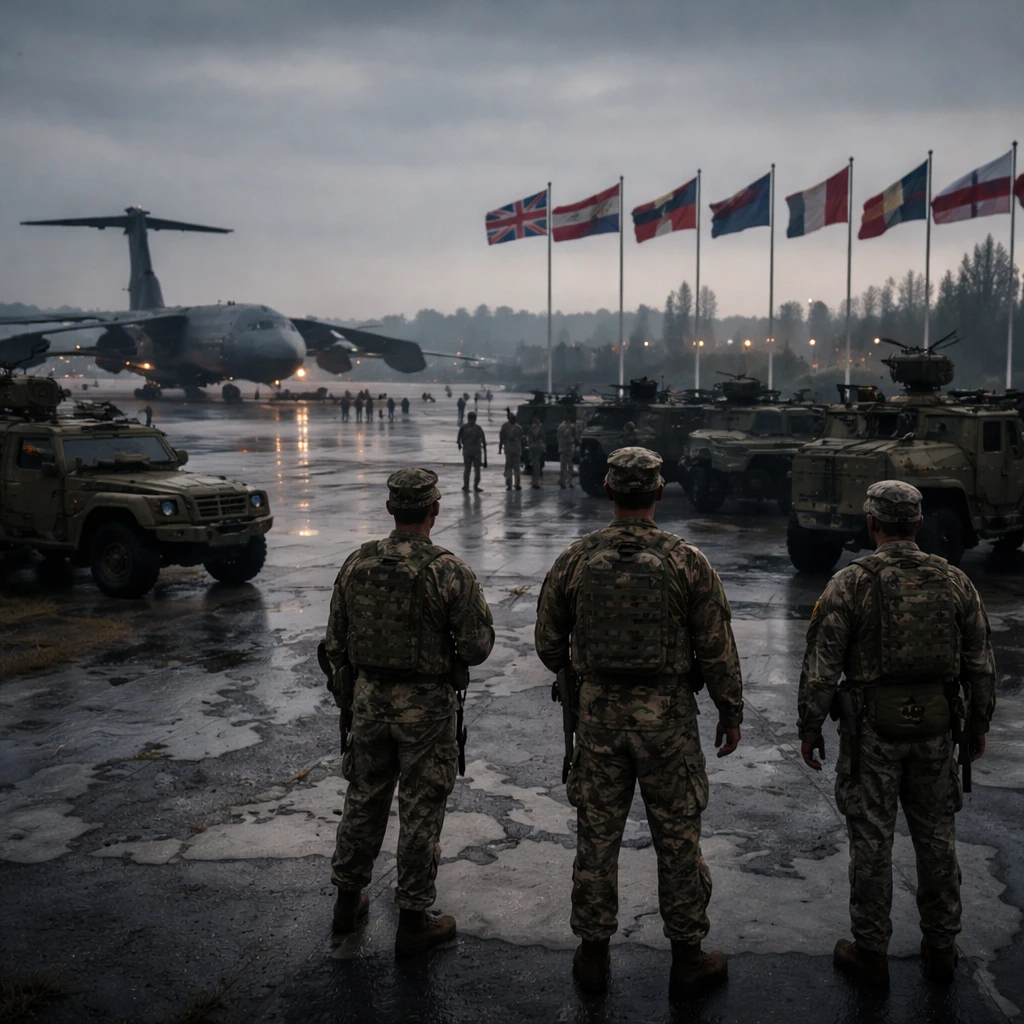
The U.S. administration is reportedly evaluating a proposal to relocate American military personnel stationed in NATO countries that it views as not supportive of the Iran war to other allied states that offered backing for the campaign, according to a report from the Wall Street Journal citing administration officials.
Under the plan under consideration, forces would be withdrawn from certain North Atlantic Treaty Organization members deemed unhelpful and reassigned to member states that the administration considers more cooperative on the Iran conflict. Officials have described the idea as an option for rewarding cooperation and penalizing what the administration sees as insufficient support.
Crucially, the proposal falls short of the president's recent threats to withdraw the United States entirely from NATO. A full exit from the alliance was described as not feasible without congressional approval, meaning the contemplated troop movements would not equate to a unilateral alliance withdrawal.
Administration officials say the plan has been circulating among senior-level staff in recent weeks and has gained some support within the White House. At the same time, sources characterize the effort as still in its early stages of consideration.
Officials have identified the proposal as one of several options being reviewed by the White House to impose consequences on NATO members judged unsupportive of the war in Iran. Beyond the fact that options are under discussion, the report indicates limited detail is available publicly about which countries would be affected, the scale of any potential movements, or the precise timeline for implementation.
Status and scope
The idea is described as under discussion among senior administration officials and having attracted some support, but it remains preliminary. The plan is not being presented as a definitive course of action; rather, it is one among several measures the White House is considering as tools to respond to allied countries' stances on the Iran war.
Information limits
The report notes that specifics such as which NATO members might lose or gain U.S. forces, the numbers involved, and a potential schedule for movements were not provided, and the plan remains at an early, exploratory phase.