
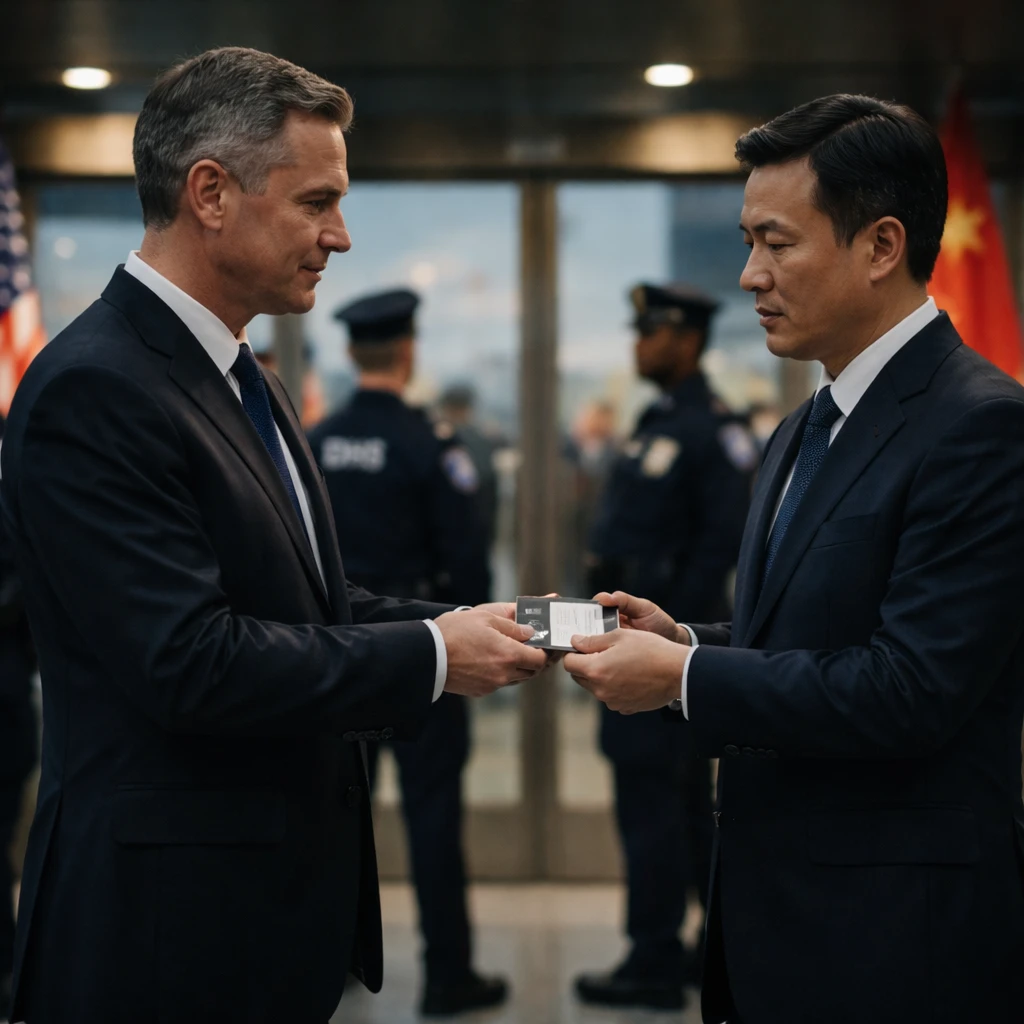
U.S. officials have transferred custody of a Chinese national accused of drug trafficking to authorities in Beijing, an action officials described as an uncommon act of bilateral law-enforcement cooperation between the two countries. The suspect was identified by the surname Han.
Chinese authorities publicly framed the repatriation as a diplomatic and policing success. The nation's Ministry of Public Security called the case a "new achievement," language that signals a willingness by Beijing to showcase cooperative steps in the lead-up to a high-level meeting between the two presidents scheduled for mid-May.
Analysts see the handover as connected to an agreement reached last October in Busan, South Korea, where the two leaders negotiated a deal that tied U.S. moves on certain fentanyl-related tariffs to Chinese actions against the precursor chemicals used to manufacture the synthetic opioid. That framework established a reciprocal pathway: reduced U.S. tariffs linked to Chinese enforcement against materials that feed illegal drug production.
Observers note that President Trump has repeatedly linked the future path of broader trade duties to Beijing's readiness to assist in addressing the U.S. overdose crisis. The repatriation is being read in some quarters as a concrete example of how law enforcement cooperation can operate as an instrument of economic diplomacy.
The timing of the transfer is notable. The president's planned trip to Beijing was moved from early April to May so the administration could concentrate on developments related to the conflict in Iran. The successful coordination between U.S. Immigration and Customs Enforcement and Chinese authorities ahead of the summit suggests both governments may be prioritizing a smooth diplomatic window.
Cooperation on counternarcotics has extended beyond this single case. According to U.S. law-enforcement statements, the Justice Department observed that Chinese police provided "critical intelligence" in an investigation into pharmaceutical companies suspected of selling illicit chemicals used in drug production. FBI leadership also highlighted the shift in tone; the FBI Director described the collaboration as "unprecedented cooperation," marking a change from prior years when Washington accused Beijing of delaying or resisting requests.
Markets and policymakers have welcomed signals that bilateral relations are stabilizing, as a less volatile relationship reduces the immediate risk of an expanded trade confrontation. The perception of a thaw has offered some relief from earlier fears that tensions could escalate into a broad trade war affecting multiple sectors.
Despite the recent advances, caution remains. The durability of the current cooperation is uncertain. The history of bilateral counternarcotics ties includes episodes where Beijing scaled back engagement when disputes flared in other areas, such as technology transfers or maritime issues. That pattern of conditional cooperation suggests that investors and policymakers should treat the present momentum as fragile.
Public-health data continue to make fentanyl a central bargaining point. Although drug-overdose deaths in the United States have begun to decline, the country still records losses exceeding 70,000 lives annually. That continued toll ensures fentanyl and its precursor chemicals will remain key elements in diplomatic and trade negotiations between the two capitals.
For now, the repatriation of the suspect surnamed Han and the broader intelligence-sharing highlights a tactical alignment on counternarcotics that could help smooth the diplomatic path to the mid-May summit. Whether that alignment will outlast future political frictions remains unclear.