
Economy April 13, 2026 07:55 AM

U.S. Forces Announce Blockade East of Strait of Hormuz Covering Gulf of Oman and Arabian Sea

Restriction applies to all vessel traffic irrespective of flag; humanitarian shipments allowed subject to inspection

By Caleb Monroe
U.S. Forces Announce Blockade East of Strait of Hormuz Covering Gulf of Oman and Arabian Sea

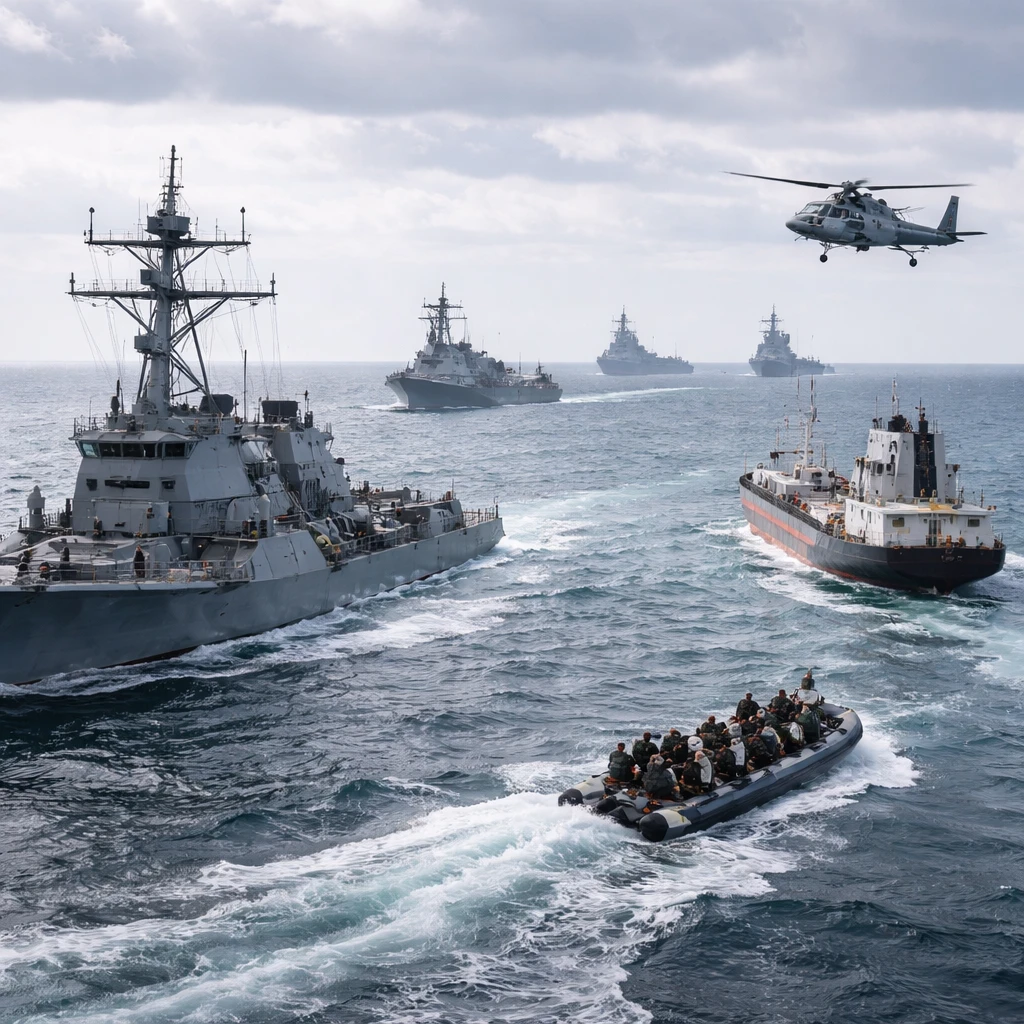
U.S. Central Command notified seafarers that a blockade covering the Gulf of Oman and parts of the Arabian Sea east of the Strait of Hormuz went into effect at 1400 GMT on Monday. The notice states that any vessel entering or departing the blockaded zone without authorization may be intercepted, diverted, or captured. Neutral transit through the Strait of Hormuz to or from non-Iranian destinations will not be impeded, though neutral ships remain subject to visit-and-search procedures. Humanitarian cargo including food and medical supplies will be permitted entry but will be inspected.

Key Points

  • U.S. Central Command issued a notice to mariners announcing a blockade in the Gulf of Oman and Arabian Sea east of the Strait of Hormuz, effective at 1400 GMT on Monday.
  • The blockade applies to all vessels regardless of flag; ships entering or leaving the blockaded area without authorization may be intercepted, diverted, or captured.
  • Neutral transit through the Strait of Hormuz to or from non-Iranian destinations is not impeded, but neutral vessels remain subject to visit-and-search procedures; humanitarian shipments are permitted subject to inspection.
  • Sectors to monitor given the scope of the restriction include maritime shipping, maritime services and logistics, and humanitarian supply chains.

The U.S. military has instituted a maritime blockade in waters of the Gulf of Oman and the Arabian Sea, east of the Strait of Hormuz, the U.S. Central Command said in a navigational note issued to mariners on Monday. The directive took effect at 1400 GMT on Monday and applies to all vessel traffic regardless of flag.

According to the note, any vessel that attempts to enter or depart the specified blockaded area without prior authorization faces the possibility of interception, diversion, and capture. The notice makes clear that enforcement actions could include measures to stop and redirect non-authorized ships within the zone.

The Central Command also stated that the blockade is not intended to prevent neutral transit passage through the Strait of Hormuz to or from destinations that are not Iranian. That exemption is limited to transit through the strait itself; the broader blockaded area in the Gulf of Oman and the Arabian Sea remains subject to the restrictions outlined in the advisory.

Neutral vessels operating in or near the affected waters should be prepared for the right of visit and search, the advisory added. Such procedures are intended to determine whether contraband cargo is present aboard neutral ships and, per the notice, neutral vessels may be boarded for inspection.

The guidance explicitly permits humanitarian shipments - including foodstuffs, medical supplies, and other essential goods - to transit the blockaded area, but it conditions that access on the completion of inspection procedures. The advisory indicates that humanitarian consignments will be allowed entry only after they have undergone the applicable inspections described in the note.


The navigational note from U.S. Central Command functions as a direct instruction to mariners and to commercial and private shipping operators whose planned courses intersect the identified waters. It outlines both the exceptions and the enforcement measures that will be applied during the period the blockade is in force.

Risks

  • Unauthorized vessels entering or departing the blockaded area face interception, diversion, or capture - a direct operational risk to affected ships and crews.
  • Neutral vessels may be boarded for visit-and-search to check for contraband, introducing the possibility of inspections and delays for commercial traffic.
  • Humanitarian consignments are permitted but only after inspection, which creates the potential for slowed delivery of essential goods while inspections are conducted.

More from Economy

Barclays Lowers U.S. Q1 Growth Call After Tepid Consumer Outlays Apr 13, 2026 Euro-area yields climb as oil jump and failed truce lift odds of another ECB hike Apr 13, 2026 Kremlin Says U.S. Plan to Seal Off Hormuz Will Weigh on Global Markets Apr 13, 2026 Hedge funds pivot to long equity bets before US-Iran talks, Goldman notes show Apr 13, 2026 UBS Lowers 2026 UK Growth Forecast as Energy Shock Lifts Prices Apr 13, 2026