
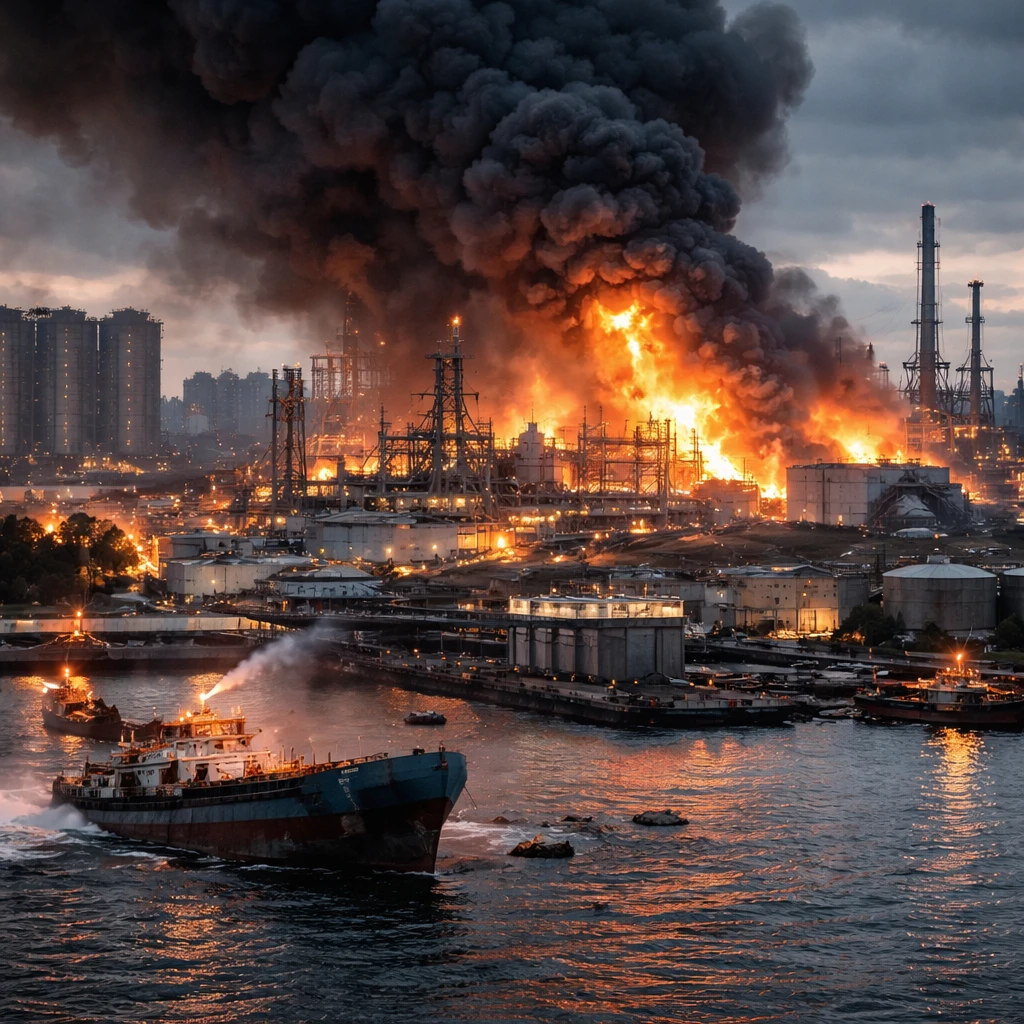
Ukrainian drone and missile operations on Saturday struck critical maritime and industrial targets across southern Russia, regional officials said, causing at least one death and several injuries while igniting substantial fires at chemical facilities and damaging port infrastructure.
Authorities in the Rostov and Samara regions reported that the attacks penetrated local air defenses. In the port city of Taganrog, Governor Yuri Slyusar said a missile hit commercial infrastructure, damaging a logistics company warehouse and prompting an emergency evacuation of nearby areas.
Offshore in the Sea of Azov, a Ukrainian drone reportedly struck a dry cargo ship several kilometers from shore. The drone strike set the vessel ablaze and raised renewed concerns about the safety of commercial shipping lanes in the region.
Medical officials in the Rostov region reported one person killed and four others seriously wounded. Of the wounded, three, including one foreign national, are in critical condition, according to regional health authorities. Local observers noted that attacks on Taganrog and the Sea of Azov represent a direct threat to logistics hubs that support the export of grain and industrial materials from the area.
Chemical production sites struck in Samara region
At the same time, the industrial city of Togliatti in the Samara region was the target of a large-scale drone assault. Governor Vyacheslav Fedorishchev confirmed that at least one industrial worker suffered shrapnel injuries and that a residential high-rise had been struck by a drone.
While official statements did not specify all industrial targets, open-source intelligence and eyewitness video showed large fires close to two prominent chemical enterprises: Tolyattikauchuk and KuibyshevAzot.
Tolyattikauchuk is an important producer of synthetic rubber used in tire and automotive manufacturing, and KuibyshevAzot is a significant maker of nitrogen fertilizers and chemical feedstocks. The strikes come after earlier attempts to disrupt the TogliattiAzot facility, an indication, officials and observers say, that these operations may form part of a broader effort to degrade high-value chemical and fertilizer production capacity in the region.
Fires and damage from the drone strikes also forced a temporary suspension of operations at the nearby Samara airport, adding further disruption to regional transportation and logistics.
Immediate implications
The reported incidents combined direct human casualties with damage to infrastructure that supports shipping, logistics, and chemical manufacturing. The affected chemical plants produce inputs for the tire and automotive industries as well as fertilizers and feedstocks, all of which could face near-term operational disruption as a result of the damage and airport suspension.