
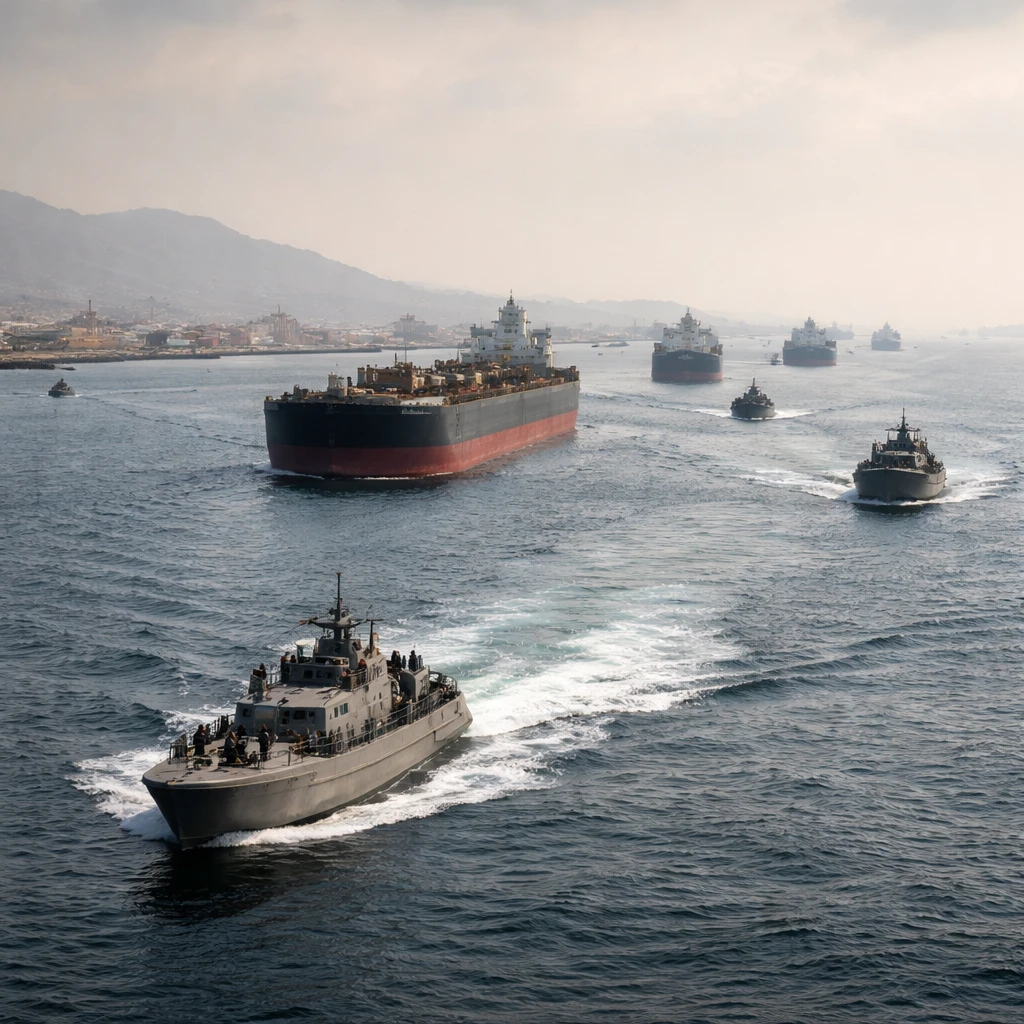
U.S. President Donald Trump on Thursday publicly faulted Iran for what he described as an insufficient allowance of oil shipments through the Strait of Hormuz and cautioned Tehran against imposing tolls on vessels transiting the channel.
In a social media post, Trump wrote: "Iran is doing a very poor job, dishonorable some would say, of allowing Oil to go through the Strait of Hormuz. That is not the agreement we have!" He had earlier in the day warned Iran specifically about the prospect of charging fees for crossings after Tehran indicated it was considering such a move.
The president's remarks follow reports that, under a tentative two-week ceasefire agreement between Washington and Tehran, Iran has capped passage at no more than 15 vessels per day through the strait. That arrangement was put under immediate strain: less than 48 hours after it took effect, Iran was reported to have closed Hormuz earlier on Thursday in reaction to devastating Israeli strikes on Lebanon.
Ship traffic through the strait remained a fraction of normal volumes by Thursday evening. Authorities in Tehran issued warnings telling ships to remain within Iran's territorial waters or risk attack. Over the most recent 24-hour period, just seven vessels passed through the strait compared with an average of about 140 ships daily, according to reporting on vessel movements.
Trump said the United States will keep its military forces positioned around Iran until a "real agreement" is secured, signaling that Washington plans to maintain a security posture in the region while negotiations proceed.
The Strait of Hormuz has taken on heightened significance in the conflict involving the U.S., Israel and Iran because roughly 20% of the world’s oil consumption is supplied via the passage. Since the onset of the war, Iran has effectively blocked the strait at times, contributing to a shortage in physical oil supplies and a sharp uptick in global oil prices.
Diplomatic activity is continuing despite the volatility: U.S. and Iranian officials are scheduled to hold in-person talks in Pakistan this week, their first direct face-to-face negotiations since the conflict began in late-February. Washington and Tehran reached a fragile ceasefire agreement earlier this week, but Iran accused the U.S. and Israel of breaching that accord almost immediately and called for Lebanon to be included in the terms.
Separately, Israel said on Thursday it was pursuing direct ceasefire discussions with Lebanon, a development that could affect the regional dynamics underpinning maritime safety and the flow of energy shipments through Hormuz.
Summary
President Trump has publicly criticized Iran for limiting oil transit through the Strait of Hormuz, warned against Tehran imposing tolls on ships, and said the U.S. will keep military forces in the region until a substantive agreement is reached. Vessel traffic through the strait has fallen dramatically, and a tentative two-week ceasefire between Washington and Tehran has already faced violations and accusations.
Key points
- President Trump accused Iran of not allowing sufficient oil shipments through the Strait of Hormuz and warned Iran against charging tolls on crossings.
- Reports indicate Iran is restricting passage to no more than 15 vessels daily under a two-week ceasefire with the U.S., while actual transit recently fell to seven ships in 24 hours versus about 140 daily.
- The situation affects global energy supply routes and maritime transport, prompting continued U.S. military presence and scheduled in-person talks between U.S. and Iranian officials in Pakistan.
Risks and uncertainties
- Reduced throughput in the Strait of Hormuz creates a risk of tighter physical oil supply and upward pressure on global oil prices - a direct impact on energy markets.
- Continued military deployments and warnings to vessels about remaining in territorial waters raise the risk of attacks or confrontations at sea, affecting shipping, insurance costs, and freight routes.
- The ceasefire’s fragility - with mutual accusations of violations and calls to expand the agreement to include Lebanon - leaves negotiation outcomes uncertain and could prolong instability affecting regional trade and logistics.