
Economy April 13, 2026 05:18 AM

Starmer Says Britain Will Not Join U.S.-Led Blockade of Strait of Hormuz

Prime minister affirms UK non-participation while stressing efforts to reopen the vital waterway; U.S. moves to enforce restrictions on ships linked to Iranian ports

By Avery Klein
Starmer Says Britain Will Not Join U.S.-Led Blockade of Strait of Hormuz

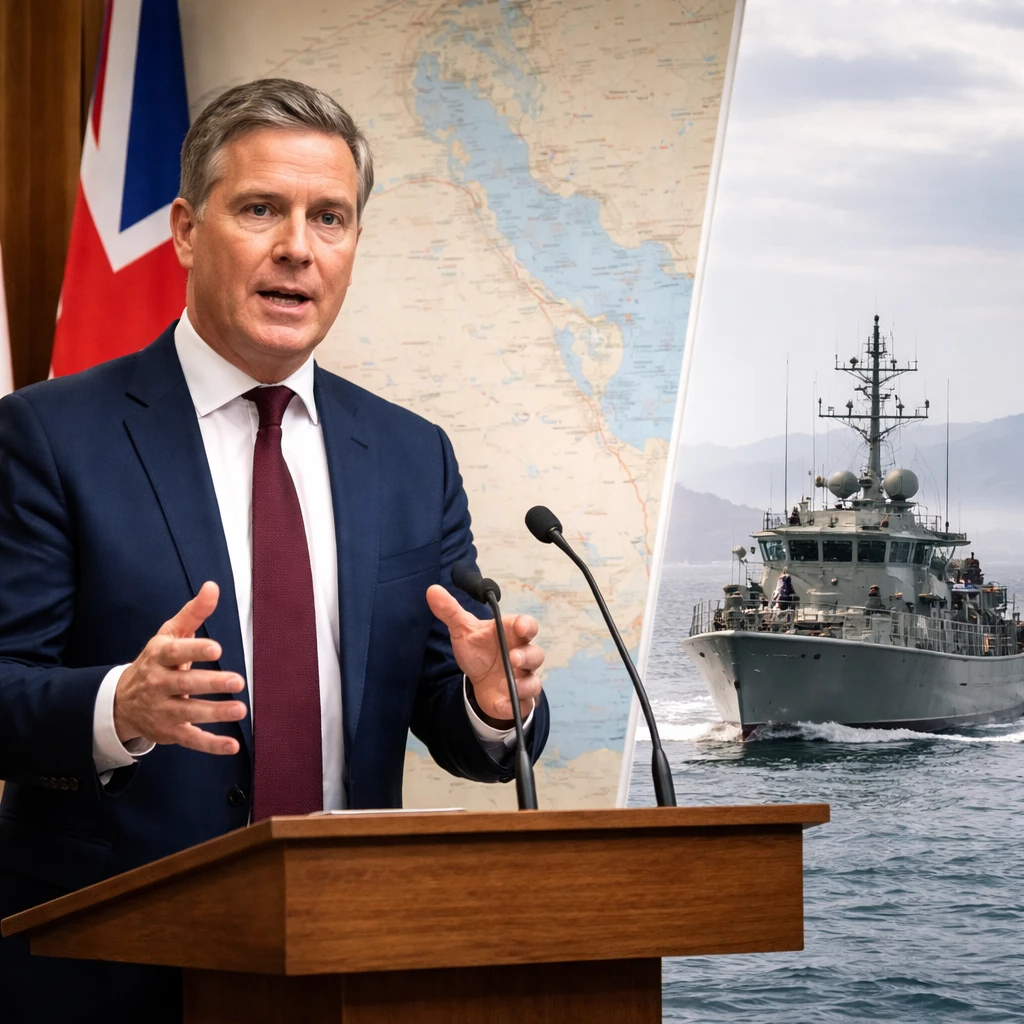
British Prime Minister Keir Starmer told BBC Radio 5 Live that the UK will not take part in a blockade of the Strait of Hormuz, while confirming Royal Navy minesweeper presence in the region focused on ensuring the waterway is fully reopened. The comments came as the U.S. announced it would begin restricting passage for vessels entering or leaving Iranian ports at a specified time, following unsuccessful negotiations between Washington and Tehran in Pakistan.

Key Points

  • Prime Minister Keir Starmer explicitly said the United Kingdom will not support or participate in a blockade of the Strait of Hormuz.
  • The U.S. military announced it would begin enforcing restrictions at 10 a.m. Eastern on Monday for vessels entering or leaving Iranian ports and coastal areas, while allowing transit for ships not destined for Iran.
  • British minesweepers are deployed in the region, with the UK stating the military role is focused on reopening the Strait; the U.S.-Iran talks in Pakistan lasted 21 hours but ended without an agreement, per U.S. Vice President JD Vance.

British Prime Minister Keir Starmer said on Monday that the United Kingdom will not participate in a blockade of the Strait of Hormuz.

"We’re not supporting the blockade," Starmer told BBC Radio 5 Live, and he added that it was vital to get the Strait reopened.

The remarks coincided with a U.S. announcement that American forces would begin enforcing a restriction on traffic tied to Iran. The Pentagon said the measure would take effect at 10 a.m. Eastern on Monday and would apply to vessels entering or departing Iranian ports and coastal areas, an action taken after an order from U.S. President Donald Trump following failed weekend negotiations with Iran.

The Pentagon noted that ships transiting the strait that are not destined for or departing from Iranian ports would be permitted to continue their passage.

The heightened measures and diplomatic efforts followed 21 hours of talks held in Pakistan between U.S. and Iranian delegations that did not produce an agreement to formalize a recent two-week pause in hostilities. U.S. Vice President JD Vance, who led the American side in those discussions, said Iran had refused to accept U.S. demands to refrain from developing a nuclear weapon.

Starmer also said Britain had minesweepers in the region. He declined to discuss operational details, but stated that the military capability on station was focused on ensuring the Strait was fully open.


This sequence of statements and military moves highlights a divergence between the announced U.S. approach to restricting vessels tied to Iranian ports and the British government’s public decision not to join a blockade, while underscoring ongoing diplomatic friction following extended negotiations in Pakistan.

Risks

  • Potential disruption to maritime traffic connected to Iranian ports due to the U.S. restriction on vessels entering or departing those ports - this impacts shipping and logistics sectors.
  • Continuing diplomatic breakdown after 21 hours of negotiations in Pakistan increases the risk of renewed hostilities or further military measures - this affects defense and regional security considerations.
  • Uncertainty over operational details, as the UK declined to discuss specifics of its deployments, leaves open questions about the scope and coordination of naval activity in the strait - this may affect markets sensitive to geopolitical risk, such as energy and maritime insurance.

More from Economy

Kremlin Says U.S. Plan to Seal Off Hormuz Will Weigh on Global Markets Apr 13, 2026 Hedge funds pivot to long equity bets before US-Iran talks, Goldman notes show Apr 13, 2026 UBS Lowers 2026 UK Growth Forecast as Energy Shock Lifts Prices Apr 13, 2026 China’s March lending rise falls short of forecasts as PBOC shows no rush to loosen policy Apr 13, 2026 Markets Brace as U.S. Begins Strait of Hormuz Blockade; Oil, Inflation and Earnings Take Center Stage Apr 13, 2026