
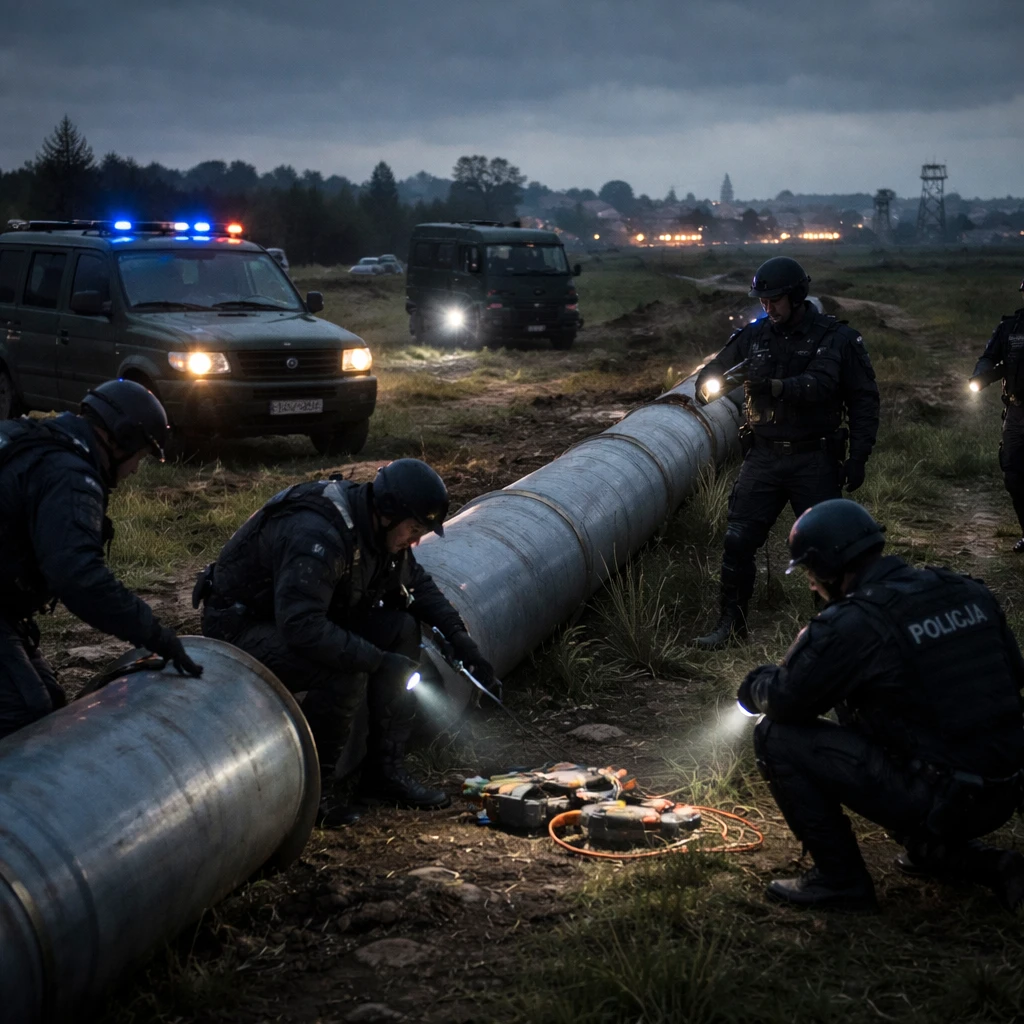
Serbian security forces have intercepted what officials describe as a large-scale sabotage attempt on a principal natural gas conduit near the Hungarian frontier, uncovering what President Aleksandar Vucic called "explosives of devastating power." The discovery was announced on Sunday and prompted immediate cooperation between Serbian and Hungarian authorities.
The explosives, some fitted with active fuses, were located near the town of Kanjiza, roughly six miles from the border with Hungary. The device placements were alongside a pipeline that provides the lion’s share of Serbia’s domestic gas before continuing north to serve the Hungarian economy.
No damage to the pipeline was reported following the discovery. Still, the proximity of the ordnance to the international boundary led Belgrade and Budapest to open a joint investigation into the incident.
President Vucic conveyed early investigative findings to Hungarian Prime Minister Viktor Orban and used a television address to emphasize a firm posture toward threats to national infrastructure. "The Serbian army today managed to prevent an action against the vital interests of the country," he said, and added that "Serbia will ruthlessly deal with anyone who thinks they are threatening its vital infrastructure."
Officials noted the timing raises geopolitical sensitivities. The event was made public one week before Hungary’s national elections, and comes after Prime Minister Orban had already ordered an increase in security around energy facilities in February, citing worries that regional instability could lead to deliberate disruptions of Hungary’s energy systems.
Market participants and analysts have flagged the attempted sabotage as an additional element of "territorial risk" for European energy markets. Those concerns are set against other strains on energy logistics, including disruptions in strategic maritime routes. Observers warn that any interruption to overland pipeline connections could produce rapid, non-linear effects on wider economies, with modeling referenced for countries such as the UK and the Eurozone.
The episode highlights a broader pattern in which energy infrastructure is increasingly perceived as a potential target for asymmetric attacks during periods of elevated international tension. Authorities in Belgrade and Budapest are coordinating investigative steps to determine responsibility and to mitigate any further risk to the pipeline and connected systems.
For now, officials reported the infrastructure itself remained intact and functioning, but the discovery has amplified concerns about the vulnerability of critical energy supply chains and the implications for regional stability and market confidence.
Contextual note: The information presented here reflects official statements and reported investigative developments announced by Serbian authorities and briefings between Serbia and Hungary. Where details remain limited by ongoing inquiries, authorities have signaled continued investigative and security measures.