
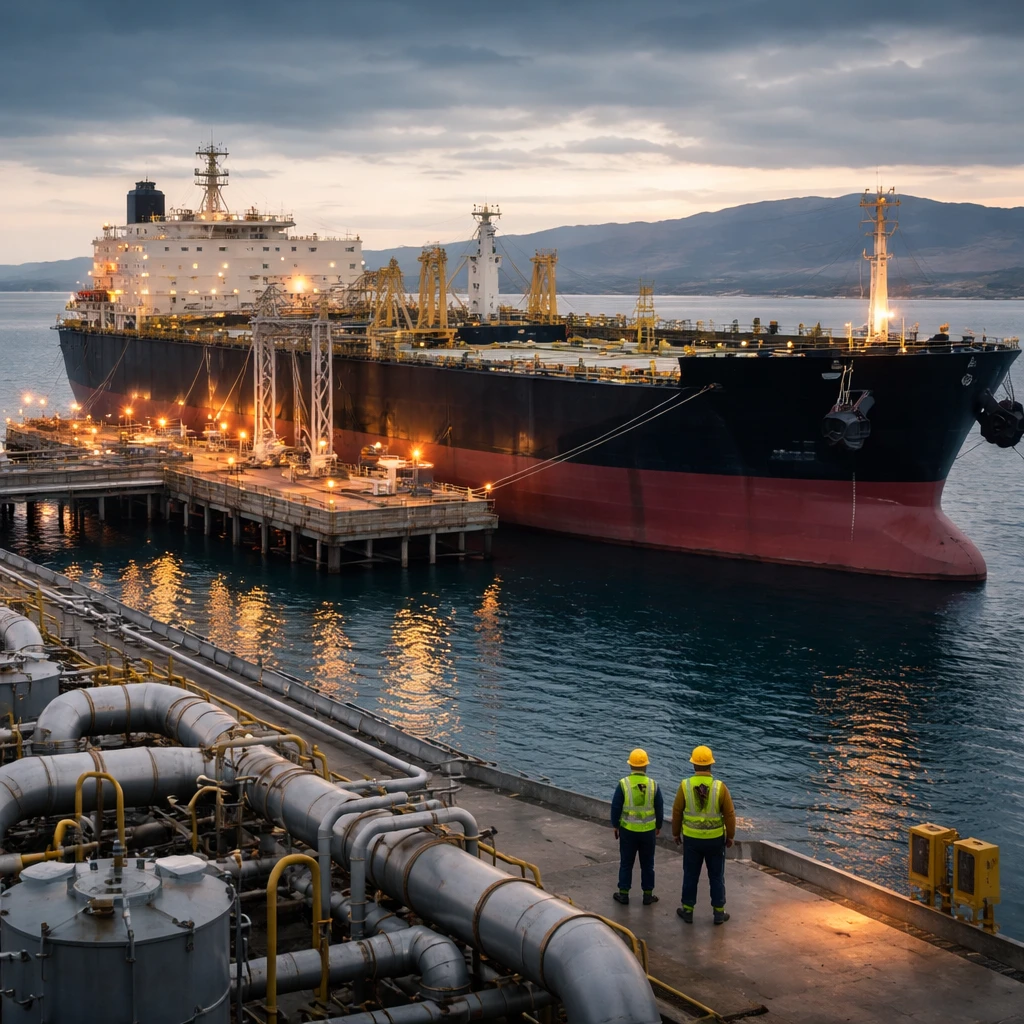
Seoul is moving to secure a substantial long-term crude oil supply from Kazakhstan as it intensifies efforts to reduce exposure to Middle Eastern maritime risks. Industry Minister Kim Jung-kwan said in an interview that the government expects to announce the exact volumes and the logistical framework for the deal early next week.
The push toward Central Asian supplies follows a high-level diplomatic trip led by Presidential Chief of Staff Kang Hoon-sik and Minister Kim, which included visits to Kazakhstan, Oman and Saudi Arabia. Officials said the mission was driven by a series of persistent disruptions in the Strait of Hormuz that have posed a threat to South Korea's energy stability.
Minister Kim highlighted the transit-time considerations while explaining the rationale for the shift in sourcing. "Kazakhstan might sound very far, but it actually takes about the same time as shipments from the U.S., about 50 to 60 days," he said, noting that the transit duration is significant but acceptable given the objective of lowering the "Hormuz risk" for a country that has historically bought roughly 70% of its oil from the Middle East.
Analysts and officials portray the prospective Kazakhstan arrangement as a strategic, long-term measure intended to insulate South Korea's industrial base from potential regional naval blockades and related supply shocks. The country, which is heavily dependent on imported energy, is prioritizing diversified routes and sources to guard against disruptions that could translate into domestic economic stress.
The prospective Kazakhstan supply is the latest in a series of emergency and strategic acquisitions by Seoul amid heightened global energy market tension. Last month, South Korea obtained a pledge from the United Arab Emirates for 24 million barrels of crude oil, a move described by observers as a short-term buffer while broader sourcing arrangements are negotiated.
Decision-makers in Seoul emphasize that securing so-called "Safe Passage" alternatives, even if they involve transit times of around 60 days, is essential. Officials warn that ensuring continuous inputs for the manufacturing sector is a priority to avoid a stagflationary shock to the domestic economy, given the country's near-total dependence on imported energy.
Officials plan to provide detailed figures and logistics information on the Kazakhstan supply agreement early next week, at which point market participants will have clearer visibility on how the new route and volumes will fit into South Korea's broader energy security strategy.