
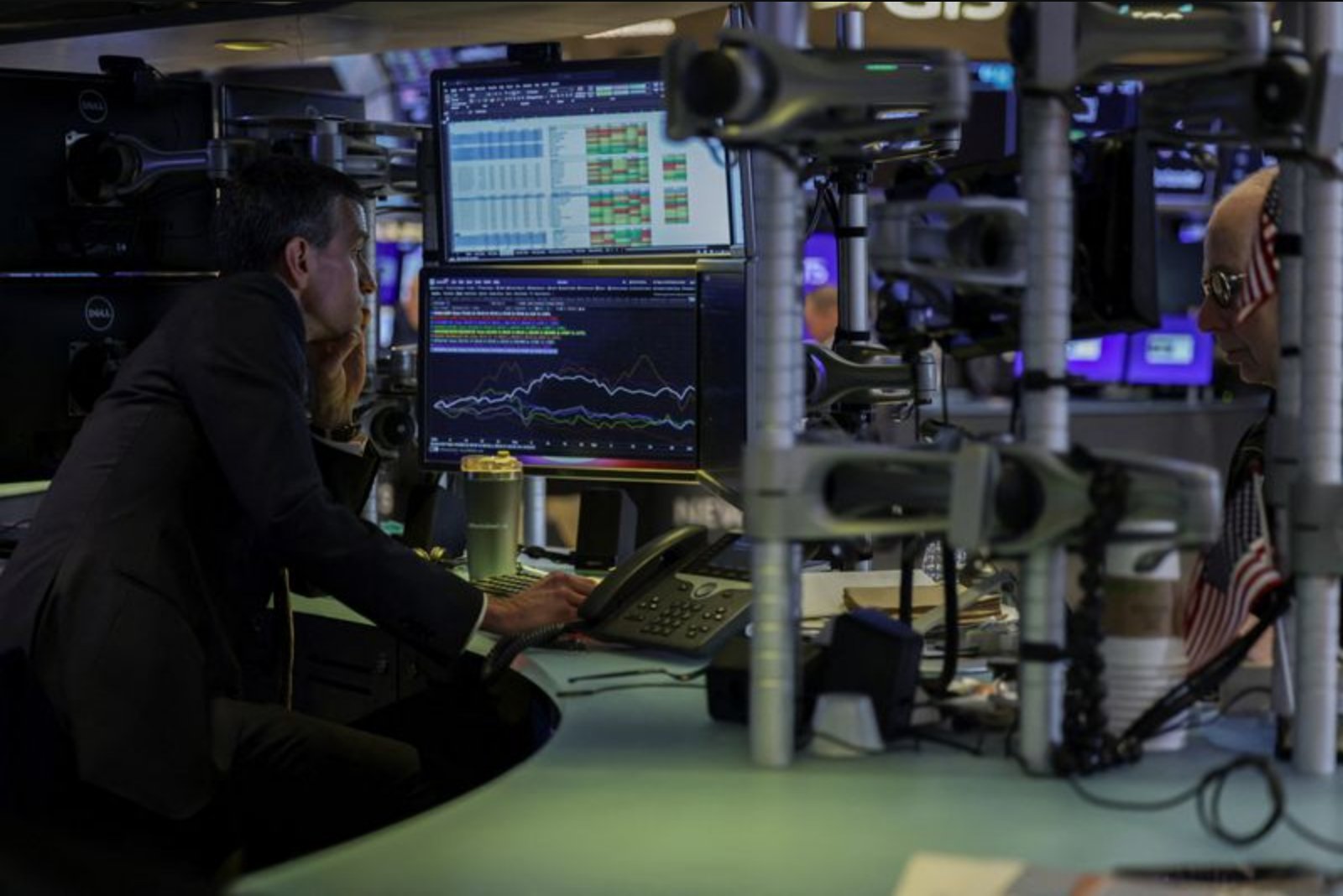
Wall Street and the Asian bourses that were trading on Easter Monday closed modestly higher, with investors appearing to trade on concrete developments rather than heightened rhetoric and another uptick in crude. The trading day saw a mixed backdrop: elevated oil prices, sharper comments from U.S. President Donald Trump on Iran, and some encouraging early March U.S. data.
For readers who want added context, the following pieces were suggested for further reading:
- Iran rejects ceasefire as Trump says entire country can be 'taken out'
- U.S. service sector cools in March; price paid measure highest in 3-1/2 years
- U.S. crude premiums climb to record levels as Asia, Europe compete for supply
- Goldman Sachs private credit fund defies redemption surge across industry
- BOJ warns of economic hit from Middle East conflict
Market snapshot
- Stocks: South Korea up nearly 2%, India +1%, Japan's Nikkei +0.5%. Europe was closed. Main U.S. indices rose about 0.4% to 0.5%.
- Sectors/shares: Eight of 11 S&P 500 sectors gained, led by consumer discretionary and staples, and energy. Starbucks climbed 5% and Boeing rose 2%. Invesco and Super Micro Computer each fell 5%.
- FX: The dollar eased. The biggest G10 gainers were the Australian dollar and the British pound. The biggest emerging market FX gainer was the Hungarian forint ahead of an April 12 election. Bitcoin returned to trade above $70,000, rising 4%.
- Bonds: U.S. Treasury yields drifted 1-2 basis points lower across the curve as investors prepare for a three-year note auction on Tuesday.
- Commodities/metals: Oil rose about 1%, with WTI posting its highest close since June 2022. Gold was down 1%.
What moved markets
Markets largely looked through sharper U.S. rhetoric toward Iran. After an expletive-filled set of threats on Sunday, President Trump on Monday said "every bridge and power plant in Iran will be blown up by midnight on Tuesday unless a deal is agreed and the Strait of Hormuz is reopened." Despite the intensity of the language, U.S. stocks advanced, the dollar softened and Treasury prices ticked higher. Oil did rise, but by a modest 1% on the day.
Investors appear to be attempting to filter signal from noise - treating repeated bellicose statements with less immediate trading impact and focusing more on tangible developments on the ground and in markets.
U.S. data offered early signs of resilience
Even as the Iran conflict extends into a sixth week and U.S. gasoline costs exceed $4 per gallon, the initial set of March indicators suggest the U.S. economy is holding up. WTI is roughly 65% higher than a year ago. Nonfarm payrolls exceeded expectations, the manufacturing ISM rose to its strongest level since 2022, and the U.S. economic surprises index reached its highest level in nearly four weeks. Some of the surveys only cover the early part of March, so these upside surprises may not persist, but the initial readings were constructive.
Asia faces currency intervention risks
Several Asian economies have already intervened in FX markets since the start of the Iran conflict to support their currencies - India and the Philippines are cited examples. With global oil prices elevated and premiums in Asia for physical cargoes and refined products at record levels, additional intervention by other Asian central banks seems possible. Economies running current account deficits, such as Indonesia, are singled out as particularly vulnerable. The write-up also highlights that surplus economies are not immune; in severe scenarios a damaging energy/FX/inflation spiral could force some countries to consider selling foreign bonds or gold to secure fuel supplies.
Events to watch next
- Developments in the Middle East
- Moves in energy markets
- Final services PMIs for March from Australia, the euro zone and the UK
- Japan household spending (February)
- Canada PMI (March)
- U.S. durable goods (February)
- U.S. Treasury sale of $58 billion of three-year notes at auction
- Public remarks from U.S. Federal Reserve officials including Chicago Fed President Austan Goolsbee, Vice Chair Philip Jefferson and San Francisco Fed President Mary Daly
Investors will be looking for clearer signals from these data points and events to help set a near-term market direction, particularly given the cross-currents of geopolitics, energy prices and domestic economic readings.