
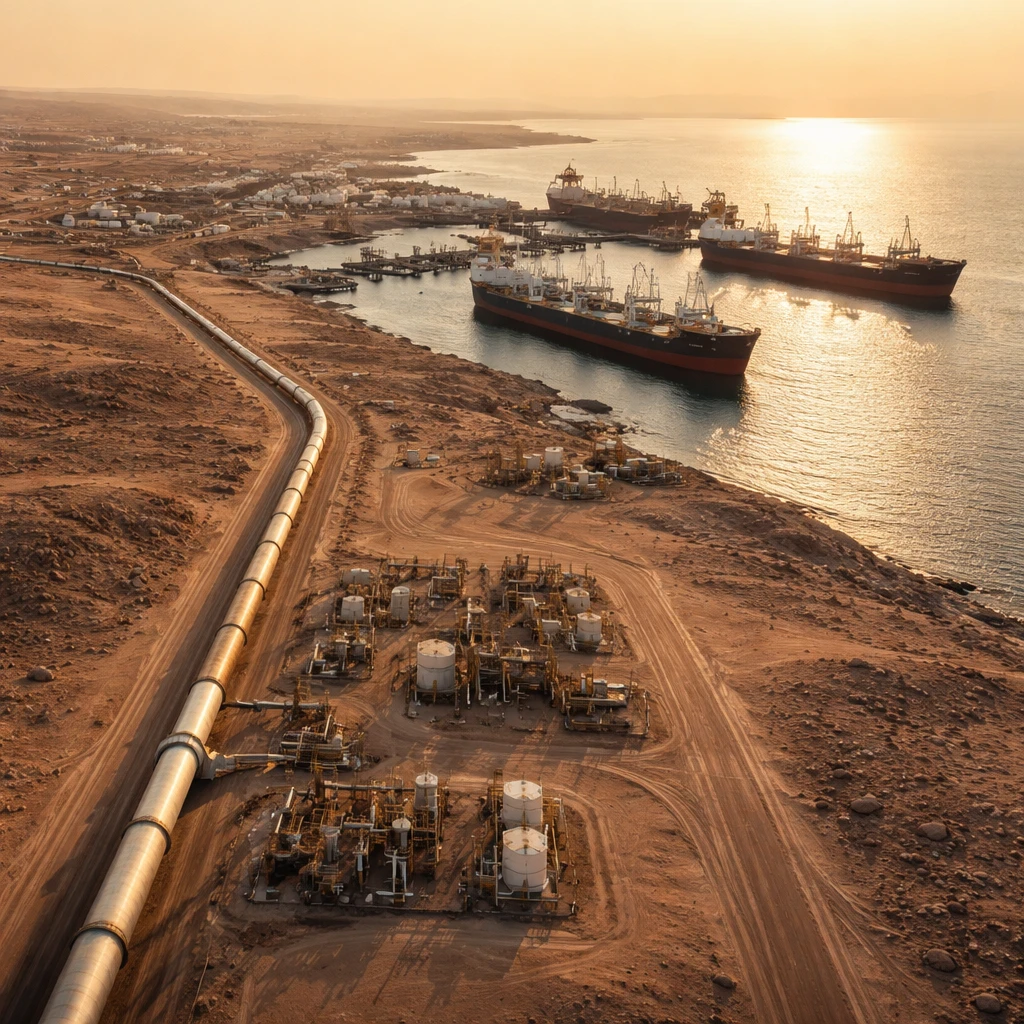
Saudi Arabia's trans-kingdom East-West crude pipeline is operating at its advertised capacity of about 7 million barrels per day, a person with knowledge of the situation told Bloomberg. The pipeline provides an alternate export corridor that avoids the Strait of Hormuz, and its increased throughput reflects adjustments by Gulf producers to disruptions affecting Hormuz traffic.
The surge in pipeline use corresponds with higher loadings at the Red Sea port of Yanbu. Shipments from Yanbu have climbed to roughly 5 million barrels per day, according to the report, and carriers are also taking on between 700,000 and 900,000 barrels per day of refined products. These flows are part of a broader reconfiguration of Saudi export logistics as regional shipping through Hormuz remains constrained.
Of the roughly 7 million barrels per day transiting the pipeline, an estimated 2 million barrels per day are retained for processing in Saudi domestic refineries. That domestic draw reduces the volume available for direct export, a dynamic that shapes the balance between internal fuel supply and international shipments.
While the East-West pipeline's expanded role has alleviated some pressure on global crude availability, it does not fully replace the capacity that historically moved through the Strait of Hormuz. The Strait previously saw about 15 million barrels per day of crude flows, and the current diversion via Yanbu only partially compensates for the near-closure of that route. Market observers cited in the reporting say the alternative corridor has helped prevent oil prices from climbing to the more extreme levels witnessed in past supply shocks.
The operational shift highlights the strategic importance of export infrastructure that bypasses constrained chokepoints. For infrastructure owners, refiners and shipping interests, the change underscores how redirecting flows can sustain exports under duress but may leave residual supply vulnerabilities given the scale of volumes once handled by Hormuz.
Summary
The East-West pipeline is now at full capacity of about 7 million barrels per day, routing crude to Yanbu as Hormuz passages are disrupted. Yanbu loadings have risen to roughly 5 million barrels per day, plus 700,000 to 900,000 barrels per day of refined products; about 2 million barrels per day of the pipeline's throughput are consumed domestically. The reroute has eased supply strains but only partially replaces flows through the Strait of Hormuz.