
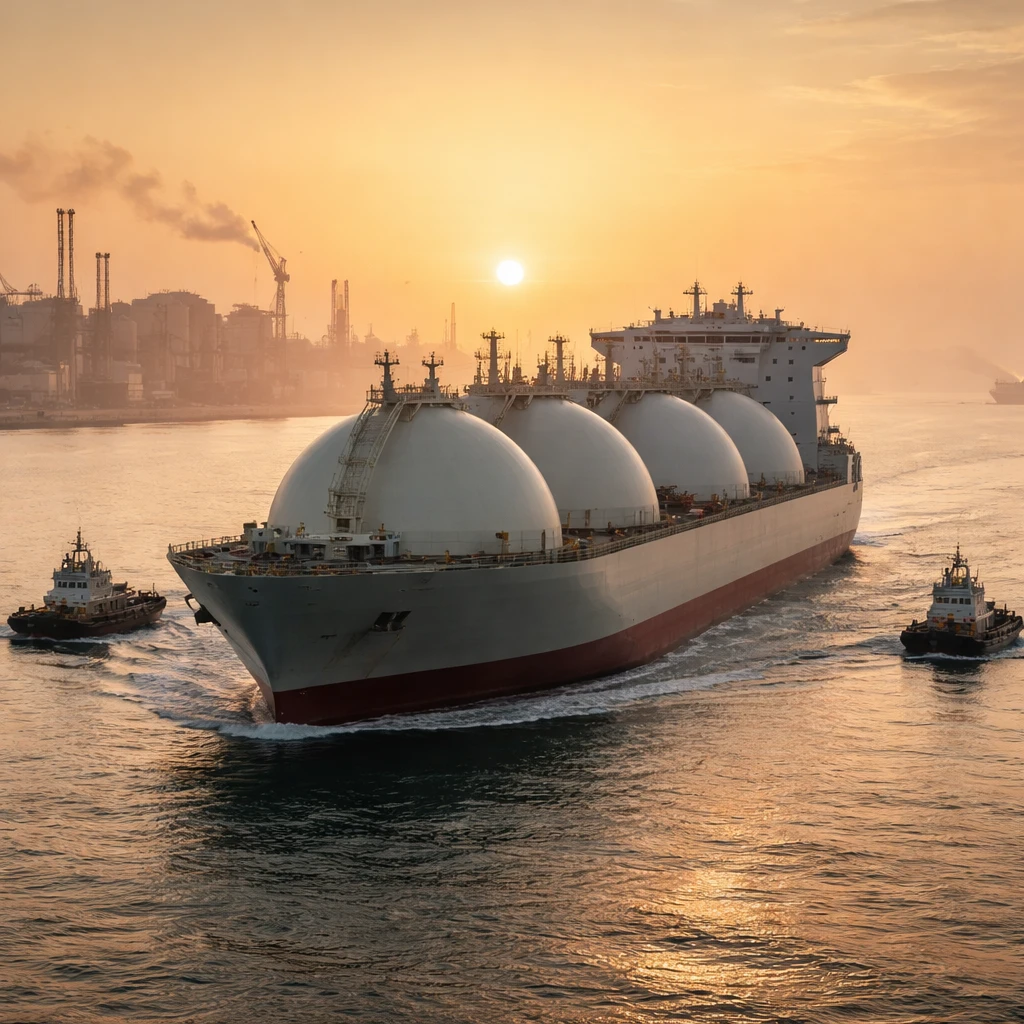
Qatar announced the reinstatement of full maritime navigation for all vessels and ships within its territorial waters effective Sunday, allowing movement during a daylight window from 6:00 a.m. to 6:00 p.m. local time. Officials framed the decision as a first significant move toward operational normalization after the regional conflict accelerated in early March.
The Transport Ministry's statement formalizes the daylight-only corridor as the prevailing security arrangement for Qatari waters. Market participants and traders immediately treated the move as a carefully calibrated reopening rather than a wholesale restoration of pre-crisis maritime operations.
Observers are closely linking the timing of the announcement to the diplomatic track unfolding in Islamabad - specifically the ongoing negotiations between the U.S. and Iran. The resumption of navigation is being parsed as a potential sign that negotiations could be producing terms that would ease regional tensions, although the Qatari measure itself is limited to territorial waters and daylight hours.
Qatar hosts the world’s largest liquefied natural gas export facilities. Those exports were effectively paralyzed for over a month after an Iranian attack on infrastructure prompted what market actors have described as the "de facto" closure of the Strait of Hormuz. The interruption removed a substantial volume of supply from an already strained global gas market.
Market reaction has focused on two linked developments. First, the daylight-only restriction implies that security concerns remain acute. Second, the Qatari reopening follows reports that three oil supertankers successfully transited the Strait of Hormuz, a series of passages that market sources say has reduced the immediate "war premium" priced into regional shipping insurance.
Analysts and traders describe the Qatari step as a "controlled opening" intended to probe the resilience of the current two-week ceasefire. If Qatari LNG tankers begin moving through the corridor toward Asian and European hubs, market participants say it would represent the most notable easing of global energy supply constraints since the conflict began.
Price effects are expected to materialize quickly in gas benchmarks. The March shutdown of Qatar's export plants removed a large supply component from markets already coping with the loss of Russian pipeline gas. Analysts in market commentary suggest that even a partial resumption of Qatari shipments could prompt a "downward mean-reversion" in Dutch TTF and JKM prices, which have traded at a 40% premium during the period of blockade.
Despite the cautious optimism around restoration of Qatari export activity, material uncertainties remain. The "Janbaz" status of Iran’s new Supreme Leader, together with ongoing naval standoffs in the Strait, are cited by some market contacts as continuing impediments to a sustained recovery. Importantly, the resumption of navigation in Qatari territorial waters does not equal a "Safe Opening" of the Strait of Hormuz itself - that remains a separate and technically complex negotiation item in Islamabad.
For traders, shippers, insurers and energy buyers, the Qatari move will be assessed day by day for signs that cargoes can transit reliably and at scale. Until broader guarantees or durable arrangements are confirmed, participants will likely treat the daylight corridor as a limited but significant test of whether the recent ceasefire and diplomatic efforts can translate into restored flows.
Key points
- Qatar will allow maritime navigation for all vessels in territorial waters from 6:00 a.m. to 6:00 p.m. local time starting Sunday.
- The move is seen as a "controlled opening" tied to diplomatic developments in Islamabad and follows reports of three supertankers transiting the Strait of Hormuz.
- Partial resumption of Qatari shipments could reduce pressure on global gas benchmarks, where Dutch TTF and JKM have traded at a 40% premium during the blockade.
Risks and uncertainties
- Security remains a concern due to ongoing naval standoffs in the Strait of Hormuz - this directly affects shipping and insurance sectors.
- Political variables, including the "Janbaz" status of Iran’s new Supreme Leader, create continued geopolitical risk for energy markets and LNG exporters.
- The "Safe Opening" of the Strait is a separate negotiation in Islamabad; success there is not guaranteed and will determine the scope of broader supply restoration.