
Summary
The conflict involving Iran and constraints on shipping through the Strait of Hormuz has driven oil prices to levels that are already translating into higher costs for manufacturers, exporters and farmers. Some businesses are confronting sudden input-price spikes that make honoring existing contracts uneconomic, plants in energy-dependent regions have temporarily closed, and consumers face rising prices at the pump that are expected to weigh on spending. Economists and market strategists say the shock to energy markets increases the risk of a global economic pullback - and could lead to a recession if it persists or escalates.
From factory floors to farmland - immediate effects
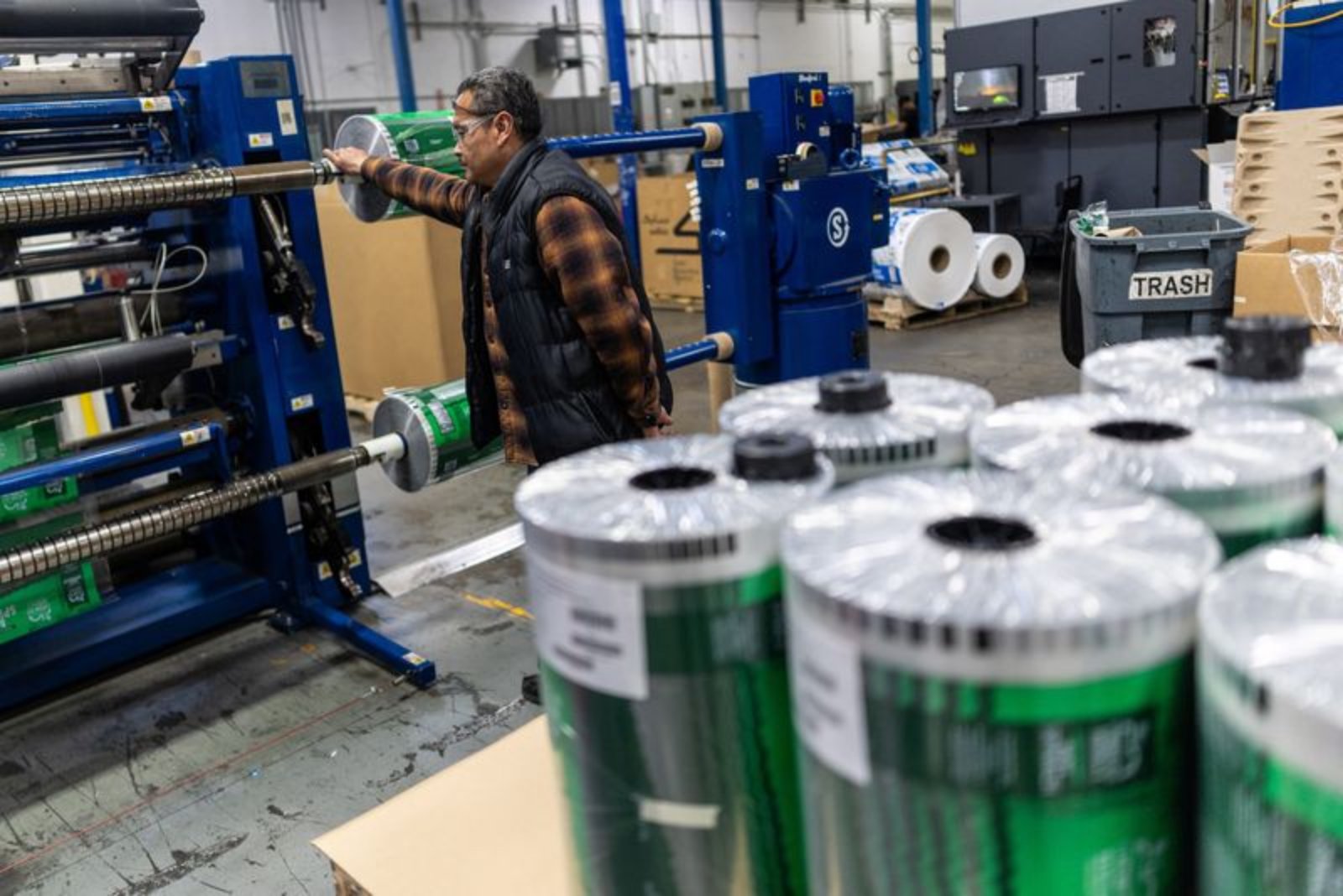
At a plastics plant in Union City, California, a family-owned manufacturer confronted a dramatic increase in resin costs over a matter of weeks. Prices for the raw plastic rose from $0.45 to $0.85 per pound, a jump the owner called unprecedented and one that he said would force the company to invoke force majeure - legally notifying customers it cannot meet contract terms because of circumstances beyond its control. The owner said the firm’s annual revenue is $92 million and that passing higher input costs onto customers risked losing long-standing business relationships, though he expected most longtime clients to accept revised terms.
Half a world away in India, gas shortages linked to the regional disruption forced dozens of aluminum extrusion plants to halt operations within days of the conflict beginning. The Aluminium Extrusion Manufacturers Association of India said many plants in Gujarat closed "four to five days after the war started due to unavailability of gas." India, a major exporter of aluminum extrusion products used in construction, solar equipment and consumer goods, risks contributing to higher global metal prices if production remains constrained.
In Britain, rising fertilizer prices and limited availability have led some farmers to ration supplies. One cut-flower producer in England’s East Midlands described using existing stocks sparingly, noting some farmers were weighing whether selling fertilizer might be temporarily more profitable than planting crops. The Organisation for Economic Cooperation and Development has reduced its forecast for British growth to 0.7% this year from a prior projection of 1.2%, making it the largest downgrade among major economies.
Markets, macro reads and tipping points
Benchmark Brent crude traded at about $109 a barrel on a recent trading day, remaining above or around the $100 mark for more than three weeks. That represents an increase of over 50% from roughly $70 a barrel in the days before the conflict began on February 28. Analysts warn that as oil approaches and crosses thresholds such as $110 or $120 a barrel, economic activity could be re-prioritized and some kinds of spending may no longer be justifiable, accelerating a nonlinear pullback in demand.
Among indicators of rising business cost pressures, prices paid by companies for inputs climbed by the most in more than 13 years in March. Market strategists have responded by raising recession odds for the United States; one large investment bank increased its assessment of U.S. recession risk to as much as 30%.
Nathan Sheets, chief global economist at Citi, warned that as the oil shock expands, risks of recession increase meaningfully. "As this shock gets bigger and bigger, the risks of recession are rising significantly...There are likely some thresholds where...certain kinds of economic activity no longer are justifiable, and you have a sharper, more nonlinear pullback," he said.
Supply disruption scale and outlook
Before the outbreak of hostilities, roughly 20 million barrels of oil and refined products were shipped out of the Gulf region each day. Officials and industry representatives say only a fraction of that volume is now reaching global markets via alternate routes. State-run oil and gas companies in the region have noted that attacks that damaged refineries, ports and storage facilities could mean a multi-month timeline for energy flows to return to prior levels even after combat ends. If supply remains constrained, higher prices could be sustained for an extended period.
Thirteen analysts polled by market reporters forecast a wide range for the annual oil price under current conditions, with expected averages between $100 and $190 per barrel. That spread reflects uncertainty about the duration and escalation of the conflict and the degree of lasting damage to regional energy infrastructure.
Travis Flint, an investment-grade credit analyst, said a disruption on this scale will require "significant demand destruction" to rebalance markets - referring to the typical fall in consumer and business demand that follows protracted high energy prices. He drew a comparison to the large-scale demand collapse seen during the COVID-19 pandemic to underline the scope of adjustment that may be required.
Uneven global impact
The economic effects of the energy shock are not uniform. Countries that depend heavily on energy imports and have limited domestic alternatives are more exposed to immediate downside. The United Kingdom’s downgraded growth forecast and rising farm input costs are examples of such vulnerability.
In Asia, the impact has been acute in energy-dependent manufacturing sectors. The aluminum closures in Gujarat came shortly after the start of the conflict, and given India’s role as a leading exporter of extrusion products, sustained stoppages could feed through to global metal prices over time.
Relative positions of China and the United States
The world’s two largest economies appear comparatively better positioned to absorb the shock. China’s lower dependence on Gulf oil combined with a highly electrified economic structure could help shield it from some of the worst effects of a Gulf supply disruption. The United States, now a net energy exporter, faces less direct risk of supply shortfalls. In the U.S., high energy costs have mixed effects - they increase costs for consumers while lifting revenues and potentially wages and job prospects in domestic energy firms.
Analysts noted that while the U.S. economy has endured multiple shocks in recent years and could withstand a short-lived conflict, the length of the war matters for overall economic risk. One senior U.S. economist wrote that should the war persist, the odds that "something breaks" and the economy slips toward a downturn increase substantially.
Consumer spending and household squeeze
To date, U.S. consumer spending has shown resilience. Bank of America credit and debit card data indicated that overall card use grew 4.4% year over year for the week ending March 21. When excluding gasoline, growth was 3.6% year over year, though those measures also show that lower-income households are allocating a larger share of spending to fuel costs.
Gasoline prices have jumped roughly 30%, rising from under $3 a gallon to over $4, and that increase is already expected to affect discretionary spending patterns. Analysts anticipate that family budgets will feel the squeeze in sectors such as food service, travel and lodging as higher gas bills and falling wealth from lower equity values curb spending among both lower- and higher-income households.
One forecasting firm estimated that overall spending growth in the U.S. this year could be about 1%, less than half the pace recorded the previous year. Its chief U.S. economist warned that it would be remarkable if discretionary services spending remained robust over the coming months given the drag on household cash flow.
Sector-level pressures and forward risks
Manufacturers that rely on petroleum-derived inputs, such as plastics producers, expect cost pressure to continue through the summer, even if hostilities were to end quickly. One plant owner pointed to the quantity of material tied up in the Middle East supply chain as a source of lingering price effects that will play out over several months.
In agriculture, limited fertilizer availability and soaring prices are prompting farmers to ration use or reassess planting decisions. The potential for some farmers to sell fertilizer instead of growing crops demonstrates the sorts of short-term adjustments that can ripple through food supply chains.
In manufacturing sectors that require natural gas or refined products, temporary plant closures would reduce output and, in some cases, global export capacity, with implications for prices and supply chains for building materials, solar equipment frames, transportation parts and consumer goods.
Policy signals and political rhetoric
Political statements and threats tied to the conflict have contributed to market uncertainty. A national leader’s tough rhetoric and deadlines tied to negotiations with the opposing side have kept investors wary, and comments warning of intensified strikes on infrastructure such as bridges and power plants have underscored the potential for further escalation.
Meanwhile, the International Monetary Fund’s managing director indicated the fund is likely to reduce its global growth forecast and raise its projection for inflation in response to the shock, signaling official concern about the macroeconomic implications even if hostilities are resolved in a relatively short period.
What could push the world into recession?
Analysts point to several trigger scenarios. Sustained high oil prices that force a broad pullback in consumer and business spending are one pathway. Severe damage to regional energy infrastructure that keeps refined products out of markets for months is another. Market forecasters and economists note that if either of these conditions persists, the chances of a global contraction rise substantially.
Indicators to watch include continued escalation of Brent crude above key psychological and economic thresholds; whether manufacturing outages in energy-dependent regions persist; and whether consumer spending weakens beyond the initial signs already apparent in fuel-adjusted card use figures.
Outlook and closing observations
For now, the immediate human and commercial costs of the conflict are playing out unevenly across geographies and sectors. Companies that depend on petroleum-derived inputs or on unobstructed flows of energy and refined products are being forced into difficult commercial choices, from contract renegotiation to temporary shutdowns. Farmers face input rationing, and households are beginning to feel direct price effects at the pump that will filter through to services industries.
As several economists and market analysts have highlighted, the duration and severity of the shock are the critical variables. While some major economies may be relatively insulated in the short run, a prolonged disruption that keeps oil prices elevated and constrains refined product availability would amplify recession risks globally and force a deeper reallocation of demand and economic activity.
"We’ve created huge problems for ourselves that are going to play out over the next several months," the plastics manufacturer said, standing by large rolls of material in his plant and noting that even a swift end to hostilities would not immediately reverse the supply bottlenecks and price moves set in motion.