
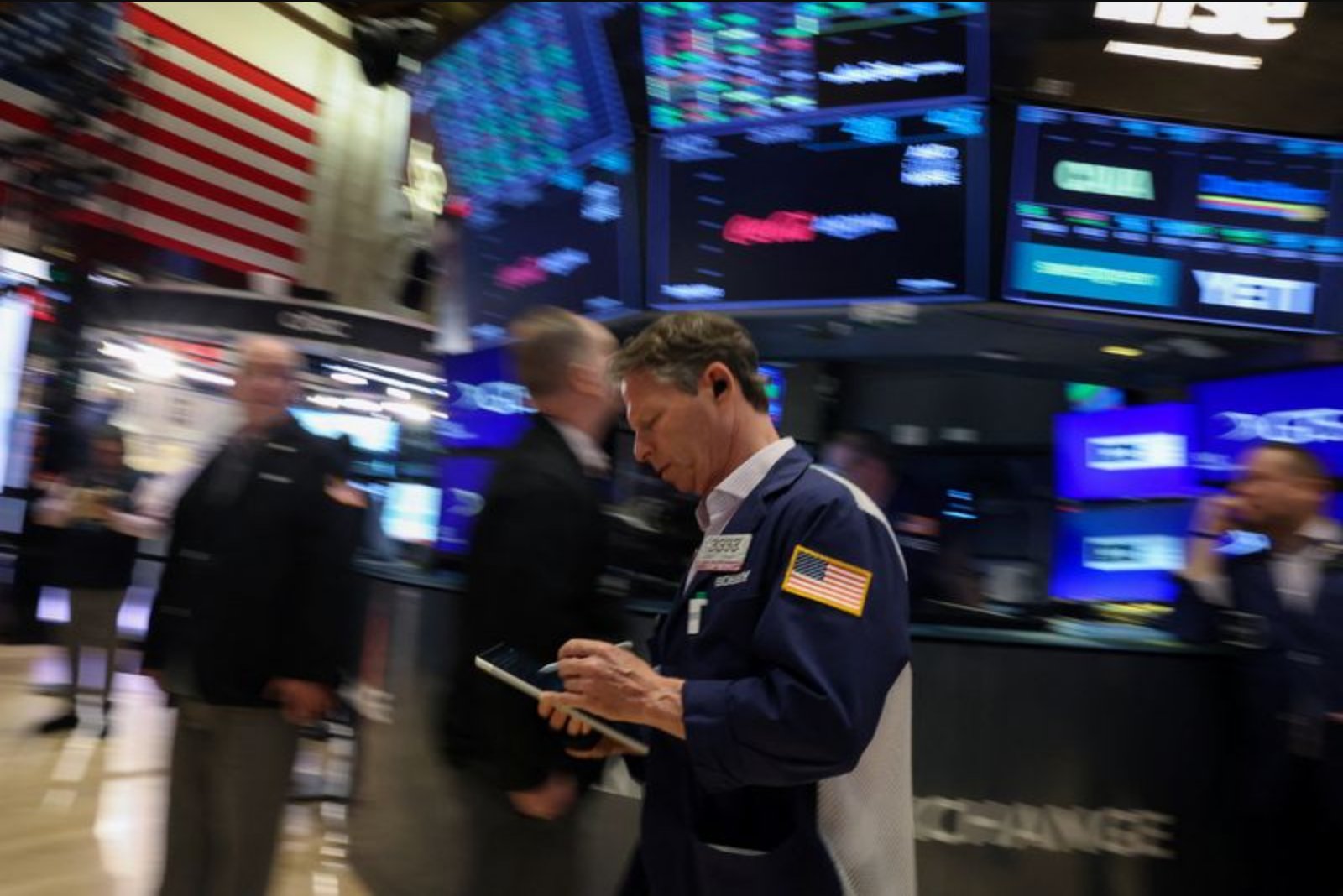
ORLANDO, Florida, April 8 - World markets registered strong gains on Wednesday and oil tumbled to its largest single-day decline in five years, as investors responded with relief to the announcement of a ceasefire in the Iran war. The scale of the moves has prompted a debate over whether markets are experiencing a one-off mega-relief rally or a meaningful change in investor sentiment.
The episode has also drawn attention to wider global financial imbalances - widened current account deficits and surpluses among major economies - that, if left unchecked, could present stability risks. For readers seeking further context on the market moves, several recommended pieces examine the diplomatic developments, the energy market's reaction and the longer-term outlook for rates and bonds.
Today's Key Market Moves
- Stocks: South Korea led gains in Asia with a rise of 7.5%, while Japan climbed 5%. In Europe, the UK added 2.5% and the region as a whole rose 3.7%. U.S. benchmarks rallied between 2.5% and 2.9%, and the Nasdaq recovered to its pre-war level.
- Sectors and shares: Ten of the 11 S&P 500 sectors advanced, with industrials, communications services and materials each up 3% or more. Energy was the notable laggard, sinking 3.7%. Travel-related names including airlines, cruise operators and hotel stocks rallied sharply.
- Foreign exchange: The dollar index fell about 1%. Among G10 currencies, the Swedish krona and New Zealand dollar were the largest gainers at about 1.6% each. Emerging market winners included the South African rand, Hungarian forint and Chilean peso, each up roughly 2%.
- Bonds: Europe saw a powerful rally in government bonds: two-year German and UK yields plunged by about 25 basis points, while 10-year yields fell 15-20 basis points. U.S. Treasuries moved more modestly, with short-end yields down about 6 basis points. The U.S. 10-year auction was reported to be on the soft side. Japanese Government Bonds were narrowly mixed.
- Commodities and metals: Oil prices plunged, with Brent down 13% and U.S. West Texas Intermediate falling 16% - the largest drop since April 2020. European LNG fell about 15%. Gold rose only about 1%.
Talking Points
The ultimate TACO Tuesday
The timing was almost poetic - a Tuesday announcement set the stage for Wednesday's market fireworks. President Donald Trump's ceasefire announcement ignited trades that had bet on a pullback, and markets responded with sweeping moves: the best day for global stocks in a year, the steepest three-year fall in two-year UK and euro zone yields, and the biggest drop in U.S. oil in five years. While the celebration in markets was evident, commentators cautioned that the underlying realities that drive markets will reassert themselves in time.
Just a minute
Minutes from the Federal Reserve's March 17-18 policy meeting showed a growing number of officials leaning toward raising rates, and described a "strong case for a two-sided" assessment of the central bank's next move - meaning officials saw a roughly balanced chance of raising or lowering rates. That contrasted with a smaller group of "several" officials who were open to raising rates in January. The minutes also flagged the risk that a "persistent increase in oil prices" would make rate cuts this year less likely, even if the ceasefire endures.
The only certainty is uncertainty
The relief evident across markets does not erase broader volatility. Economic conditions are growing more unpredictable for investors, companies and households alike. One gauge of note is the U.S. policy uncertainty index, which, aside from isolated spikes and the once-in-a-century pandemic shock in 2020, has shown a structural move higher since Trump came back to the White House. That elevated baseline of uncertainty complicates forecasting, planning and decision-making for private and public sector actors.
What could move markets tomorrow?
- Developments in the Middle East
- Energy market moves
- Social media posts from Trump
- Japan consumer confidence (March)
- Poland interest rate decision
- Germany trade (February)
- Germany industrial production (February)
- Mexico inflation (February)
- U.S. Treasury sells $22 billion of 30-year bonds at auction
- U.S. weekly jobless claims
- U.S. PCE inflation (February)
- U.S. GDP (Q4, final)
If you want to receive a daily briefing covering major market moves and key data releases, sign up for the Trading Day newsletter.