
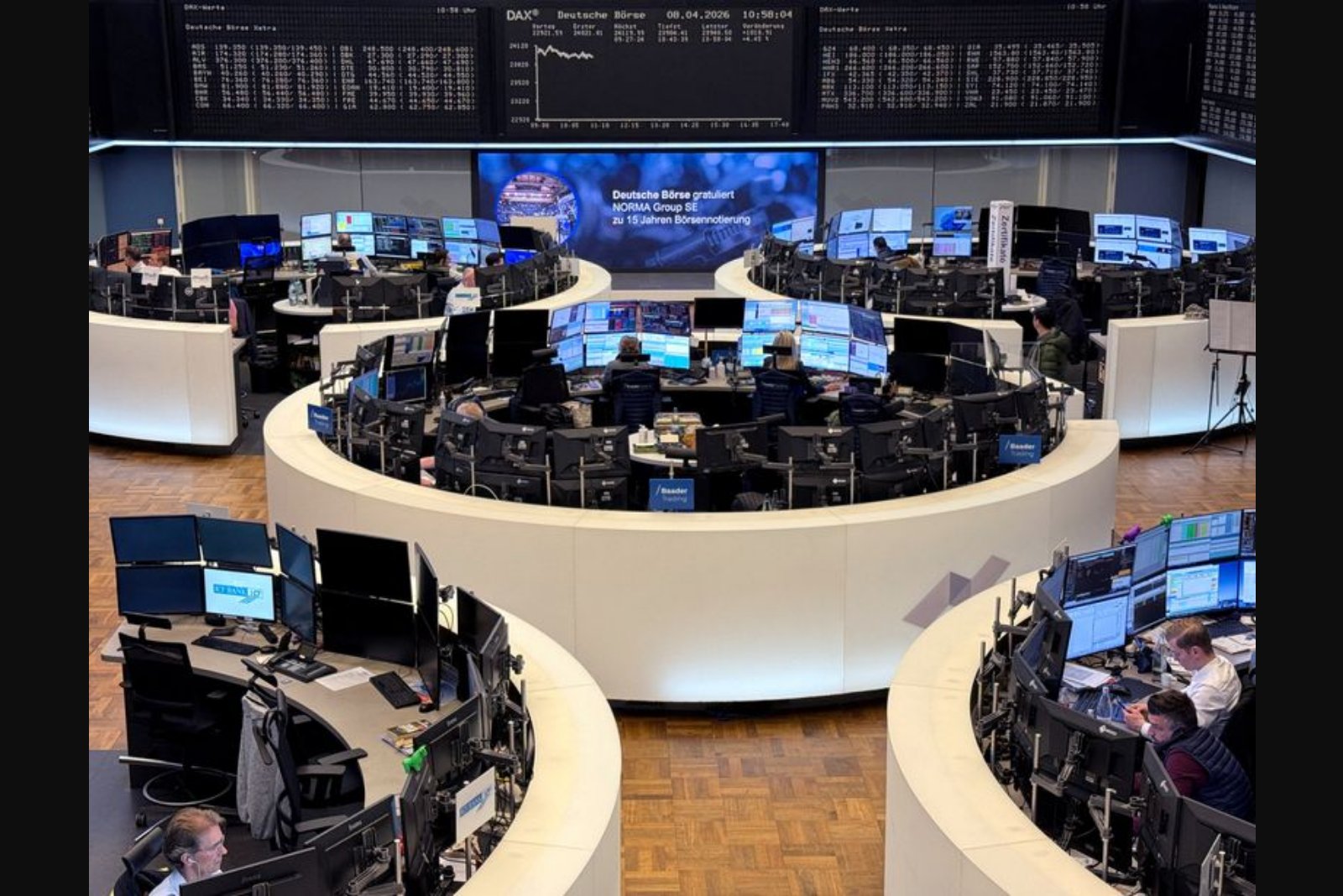
April 9 - The optimism that briefly buoyed markets following hopeful headlines from the Middle East has run into a harsher reality, nudging investors back toward caution.
Asian stock markets and U.S. futures were trading lower after recent celebratory gains, while the U.S. dollar was broadly unchanged. European government bonds recorded stronger moves than U.S. Treasuries, as commentary from several Federal Reserve officials signalled little urgency to begin cutting interest rates and, in some cases, hinted at the potential for tighter policy.
Diplomatic engagement between Tehran and Washington, scheduled for Saturday, is now being publicly questioned by Iranian officials given ongoing Israeli strikes in Lebanon. The two sides have each issued multi-point plans - described as a 10-point plan and a 15-point plan - that reportedly share almost no common ground. There are also reports that an English translation of Tehran's proposal does not align with the original Farsi text.
Most consequential for global trade is the continuing disruption to navigation through the Strait of Hormuz. Contrary to some U.S. official statements suggesting free movement, vessel-tracking applications show ships crowding on both sides of the strait. Only a small number of vessels are moving through, and those that do are passing via an inspection point described as Iran's "toll" gate located at the northern end of the narrow channel.
Transit volumes have plunged from an average of around 138 vessels per day before the conflict to 10 or fewer now. Iran's Revolutionary Guards are asserting control over the waterway, requiring tankers to submit to checks and approval procedures and to pay a charge reportedly equal to $1 per barrel or $2 million for a very large crude carrier (VLCC). Payment is being sought in yuan or cryptocurrency, a development that is sensitive for those concerned about the status of the petrodollar.
Beyond the currency issue, the requirement to pay such fees presents major compliance risks for shipowners. Even if willing to pay, many operators would face violations of various international sanctions regimes. The enforcement of inspections and charges at Hormuz also raises a broader normative question about maritime freedom; if one littoral state can impose payments for passage, it could set a precedent for tolling other strategic straits and passages, with hypothetical implications for the Bab el-Mandeb, the Taiwan Strait, the Cape of Good Hope and the waters around Cape Horn. Such a shift would add another fragment to global supply-chain fragility.
Traders and policymakers will be watching a batch of economic indicators and events on Thursday that could influence market direction. These include U.S. personal spending and personal income data for February, core PCE inflation for February, weekly initial jobless claims and the third release of Q4 GDP. In Europe, German industrial output figures for February are on the calendar. Additionally, the IMF Managing Director will deliver a curtain-raiser speech ahead of the IMF/World Bank spring meetings.
Key takeaways
- Market sentiment has cooled after a short-lived rally as geopolitical tensions in the Middle East continue to weigh on risk appetite.
- Bond markets diverged across regions, with European sovereigns outperforming U.S. Treasuries amid cautious Fed commentary.
- Shipping through the Strait of Hormuz remains highly constrained, with volume down sharply and new inspection and payment demands raising legal and operational risks for vessel operators.
Impacted sectors - Energy, shipping/logistics, financial markets.
Risks and uncertainties
- Persistent maritime disruption: Continued restrictions in the Strait of Hormuz risk further bottlenecks in oil and bulk shipping and higher operational costs for carriers.
- Sanctions and compliance exposure: Shipowners face potential breaches of international sanctions if they comply with inspection fees demanded by Iranian authorities.
- Monetary policy divergence: Signs that Fed officials are not prepared to cut rates soon, and some language suggesting possible tightening, create uncertainty for rate-sensitive assets.