
Economy April 10, 2026 06:24 AM

Japan Lowers Tone on China in 2026 Diplomatic Bluebook, Stresses Continued Dialogue

Annual report shifts wording amid sustained tensions over Taiwan while Tokyo reaffirms commitment to communication with Beijing

By Leila Farooq
Japan Lowers Tone on China in 2026 Diplomatic Bluebook, Stresses Continued Dialogue

Japan's 2026 Diplomatic Bluebook downgrades the characterization of its relationship with China from "one of the most important bilateral relations" to "an important neighbor," reflecting continuing strain over Taiwan. Tokyo nonetheless underscores the need for ongoing contact and says it will pursue a strategic, mutually beneficial relationship and remain open to dialogue with Beijing.

Key Points

  • Japan's 2026 Diplomatic Bluebook replaces the 2025 description of ties with China - shifting from "one of the most important bilateral relations" to calling China "an important neighbor."
  • Tokyo emphasizes continued communication and a desire for a strategic, mutually beneficial relationship, with Foreign Minister Toshimitsu Motegi saying changes occur annually across many fields and that Japan remains open to dialogue.
  • Recent friction includes Prime Minister Sanae Takaichi's comment that a Chinese invasion of Taiwan may justify Japanese troop deployment, Chinese travel warnings and trade restrictions, and the arrest in late March of an active Self-Defense Forces member for breaching the Chinese embassy grounds - developments relevant to trade, travel, and defense-related sectors.

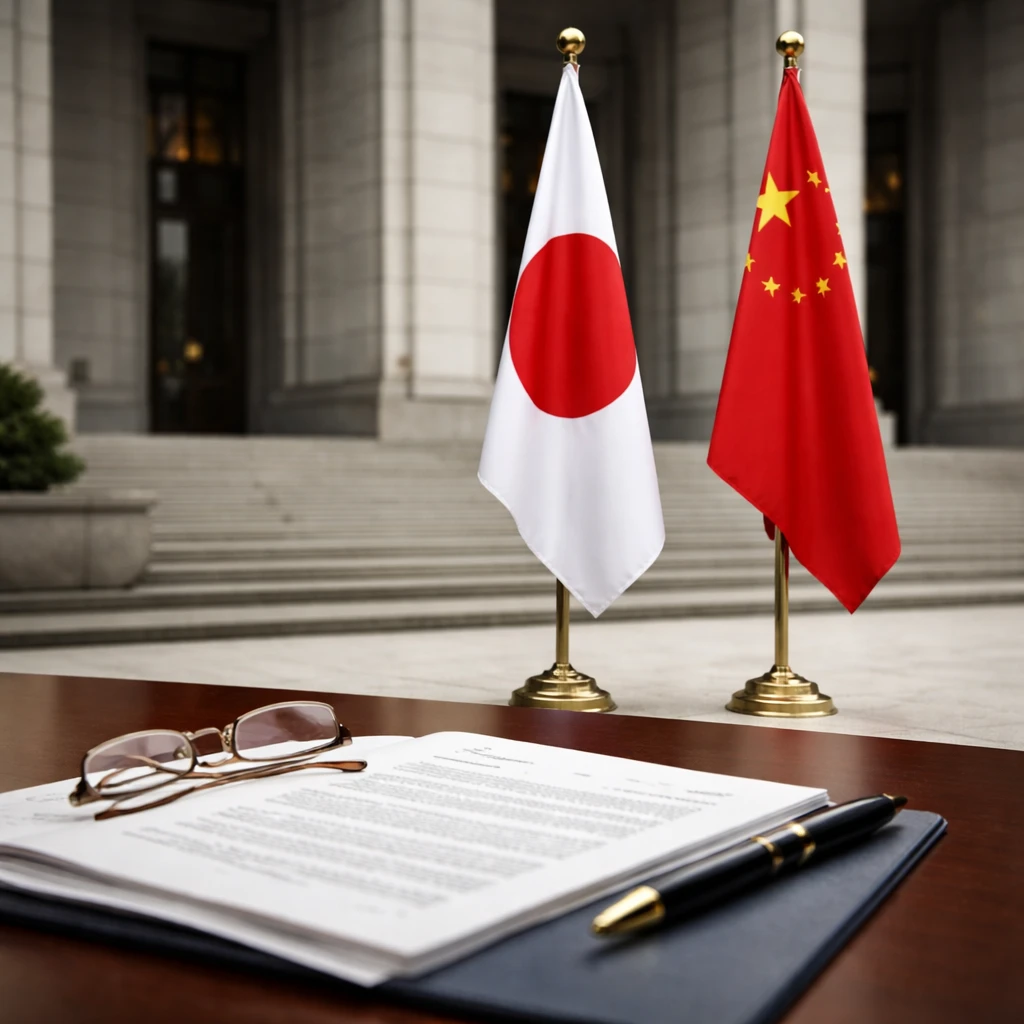
Japan has revised its official language describing its ties with China in the 2026 edition of its annual foreign policy report, moving from the description in the 2025 report that labeled the relationship as "one of the most important bilateral relations" to referring to China as "an important neighbor." The change, published Friday in the Diplomatic Bluebook, signals a shift in tone amid persistent tensions between the two countries over differing views on Taiwan.

Despite the adjustment in wording, Tokyo made clear that it intends to maintain channels of communication with Beijing. The Bluebook repeats a pledge to continue efforts to improve relations and to engage calmly and deliberately on issues affecting national interests.

Japanese Foreign Minister Toshimitsu Motegi commented on the report on Friday, noting that "changes occur annually across many fields." He said Tokyo will seek a strategic and mutually beneficial relationship with China, aim to build constructive and stable ties, and remain open to dialogue with Beijing.

The document and officials' remarks come against a backdrop of heightened friction in recent months. Tensions escalated after Japanese Prime Minister Sanae Takaichi said a Chinese invasion of Taiwan may be considered a legal justification for Tokyo to deploy troops. China, which regards Taiwan as its territory, has responded with measures including warnings to its citizens against travel to Japan, the imposition of trade restrictions, and public accusations that Japan is fostering militarism.

The Bluebook also follows a diplomatic incident in late March when an active member of Japan's Self-Defense Forces was arrested for breaching the grounds of the Chinese embassy in Tokyo. Such incidents have underscored the strains in bilateral ties even as Tokyo reiterates its intention to pursue dialogue.

On the path forward, the 2026 Bluebook states: "it is precisely because there are various issues and challenges that we will continue communicating and respond calmly and appropriately from the viewpoint of our national interest." The passage underscores Tokyo's approach of coupling candid appraisal of the relationship with a stated commitment to sustained engagement.


Summary - The 2026 Diplomatic Bluebook downgrades the description of Japan-China relations but stresses continued communication and a desire for a strategic, mutually beneficial relationship.

Risks

  • Sustained diplomatic strain over Taiwan could prolong trade restrictions and travel warnings, directly affecting trade and tourism sectors.
  • Heightened political rhetoric and security-related incidents, such as the embassy breach and statements on troop deployment, create uncertainty for defense procurement and regional security planning.
  • Evolving bilateral relations may complicate commercial ties and supply-chain decisions for companies operating between Japan and China given the potential for further diplomatic responses.

More from Economy

Fed’s Daly: Oil shock from Iran conflict lengthens the path back to 2% inflation Apr 10, 2026 BofA Maintains Call for Fed Rate Cuts, Cites Supply-Driven Inflation and Political Pressure Apr 10, 2026 Ukraine Negotiator Signals Advance Toward a Peace Accord With Russia Apr 10, 2026 US Secretary of State Rubio Plans May Visit to India as Ties Are Recalibrated Apr 10, 2026 European Defense Shares Drop as Construction Stocks Rally on Ukraine Negotiation Signals Apr 10, 2026