
Italian government bonds have lost the sheen they enjoyed when the current administration first came to power, with recent market moves exposing vulnerabilities tied to energy dependence, political setbacks and fiscal strain. Borrowing costs surged in March and have remained elevated despite a temporary respite in early April, as investors reassess the risks of holding Italian debt.
Short-term market volatility was especially pronounced in March when Italy’s two-year borrowing costs jumped 75 basis points - the largest monthly rise since 2022 - a move that outpaced comparable increases in France, Spain and Germany by at least 10 basis points. While a two-week ceasefire announced in early April briefly calmed markets, two-year yields sitting around 2.76% remain noticeably higher than levels before the United States and Israel attacked Iran at the end of February. Even after the fragile ceasefire, Italy’s debt financing costs climbed at an auction nL8N40S0RU on Friday to the highest level since July 2024.
Underlying the market reaction is Italy’s deep reliance on imported gas and liquefied natural gas. The London-based Energy Institute calculates that gas accounts for 38% of Italy’s energy supplies, and Italy is the European Union’s largest importer of liquefied natural gas through the Persian Gulf. Those facts have sharpened investor concern about the country’s growth outlook in the face of continued or sustained energy price increases. "With prospects for prolonged energy price increases, investors are very concerned about Italy’s growth outlook," said Commerzbank rate strategist Hauke Siemssen.
That concern is reflected in recession risk assessments. Commerzbank forecasts that Italy could register two consecutive quarters of falling gross domestic product in the first half of this year, meeting the technical definition of a recession. Growth is seen at just 0.4% this year and 0.6% in 2027 in the spring forecasts of the Organisation for Economic Cooperation and Development, marking Italy as the slowest-growing economy among the Group of 20 advanced nations in those projections.
Market moves were not limited to short-term rates. Italian 10-year benchmark BTP yields climbed roughly 80 basis points in March following the start of the Iran war - a larger move than the roughly 60-basis-point increase in equivalent French OATs and the 45-basis-point rise in German Bund yields. The premium investors demand to hold Italy’s 10-year bonds versus Germany’s - the closely watched spread - briefly widened above 100 basis points, its highest level in nine months. That widening makes it more expensive for Rome to service and refinance public debt that rose last year to 137% of gross domestic product, the second-largest ratio in the euro zone after Greece’s. Italy’s 10-year benchmark bonds now offer the highest yields in the 21-nation bloc.
Analysts argue that the Iran conflict served as a reminder to markets that Italian debt remains particularly vulnerable to episodes of risk aversion despite improvements Rome has touted in economic fundamentals. "To me, BTPs are like a global risk proxy," said Steven Major, global macro advisor at the global brokerage Tradition in Dubai.
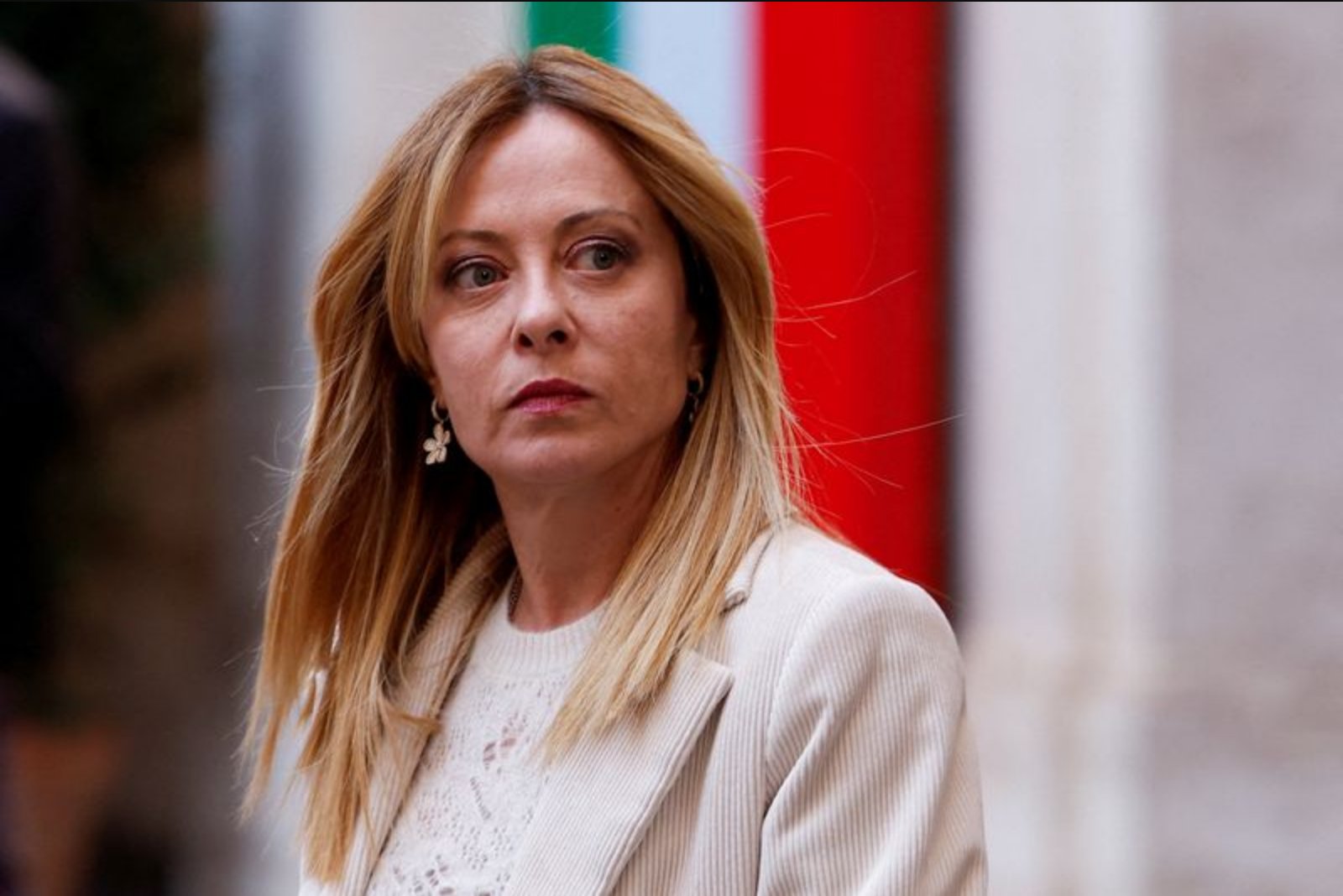
Political developments have added another layer of uncertainty. Prime Minister Giorgia Meloni, whose government had enjoyed a period of market-friendly stability since coming to power in 2022, recently suffered a decisive defeat in a referendum on judicial reform nL8N40B1GV. In the days that followed the vote she dismissed three government officials nL8N40D2A8, two of whom faced financial or mafia-related scandals. The referendum setback and the dismissals have eroded some of the political stability that markets had factored into their favourable view of Italian sovereign debt.
Political risk consultancy Eurasia Group said in a client note that Meloni’s position is "becoming more precarious," and noted that the referendum defeat undercut what had been one of the government’s flagship achievements while demonstrating an ability for a sizeable majority to coalesce against it. That fragility has implications for fiscal policy heading into the 2027 elections; analysts warn the government could face stronger incentives to loosen fiscal policy to shore up popular support.
Both Meloni and Economy Minister Giancarlo Giorgetti have asked Brussels to suspend European Union budget rules if the Iran war persists nL8N40M07F, although the EU has so far declined that request. Observers say this combination of political pressures - the justice reform vote, the approach of the 2027 election and rising energy costs - raises the probability that fiscal discipline could wobble. Franziska Palmas, senior Europe economist at Capital Economics, said the incentives to loosen policy have risen under these circumstances.
At the same time, Rome’s fiscal room for manoeuvre is constrained by recent budget outcomes. News last month showed that Italy’s 2025 deficit stood at 3.1% of GDP, missing a 3.0% target nL8N3ZQ0QY, which means Italy cannot exit an EU disciplinary procedure this year for its "excessive deficit." Capital Economics projects that, despite EU constraints, this year’s deficit will rise to 3.5% of GDP rather than fall to the 2.8% the government has targeted.
Market strategists differ on how long investors will remain wary of Italian debt once geopolitical tensions ease. Commerzbank’s Siemssen commented that he expects BTP-Bund spreads to narrow from recent peaks when Middle East turmoil subsides, but added he does not anticipate spreads returning fully to pre-crisis tightness. That cautious outlook suggests that even if an immediate geopolitical trigger abates, Italy may face a higher baseline cost of borrowing than in earlier periods when markets placed greater confidence in its fiscal trajectory.
For investors and policymakers alike, the current episode reinforces three linked vulnerabilities: reliance on imported energy, political volatility that can alter fiscal trajectories, and already elevated public debt that amplifies the impact of higher borrowing costs. The interplay of these factors is shaping sentiment toward Italian sovereign debt and will influence how markets and authorities navigate financing and policy choices in the months ahead.