
SHANGHAI, April 8 - Several of the world’s largest investment banks have scaled back expectations that China will cut its official interest rates this year, now projecting policy rates will be held steady through 2026. The change in forecasts comes as the economic effect of the Middle East conflict appears to be smaller for China than for many of its regional peers, and as recent indicators point toward a modest rebound in activity.
Goldman SachsChina economist Xinquan Chen said in a research note that, "Against the backdrop of Chinas relative resilience amid Hormuz disruptions, better-than-expected activity data in January-February, and the producer price index (PPI) likely turning positive in March, we see no clear catalyst for a policy rate cut in 2026." He added that the bank had removed its prior call for a 10-basis-point (bps) rate cut in the third quarter from its baseline scenario, while retaining an expectation that banks' reserve requirement ratios would be reduced by a cumulative 50 bps.
Analysts say Chinahas more space to respond to rising global energy costs than many other economies because it entered the period with deflationary pressure and holds comparatively greater oil and gas reserves. That combination has helped blunt the pass-through of higher oil prices into domestic inflation, and reduced the urgency for immediate policy easing.
Standard Chartereds head of Greater China and North Asia economic research, Shuang Ding, said, "Middle East conflicts certainly had an impact on China, but it will be smaller than on other countries." Ding noted that, "China has effectively ruled out the possibility of interest rate cuts (for now), and there is no need for interest rate hikes in the short term."
Late on Tuesday, the United States and Iran agreed to a two-week ceasefire, a development that market watchers flagged as further reducing the near-term risk of a larger economic shock to China. Domestic policy steps in China since the outbreak of the Iran war have been relatively muted, beyond adjustments to retail gasoline and diesel pricing.
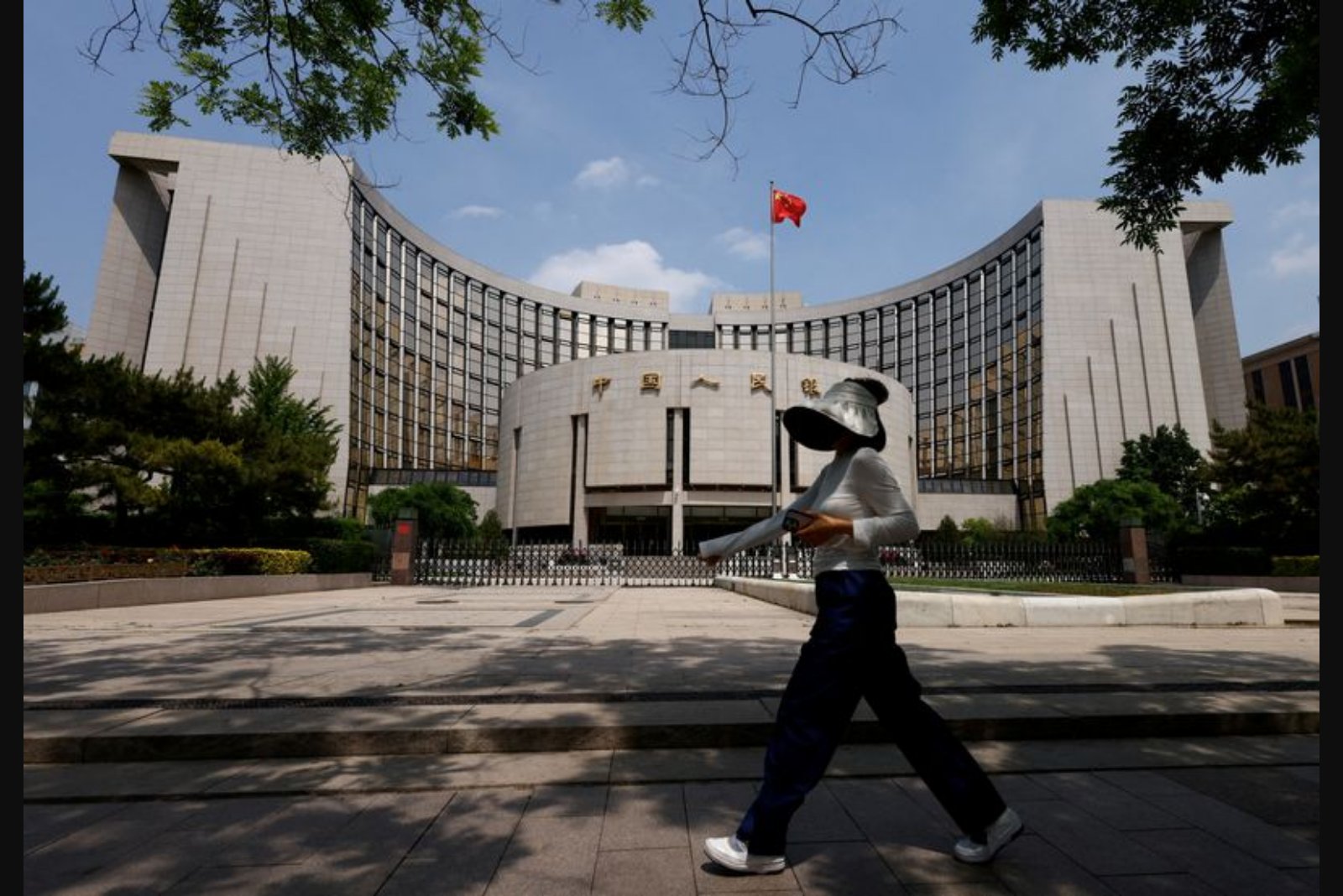
The Peoples Bank of China has reiterated that it will maintain an "appropriately loose" monetary stance this year, deploying tools such as cuts to reserve requirements and adjustments to interest rates to keep liquidity abundant. Market indicators have shown that the banking system is carrying ample liquidity since the start of the month: the trade-weighted overnight repo has been around three-year lows and the seven-day repo rate has fallen below the main policy rate.
Reflecting these developments, ANZ analysts wrote in a note that, "As the growth momentum is within the policy target, we no longer expect policy rate cuts in both 2026 and 2027." The banks view underscores the growing consensus among global financial institutions that an immediate easing cycle for official policy rates in China is unlikely while macro momentum remains aligned with policymakers' objectives.