
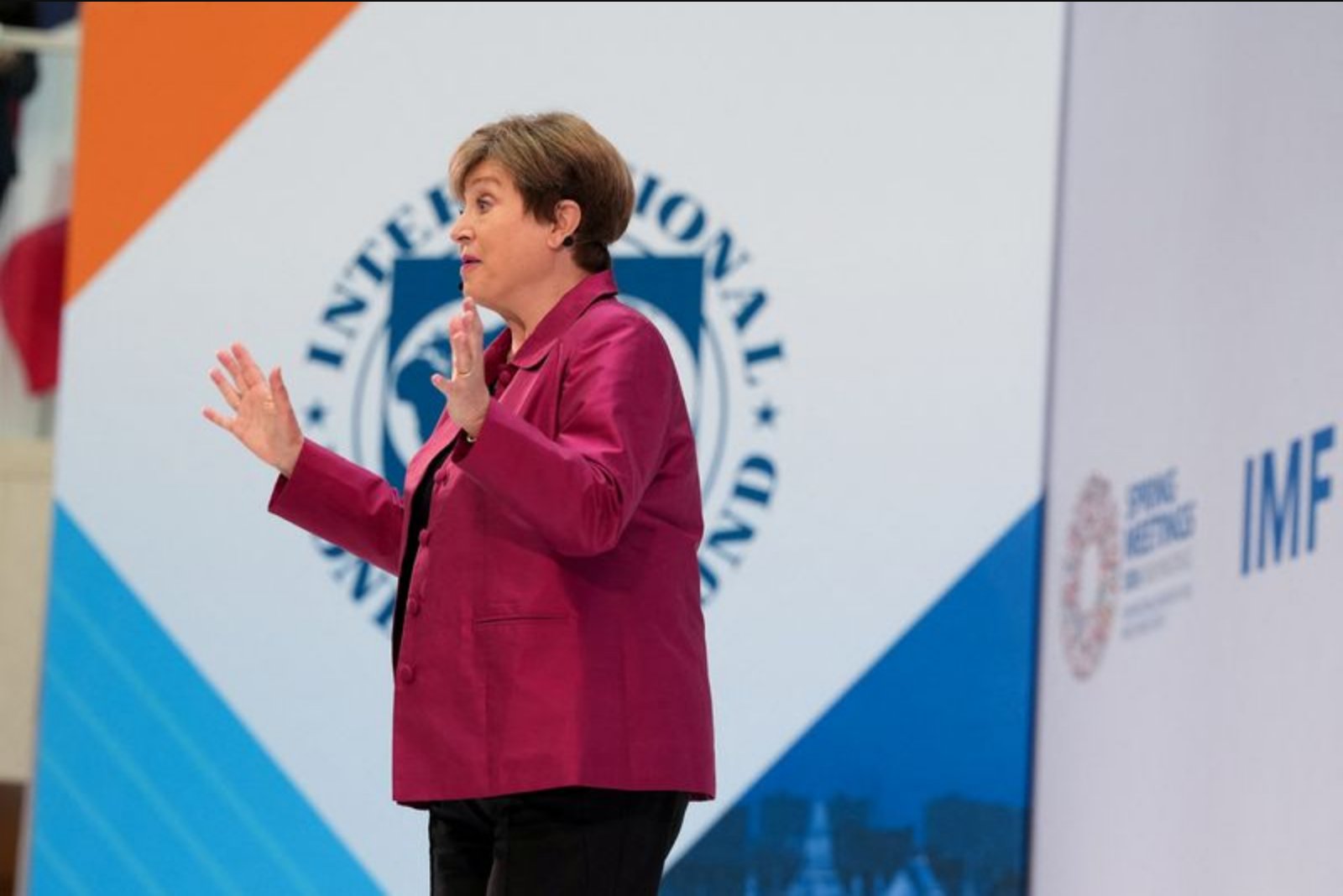
WASHINGTON - International Monetary Fund Managing Director Kristalina Georgieva said on Thursday that the IMF needs to complete the 16th quota review approved in 2023 so the institution will have what she described as "scary" financial firepower to respond to future crises.
Georgieva said she was optimistic the IMF will obtain approval from the U.S. Congress this year for the quota review. The change, she noted, increases quota lending resources by 50%, which in turn makes a greater portion of the IMF's roughly $1 trillion in lending capacity immediately available.
She underscored that the United States is the IMF's largest shareholder and signaled hope that congressional approval will follow within the year. According to Georgieva, the Fund already maintains a "big cushion" of resources, but finalizing the quota increase is necessary to provide financial reassurance "because we don’t know what the future may bring."
Reflecting on the intended effect of greater capacity, Georgieva said the goal was not merely to avoid running out of funds but to be so robust that a crisis would effectively be deterred. "It is not like we run out of money, but we want to be so strong that the crisis comes, looks at us, puts its tail between its legs and goes away. Scary," Georgieva said.
Summary of the key elements in Georgieva's comments:
- The IMF needs to finalize the 16th quota review, approved in 2023, to strengthen its lending position.
- The quota review would raise quota lending resources by 50% and broaden immediate access to the IMF's approximately $1 trillion lending capacity.
- Georgieva is optimistic about U.S. congressional approval this year; the United States remains the IMF's largest shareholder.
The comments reiterate the Fund's intent to ensure it can act decisively if systemic or country-specific shocks emerge. Georgieva framed the quota increase as a form of financial reassurance for global markets and policymakers, even as she acknowledged the IMF's present resource cushion. She emphasized the unpredictable nature of future shocks as a reason for ensuring maximum, immediately deployable capacity.