
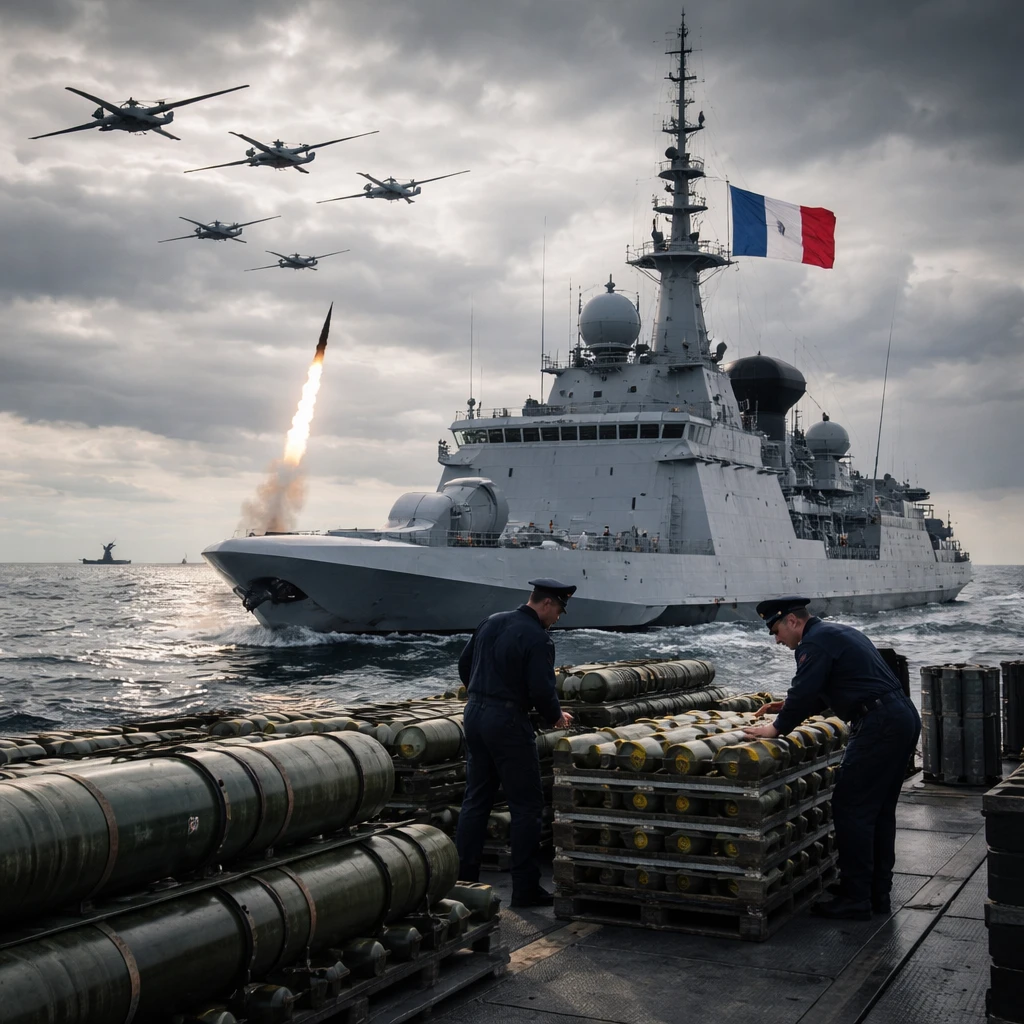
France announced on Wednesday a revised military planning law that increases defense spending by 36 billion euros through 2030, a package that the government says will expand its nuclear forces and shore up stocks of missiles, artillery ammunition and drones.
The updated 2024-2030 law sets a course for defense outlays to reach 2.5% of gross domestic product by the end of the decade, up from roughly 2% currently. The measure would lift the annual defense budget to 76.3 billion euros in 2030, a level described in the draft as nearly double the defense appropriation in 2017.
In a written summary accompanying the bill, Defense Minister Catherine Vautrin framed the package as a response to shifting global risks. "The deep and brutal shift in the balance of international geopolitics forces us to go harder and faster," she wrote. "France has acknowledged the global shift toward enduring and multidimensional conflict."
The draft planning law includes a proposal to increase the number of nuclear warheads. It also states that spending on nuclear arms would remain roughly 13% of the overall defense budget. At present France spends about 5.6 billion euros annually to maintain a stockpile of 290 submarine- and air-launched weapons, which the draft identifies as the country's current arsenal size.
Beyond the nuclear component, the bill directs an additional 8.5 billion euros toward rebuilding conventional munitions and long-range strike inventories, specifically citing artillery shells, air defense interceptors and long-range missiles.
Emphasis in the draft is placed on deep-strike capabilities. The government has launched studies for a new conventional ballistic missile with a range of up to 2,500 kilometers, and the text calls for upgrades to existing cruise missile systems.
Funding for air and missile defenses increases as well, with 1.6 billion euros earmarked to speed delivery of SAMP/T NG systems co-produced with Italy, and to broaden counter-drone capabilities on land, at sea and around critical infrastructure.
Investment in drone and robotic warfare is specifically allocated 2 billion euros. The draft outlines plans to expand naval and medium-altitude, long-endurance capabilities, to replace U.S.-made Reaper drones by 2035, and to develop robotic systems capable of diving to the ocean floor.
The law thus packages increases across strategic nuclear forces, conventional munitions, air and missile defenses, and emerging unmanned and robotic domains, while setting a multi-year ramp in spending to meet the targets through 2030.
Summary of key budget items:
- 36 billion euros in increased defense spending through 2030 (about $39 billion).
- Defense spending target of 2.5% of GDP by 2030; annual budget of 76.3 billion euros in 2030.
- Maintain nuclear arms expenditure at roughly 13% of the defense budget; current annual nuclear maintenance spending about 5.6 billion euros for a stockpile of 290 weapons.
- 8.5 billion euros for rebuilding artillery shells, air defense interceptors and long-range missiles.
- 1.6 billion euros for accelerated SAMP/T NG deliveries and expanded counter-drone capabilities.
- 2 billion euros for drones and robotic warfare, including plans to replace Reaper drones by 2035 and develop deep-ocean robots.