
Economy April 9, 2026 12:33 AM

Foreign investors return to Japanese equities, pouring in 2.96 trillion yen after three weeks of selling

Flows flip as ceasefire optimism and seasonal reallocations coincide with a jump in JGB yields

By Derek Hwang
Foreign investors return to Japanese equities, pouring in 2.96 trillion yen after three weeks of selling

Foreign purchases of Japanese stocks swung to a net inflow of 2.96 trillion yen in the week through April 4, reversing most of the prior week's heavy withdrawals. The shift came as investor sentiment steadied ahead of a ceasefire in the Iran war and as seasonal portfolio reallocation and a rise in long-term government bond yields attracted overseas capital.

Key Points

  • Foreign investors made a net purchase of 2.96 trillion yen in Japanese stocks in the week through April 4, reversing most of the prior week's 4.45 trillion yen of withdrawals.
  • The Nikkei jumped about 5.39% on Wednesday after a ceasefire deal between the U.S. and Iran, while seasonal repatriation of holdings and a rise in JGB yields supported inflows.
  • Foreign inflows into local long-term Japanese government bonds amounted to 2.46 trillion yen; Japanese investors put roughly 1.44 trillion yen into foreign stocks but sold 2.46 trillion yen of foreign long-term bonds.

Foreign investors returned to Japanese equities in the week ending April 4, injecting a net 2.96 trillion yen ($18.65 billion) into domestic shares after three consecutive weeks of net selling, according to Ministry of Finance data released on Thursday.

The inward flow offset nearly two-thirds of the 4.45 trillion yen that foreign investors withdrew the previous week and followed significant net sales in March, when foreigners shed close to 7.37 trillion yen of Japanese equities.

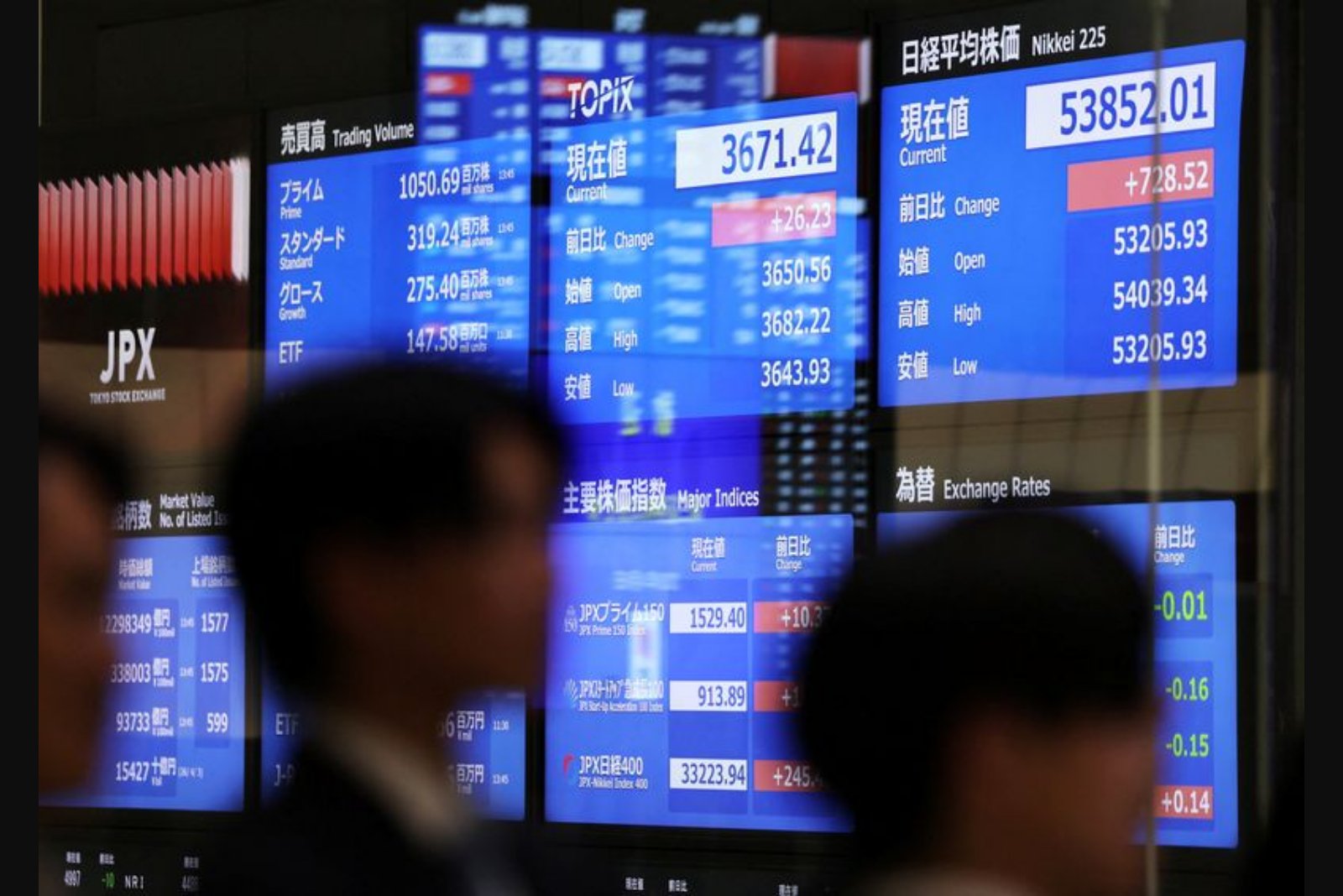
Stock market performance reflected the change in sentiment: the Nikkei rallied around 5.39% on Wednesday, a move that followed news that the U.S. and Iran had reached a ceasefire agreement the day before. Market participants noted that the prospect of easing geopolitical tensions helped stabilize investor appetite for Japanese assets.

Seasonal portfolio dynamics also played a role. Tomochika Kitaoka, chief equity strategist for Japan at Nomura, said foreign financial institutions typically transfer holdings from Tokyo to offshore entities in March ahead of the cutoff for voting rights and dividend entitlements, and then repatriate them in April. That pattern contributed to the inflows recorded in the most recent week.

Bond markets saw notable foreign interest as well. A sharp rise in benchmark Japanese government bond yields - to levels not seen in nearly three decades - coincided with 2.46 trillion yen of foreign purchases of local long-term bonds during the week.

Japanese investors were active abroad as well. Domestic investors invested approximately 1.44 trillion yen into foreign stocks in the week, the largest weekly amount in 11 months, while simultaneously selling foreign long-term bonds by a net 2.46 trillion yen. The latter marked the fourth straight week of net selling in overseas long-term debt by Japanese investors.

Exchange rate used in reporting: $1 = 158.7000 yen.

Risks

  • The recent stabilization in investor sentiment was linked to a ceasefire in the Iran war, leaving the durability of that support dependent on the continuation of the ceasefire - a potential source of renewed market volatility.
  • Seasonal portfolio movements - institutions shifting holdings offshore in March and back in April - can reverse, meaning part of the inflows may reflect timing effects rather than a sustained change in investor conviction.
  • A sharp move in benchmark Japanese government bond yields, which helped attract 2.46 trillion yen in foreign purchases of long-term JGBs, could be a source of market volatility if yields retrace.

More from Economy

March Sees Sharp Rebound in Chinese Bank Lending as Seasonality and Demand Pick Up Apr 9, 2026 Markets Face Reality Check as Middle East Tensions Persist Apr 9, 2026 Japan’s Consumer Confidence Slips Sharply in March as Middle East Conflict Drives Fuel Costs Higher Apr 9, 2026 Treasury Secretary Presses Congress to Approve Clarity Act to Set Federal Crypto Rules Apr 9, 2026 Trump Says U.S. Forces Will Stay Around Iran Until a 'Real Agreement' Is Reached Apr 9, 2026