
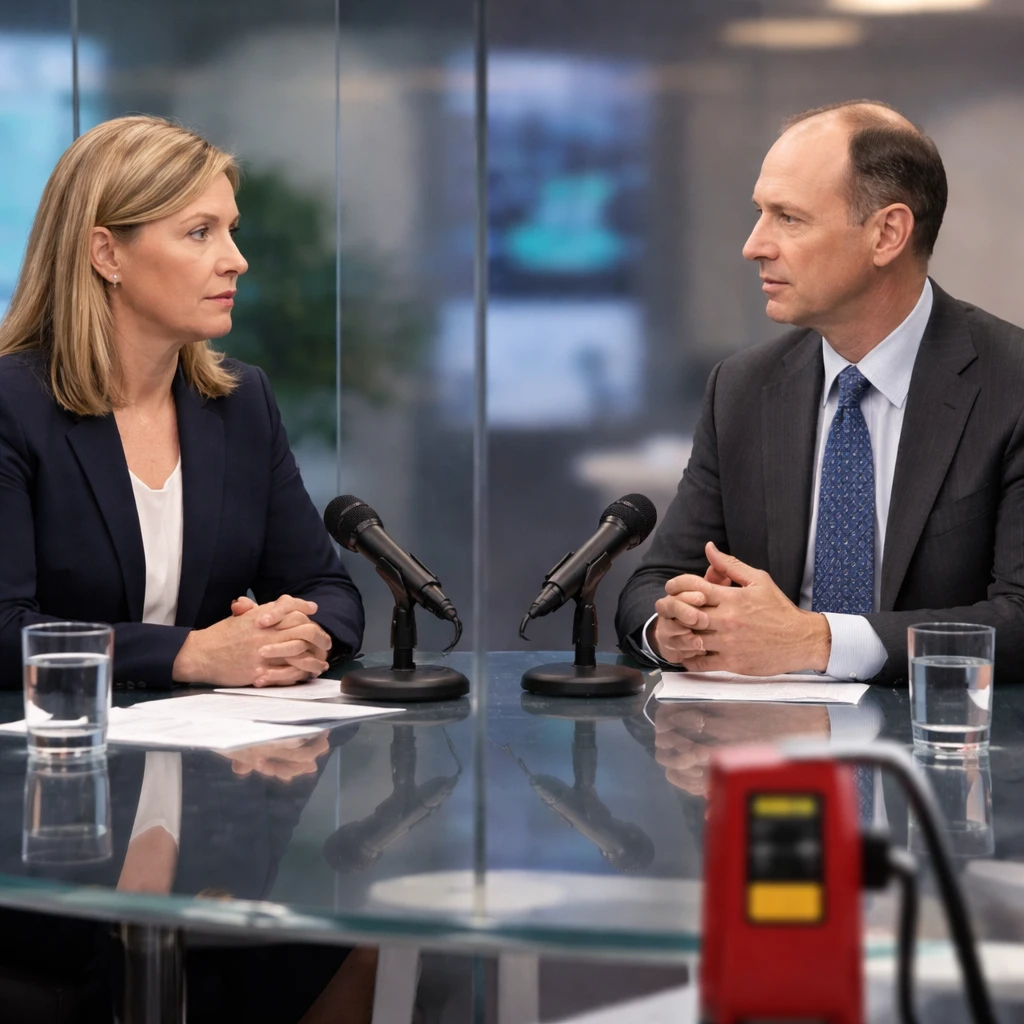
Cleveland Federal Reserve President Beth Hammack and Chicago Fed President Austan Goolsbee warned that inflation presents a greater challenge than employment, a stance that supports a bias toward tighter monetary policy as oil and gasoline prices rise in the wake of the Iran war.
The two Fed officials spoke in a joint interview using a four-color framework that ranges from red - "the house is on fire" - to green - "everything is looking swell." That framework framed their assessments of inflation, the labor market and financial stability.
Austan Goolsbee described the current inflation picture in stark terms. "At least orange. Orange with a chance of meatballs; it hasn't been great," he said, referring to the inflation outlook amid rising gasoline costs. He added that his earlier optimism about returning to a 2% inflation path has been shaken. "Yikes, it's going from orange to red lately --- we had tariffs increasing prices, that was supposed to go away, kind of didn't go away, and now we add another stagflationary shock on top ....it's a troubling moment."
Hammack echoed concerns about inflation, noting it has run above the Fed's target for five years and has been "basically moving sideways" for the past two years. Describing her color assessment, she said: "It's definitely at the brighter, the more vibrant color orange: I don't know if that's burnt orange, burnt sienna: my Crayola box is a little bit old."
The interview was recorded on Wednesday, two days before the Labor Department's March jobs report showed the largest monthly payrolls gain since Donald Trump began his second presidential term in January. The jobs report also recorded that the unemployment rate fell to 4.3%, a decline the officials noted was driven mainly by large numbers of workers leaving the labor force.
On the labor market specifically, Hammack judged the unemployment rate to be close to her estimate of full employment. She characterized the balance as fragile but ultimately gave the labor market a rating between yellow and green, invoking a lighter note when she compared it to "the Diet Mountain Dew" favored by a fellow policymaker.
Hammack assessed the financial system as "generally green," saying that from a financial stability standpoint the economy remains in a good place despite stock market declines since the start of the Iran war.
Goolsbee, by contrast, assigned the labor market a "yellow" rating, noting its low-hiring, low-firing state largely reflects ongoing uncertainty. He said he is content with payment systems but admitted to being "a little more anxious" about asset prices. "It does look like there is a lot of frothiness," he said, adding that it is unclear whether that froth is supported by productivity improvements or represents a bubble that could burst.
Both officials' remarks point to an elevated focus on inflationary risks as external developments push energy costs higher, while employment metrics show mixed signals driven in part by labor force participation changes. Their color-coded assessments underline a view that, for now, inflation warrants heightened attention from policymakers.