
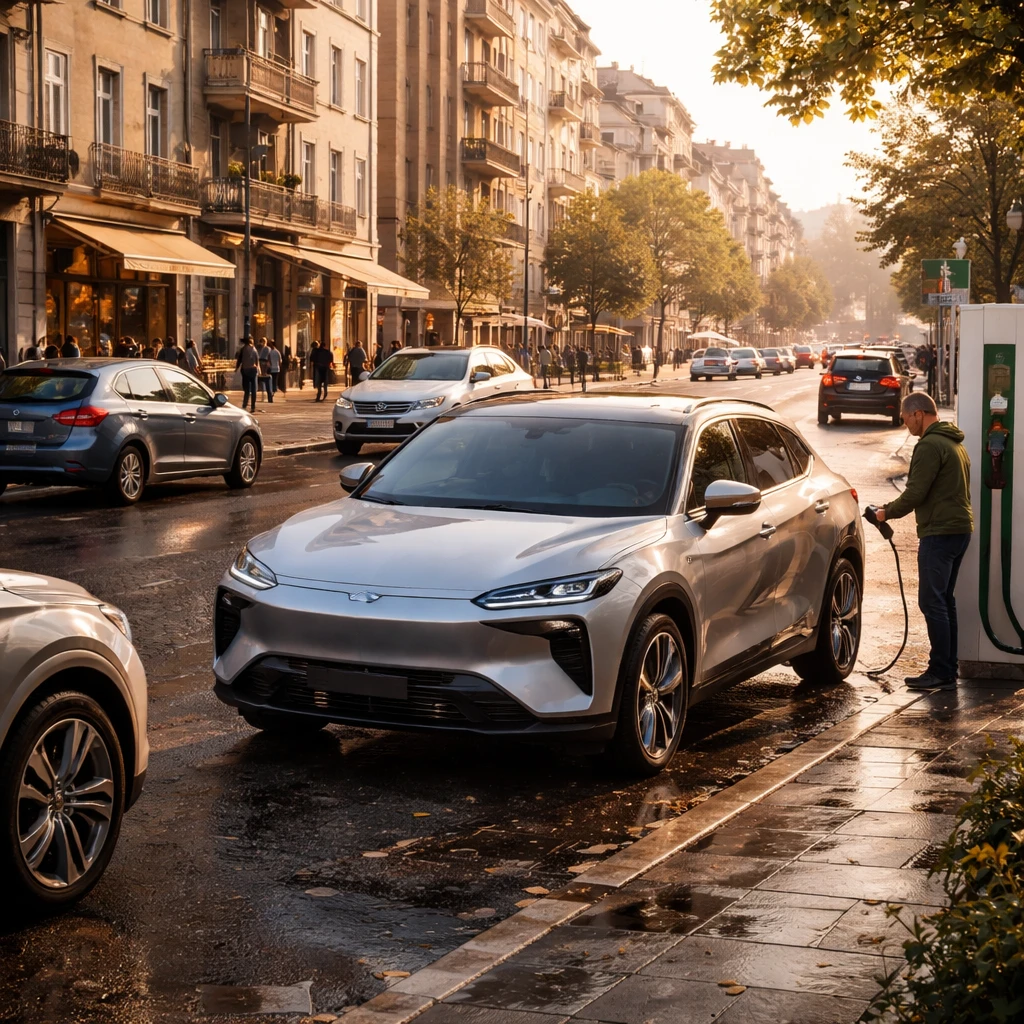
European motorists are rethinking long-held preferences as openness to Chinese automotive brands gains ground across the continent. A study of 4,400 consumers conducted by HorvE1th & Partner and analyzed by Bernstein shows that 55% of European drivers would now consider purchasing a Chinese-branded vehicle, up from 43% in late 2023.
The survey points to a rapid erosion of earlier resistance. Whereas two years ago 46% of respondents said they would categorically reject a Chinese brand, that share has fallen to 21% in the latest polling.
Regional variation and pockets of rapid adoption
The data reveal significant regional differences. Spain and Hungary top the list, with 75% of consumers in those markets indicating willingness to buy a Chinese vehicle. Italy follows with 64% expressing openness. Even in Germany, a country known for strong loyalty to domestic automakers, the share of consumers open to Chinese brands has climbed to 46%.
What is driving the shift
Survey respondents still rank traditional measures such as safety and reliability as central to their decision-making. However, a notable transition is under way in the determinants of trust: emerging, tech-oriented attributes - specifically charging speed, battery range, and infotainment connectivity - are increasingly influential.
BernsteinE28099s analysis highlights that Chinese manufacturers have leveraged strengths in battery technology and software integration to close a perceived "value gap," delivering features that historically carried a premium in European-engineered models. Brands cited in the survey as examples of Chinese competition include BYD, MG, and NIO.
From curiosity to mainstream consideration
The shift in sentiment also shows up in intent: 13% of respondents now say they would "definitely" buy a Chinese vehicle, a figure that has doubled compared with two years ago. Bernstein notes that this evolution suggests incumbent European automakers may face an increasingly constrained window to protect market share.
As Chinese names move beyond niche interest into broader consumer consideration, the battleground is changing. Competition is less about low-cost positioning alone and more about technological relevance and the ability to win consumer trust around new performance metrics.
Implications for markets and industry players
The survey's results carry clear implications for automotive manufacturers, suppliers of battery and software systems, and market participants monitoring shifts in consumer preferences. The finding underscores that consumer priorities are adjusting toward attributes where certain Chinese automakers have established competitive strengths.