
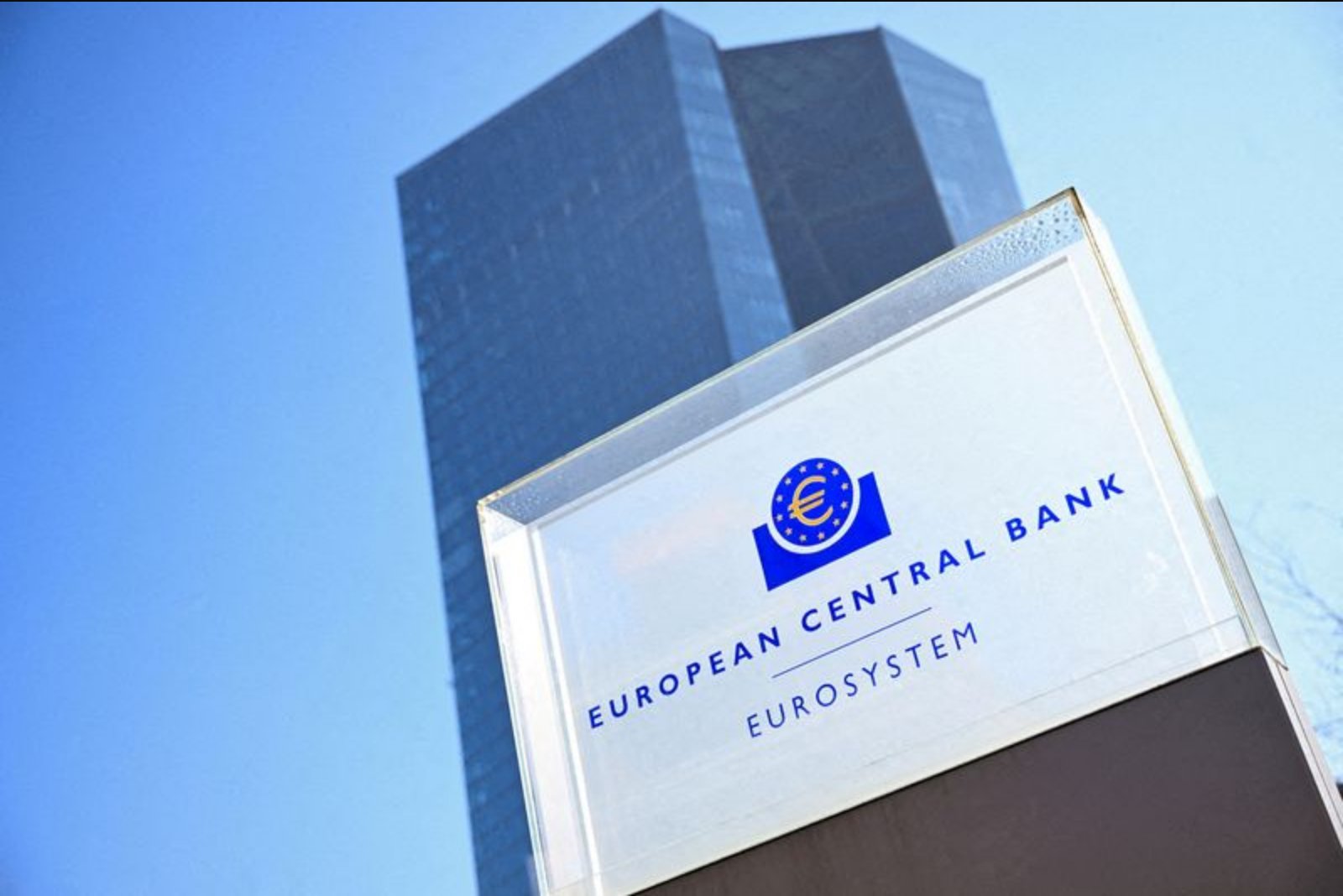
Euro‑zone government bond yields nudged up towards recent highs on Monday, driven by a spike in oil prices after talks between the United States and Iran failed to secure a deal to halt the conflict.
Brent crude futures climbed past $100 a barrel, and market attention turned to a U.S. Navy plan to block ships to and from Iran via the Strait of Hormuz - a step that could constrain Iranian oil exports. The oil move helped push money-market pricing toward a higher path for European Central Bank policy rates.
Traders moved to price in an ECB deposit facility rate of about 2.68% by year-end, a level that implies two further rate increases this year and about a 70% chance of a third move by December. That represented an uptick from around 2.60% late on Friday. Separately, markets put the probability of a policy rate increase in April at roughly 45%, up from 25% late on Friday. The ECB's deposit facility rate currently stands at 2%.
Investors are weighing a more hawkish ECB tilt even as the energy shock threatens to weigh on growth, said market participants. The effect showed up in government bond markets across core euro-area issuers.
Germany's 10-year government bond yield rose 1.5 basis points to 3.06% on Monday. The yield had peaked at 3.13% in late March, its highest level since June 2011.
Shorter-dated German paper, more sensitive to near-term policy expectations, moved higher as well: two-year yields rose 4 basis points to 2.62%. Those two-year yields had reached 2.771% in late March, their highest since July 2024.
"The temporary truce briefly reduced immediate tail risks, but the failure of negotiations over the weekend has underscored that the constraints that matter most for near‑term (energy) pricing remain unresolved," said Tobias Keller, investment strategist at UniCredit.
Commenting on the wider implications for oil reliance, Antonio Gabriel, global economist at BofA, noted that a 1970s-style repeat looks unlikely even if the conflict escalates, citing a gradual decline in global oil dependence since that era.
Among peripheral euro-area markets, Italy's 10-year government bond yield climbed 3.5 basis points to 3.86%, after reaching 4.142% in late March, the highest since July 2024. The spread between Italian BTPs and German Bunds stood at 79 basis points. That spread had been 63 basis points before the U.S.-Israeli war with Iran began and widened to 103.62 during the conflict, its highest level since June 20, 2025.
"We would probably need to see a more significant escalation for BTP-Bund spreads to test the March highs again," said Hauke Siemssen, rate strategist at Commerzbank. "BTPs should also underperform OATs (French government bonds) again this week as they are more susceptible to energy prices, while we expect the spread to re-tighten over the long term," he added.
The spread between French government debt and Bunds was 64.50 basis points, up from 58 basis points before the conflict. On Friday, Fitch confirmed France's A+ rating with a stable outlook.
Key takeaways
- Money markets have pushed the implied ECB deposit facility rate to about 2.68% by year-end, reflecting increased odds of a third rate rise in 2024.
- Oil prices above $100 and potential disruptions to Iranian exports have lifted yields across core and peripheral euro-area sovereigns, with Germany and Italy both seeing recent increases.
- Investors are increasingly pricing a hawkish ECB stance despite concerns that higher energy prices could weigh on growth.
Risks and uncertainties
- Renewed escalation in the conflict could push energy prices higher again, further pressuring growth and government borrowing costs - a material risk for energy and sovereign bond markets.
- Widening spreads between peripheral government bonds and Bunds could intensify if the conflict deepens, influencing bank and investor appetite for Italian and French debt.
- Near-term policy decisions remain uncertain: markets show rising odds of an April ECB hike, but those probabilities shifted materially over a short period, reflecting volatility in rates expectations.
Market participants noted the temporary truce reduced some immediate tail risks, but the collapse of weekend negotiations left the key drivers of energy pricing unresolved. That dynamic is now being reflected in both oil and sovereign bond markets across the euro area.