
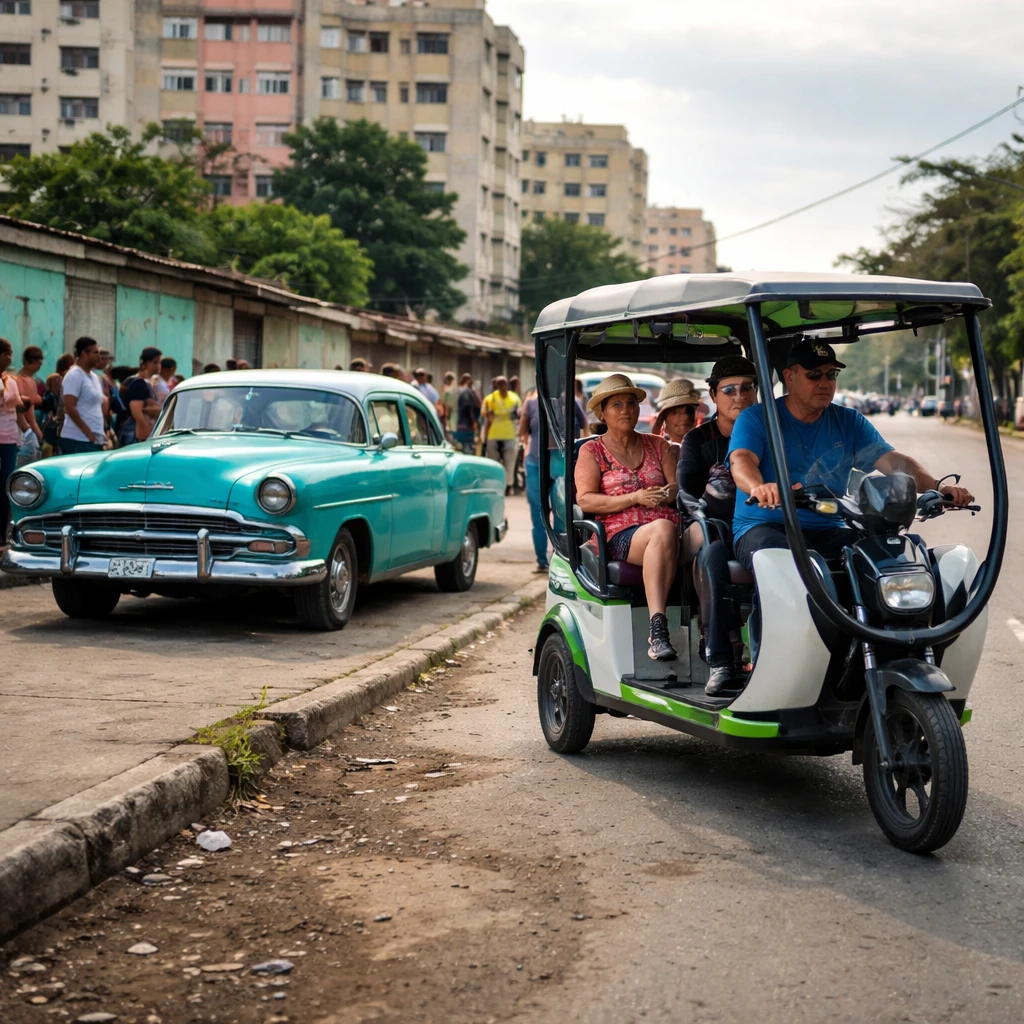
HAVANA, Feb 13 - The roar of classic 1959 Chevrolets that long defined Havana's streets is being replaced by the quieter whirr of electric vehicles as Cuba confronts one of its most acute fuel shortages in years. For decades the island's automotive scene changed little, dominated by colorful vintage cars. Recently, however, a growing share of Cubans has turned to electric transport as liquid fuel has become harder to obtain.
The shift has accelerated as U.S. policy cut off oil exports from Venezuela to the communist-run country and included warnings that other nations sending fuel to Cuba could face penalties. The U.S. administration characterized Cuba as "an unusual and extraordinary threat" to U.S. national security, measures that contributed to tightening the island's access to external fuel supplies.
In Alamar, a neighborhood on Havana's outskirts, Eugenio Gainza operates a state-owned, rickshaw-style electric tricycle, navigating the area's rutted streets to pick up passengers. He described a heavy daily workload: "We make 16 trips a day," he said. "There is no fuel. This is the only means of transportation supporting this area."
For many residents, state-run electric vehicles provide a crucial transport option amid rationing. Maria Caridad Gonzalez said these services are a lifeline in an economy under strain. She noted that private, electric services are available but come at a higher cost.
Last week, the Cuban government outlined a broad plan to ration fuel and to shield essential services from the cuts. The policy aims to prioritize mobility for critical needs while overall supplies decline. Resident Barbaro Castaneda emphasized the role of renewable-based transport in preventing a total halt in movement: "Together, it is what is helping the country move forward," he said. "Otherwise, we would be completely paralyzed."
The growing presence of electric vehicles on Cuban streets reflects an adaptation to constrained fuel availability and official steps to manage scarce resources. State-operated fleets and privately run services are both part of the response, with costs and accessibility differing between the two. As rationing takes effect, electric transport is increasingly central to everyday movement across neighborhoods dependent on reliable transit options.