
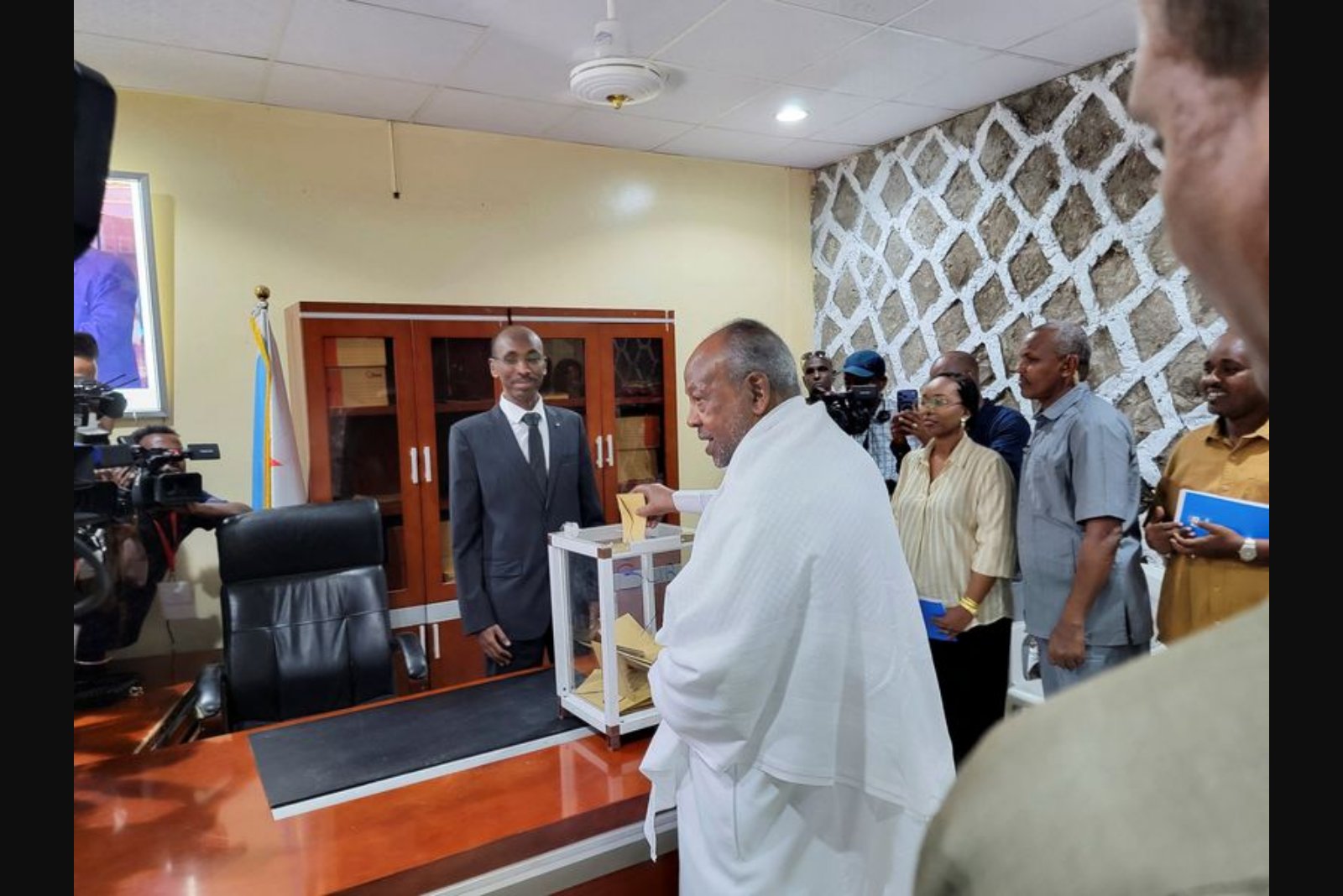
State-run Radio Television Djibouti announced on Saturday that President Ismael Omar Guelleh captured 97.8% of the vote, an outcome that awards him a sixth presidential term and keeps him at the head of the East African country he has led for 27 years.
Guelleh, 78 years old, posted an image on X bearing the French word "RÉÉLU" - re-elected - following the vote. The result was reported by the state broadcaster and reflects a contest in which the president’s victory was widely seen as assured.
In Friday’s ballot the president faced a single opponent, Mohamed Farah Samatar, who represents a small political party that does not hold seats in the national parliament. Two of the main opposition parties have boycotted national elections since 2016, citing concerns that election authorities do not act impartially.
State media published voter turnout at 80.4%. In the previous presidential election in 2021, Guelleh won with over 97% of the vote.
Last October, the national parliament removed a 75-year age ceiling for presidential candidates and also eliminated a previously required referendum to approve a new constitution. Those changes preceded this year’s vote.
Djibouti, a nation with a population under 1 million, occupies a strategic position on the Gulf of Aden at the entrance to the Red Sea. The country hosts military bases for several countries, including the United States, China, France, Italy and Japan. Since 2023, several commercial ships that were damaged in attacks by Yemen’s Houthi militants have docked in Djibouti.
Guelleh was selected in 1999 to succeed his uncle, Hassan Gouled Aptidon, and his party maintains dominant control over national institutions. Observers noted that this history of institutional control contributed to an election in which the outcome was not in doubt.
Djibouti has remained relatively stable compared with several other nations in the Horn of Africa, and the government has directed substantial investment into port infrastructure aiming to reinforce the country’s role as the principal maritime gateway for landlocked Ethiopia.
Human rights organizations, however, accuse Djiboutian authorities of suppressing political opponents, activists and journalists. The government has rejected claims of systematic abuses and dismissed criticisms of the electoral process. In 2020, security forces moved to quash rare anti-government street protests that followed the arrest of a former air force pilot who had publicly alleged corruption and clan-based discrimination.
Contextual note: This report is based on statements from state media and other details released in connection with the election. Where limited information was provided publicly, those limitations are reflected in the account above.