
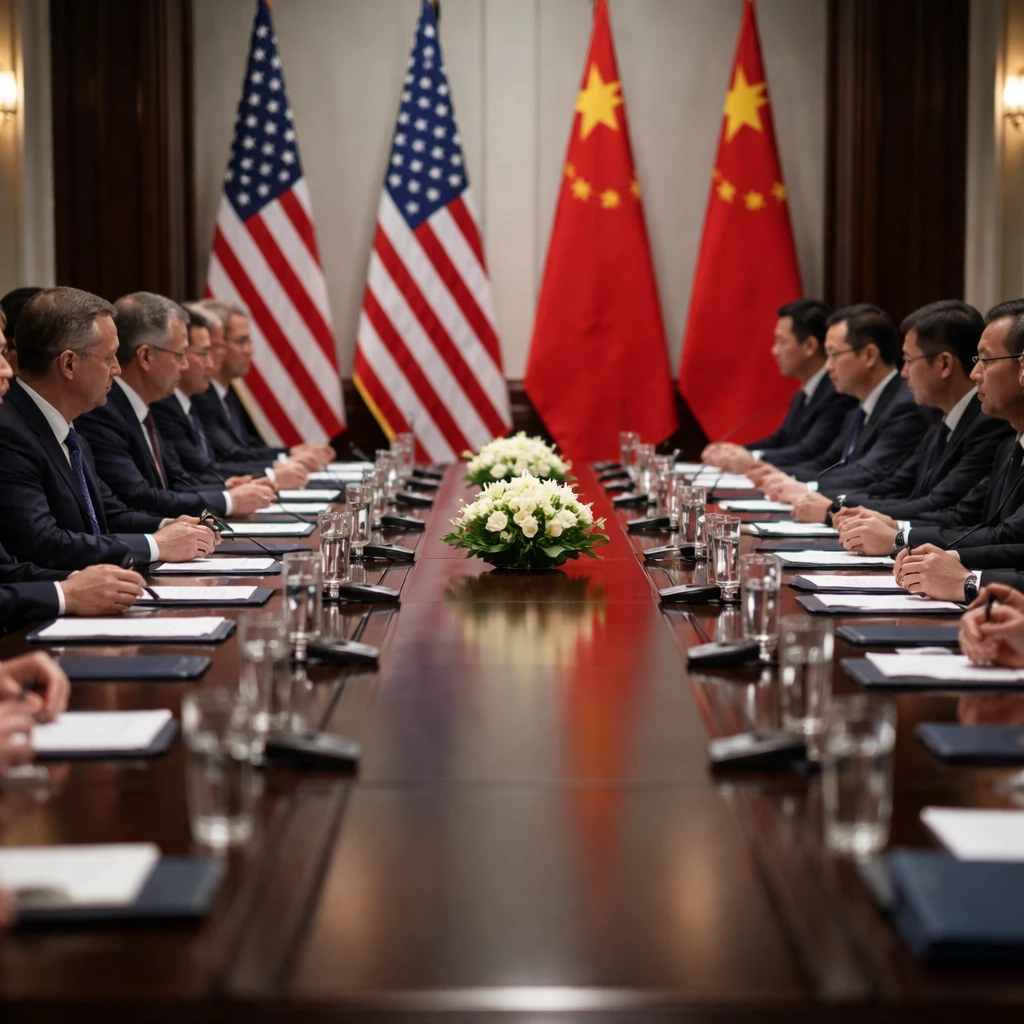
The rescheduling of U.S. President Donald Trump’s state visit to China will likely affect the calendar and tone of talks, but not the overall trajectory of U.S.-China relations, according to analysis from Bank of America.
BofA expects the trip - now slated for mid-May - to be timed so it takes place after tensions associated with the Iran conflict ease. That narrowing of geopolitical risk, the bank says, should allow negotiators on both sides to prioritize securing incremental and concrete results.
However, BofA cautions that Washington’s bargaining position in trade negotiations may have softened. The bank points to a recent Supreme Court ruling that limits the administration’s tariff authorities, and to disturbances in global energy markets stemming from the Middle East conflict, as factors that have diminished traditional U.S. pressure points.
Within this constrained environment, China is expected to press for an extension of the existing trade truce and possibly pursue broader tariff relief. In return, Beijing could offer to boost purchases of U.S. goods - particularly in agriculture, energy and aviation - categories that carry political value for the U.S. administration in an election year.
Despite potential exchange offers, BofA emphasizes that a major breakthrough is unlikely. The bank notes that deep-rooted structural tensions - including strategic competition and ongoing decoupling trends between the two economies - are not issues that can be resolved in a single meeting.
Consequently, both governments are likely to chase short-term, tactical gains designed to stabilize bilateral relations without addressing core strategic disagreements. Examples of such limited progress include purchase commitments, symbolic diplomatic gestures and selective cooperation on narrowly defined economic matters.
BofA also underlines that sensitive items - notably Taiwan and restrictions on investment - will remain on the agenda but are not expected to see substantive progress. While there may be some room for dialogue on reciprocal investment, the bank says heightened scrutiny and political resistance on both sides will continue to constrain the potential for significant liberalization.
In sum, the postponement mainly modifies when and how engagement unfolds. It does not, according to BofA, alter the broader pattern of strategic rivalry tempered by cautious cooperation that defines current U.S.-China relations.
Key points
- Visit rescheduled to mid-May to follow easing of Iran-related tensions - impacts diplomatic timing and tone.
- U.S. leverage in trade talks has weakened due to a Supreme Court ruling on tariff powers and Middle East-driven energy market disruptions - affects trade and energy sectors.
- Expect short-term, tactical deals such as purchase commitments in agriculture, energy and aviation, rather than structural resolutions.
Risks and uncertainties
- Limited U.S. tariff authority and geopolitical energy shocks reduce leverage in trade negotiations - risk for exporters and tariff-dependent sectors.
- Persistent strategic competition and decoupling mean deep structural issues will likely remain unresolved after the visit - uncertainty for investment and technology sectors.
- Heightened political scrutiny and resistance constrain progress on reciprocal investment and liberalization - potential headwind for cross-border capital flows.