
Economy April 8, 2026 01:46 PM

Daly Says U.S. Economy Holds Up Despite Iran War-Related Volatility

San Francisco Fed president highlights consumer spending and business investment while urging a steady monetary response amid oil price uncertainty

By Derek Hwang
Daly Says U.S. Economy Holds Up Despite Iran War-Related Volatility

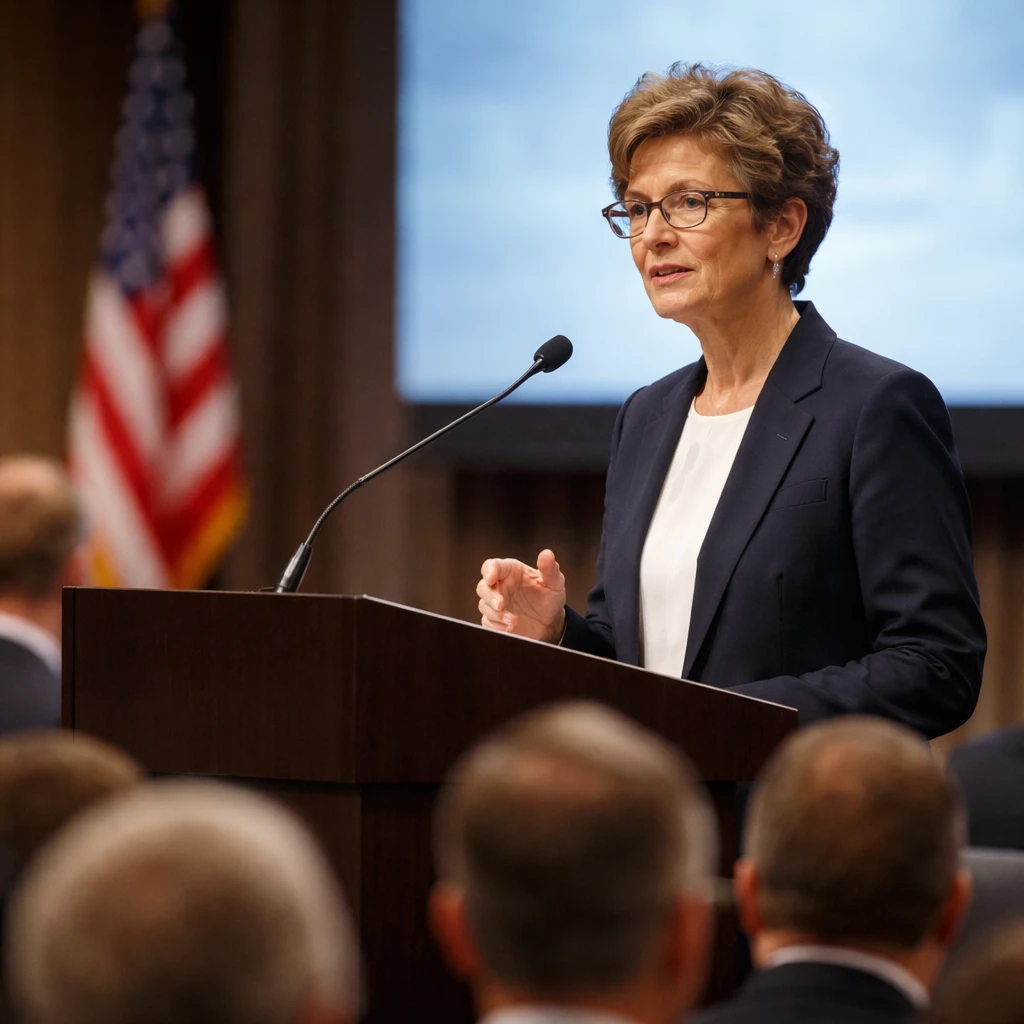
San Francisco Federal Reserve President Mary Daly told a Utah business audience that the U.S. economy remains fundamentally sound even as the conflict in Iran injects uncertainty and market volatility. Daly pointed to continued consumer spending and business investment, acknowledged potential inflation and labor-market concerns, and stressed the Fed’s preference for a steady policy stance rather than reacting to short-term news or market swings.

Key Points

  • Daly said consumers are still spending and businesses continue to invest, supporting the view that the economy is fundamentally strong (impacts: consumer sector, business investment).
  • The Fed is monitoring inflation and labor-market risks but is not currently seeing signs of deterioration (impacts: inflation-sensitive sectors, labor markets).
  • Daly urged a steady policy stance and warned against reacting to short-term market moves or news cycles (impacts: financial markets, monetary policy expectations).

San Francisco Federal Reserve President Mary Daly said Wednesday that, despite uncertainty and market volatility tied to the Iran war, the U.S. economic outlook remains solid at its core.

Addressing the St. George Area Chamber of Commerce in Utah, Daly noted that household spending is continuing and that businesses are maintaining investment activity. Those observations, she said, underpin the Fed’s view that the economy has not shown signs of deterioration in the wake of recent geopolitical tensions.

Daly acknowledged the questions policymakers are monitoring. She recognized concerns that the conflict could push inflation higher and that labor market strength might be less robust than previously thought. But she said the Federal Reserve’s readings do not show weakening: "There’s a concern that maybe this will push inflation up: that’s our job, we’ll focus on that. And there’s a concern that maybe the labor market isn’t as solid, but we’re not seeing that, we’re seeing it kind of settle at a good place," Daly said.

The Fed official also cautioned that it is too early to determine the duration of elevated oil prices. That uncertainty in energy markets is one of the factors the central bank is watching, Daly said, without drawing a definitive timetable for how long oil will remain higher.

On policy approach, Daly emphasized the importance of resisting knee-jerk reactions to short-term market movements or headline-driven news cycles. "Important that Fed doesn’t move around as much as news, or markets, do," she said, adding that "no one likes uncertainty or volatility." Her remarks underline a preference for a measured and steady stance from the central bank in the face of episodic volatility.

Her comments highlight the dual focus facing policymakers: remain attentive to risks such as commodity-driven inflationary pressure while assessing incoming data on consumer behavior and labor conditions. For now, Daly said, the balance of signals points to an economy holding up rather than deteriorating.

Risks

  • Potential upward pressure on inflation stemming from the Iran war and higher oil prices (impacts: energy sector, inflation-sensitive goods and services).
  • Uncertainty over the persistence of elevated oil prices, with unclear duration and implications for costs (impacts: energy sector, transportation, input-cost-sensitive industries).

More from Economy

UAE Seeks Clear Guarantees From Iran Over Ceasefire Terms Apr 8, 2026 Daly Says U.S. Economic Fundamentals ‘In a Good Place’ Despite Oil Shock and War Uncertainty Apr 8, 2026 France Holds 2026 Deficit Goal as Middle East Conflict Clouds Outlook Apr 8, 2026 Fed Minutes Confirm Rate Cuts Remain Contingent on Inflation Path Apr 8, 2026 Chris Phelan Emerges as Leading Candidate for White House Chief Economist Apr 8, 2026