
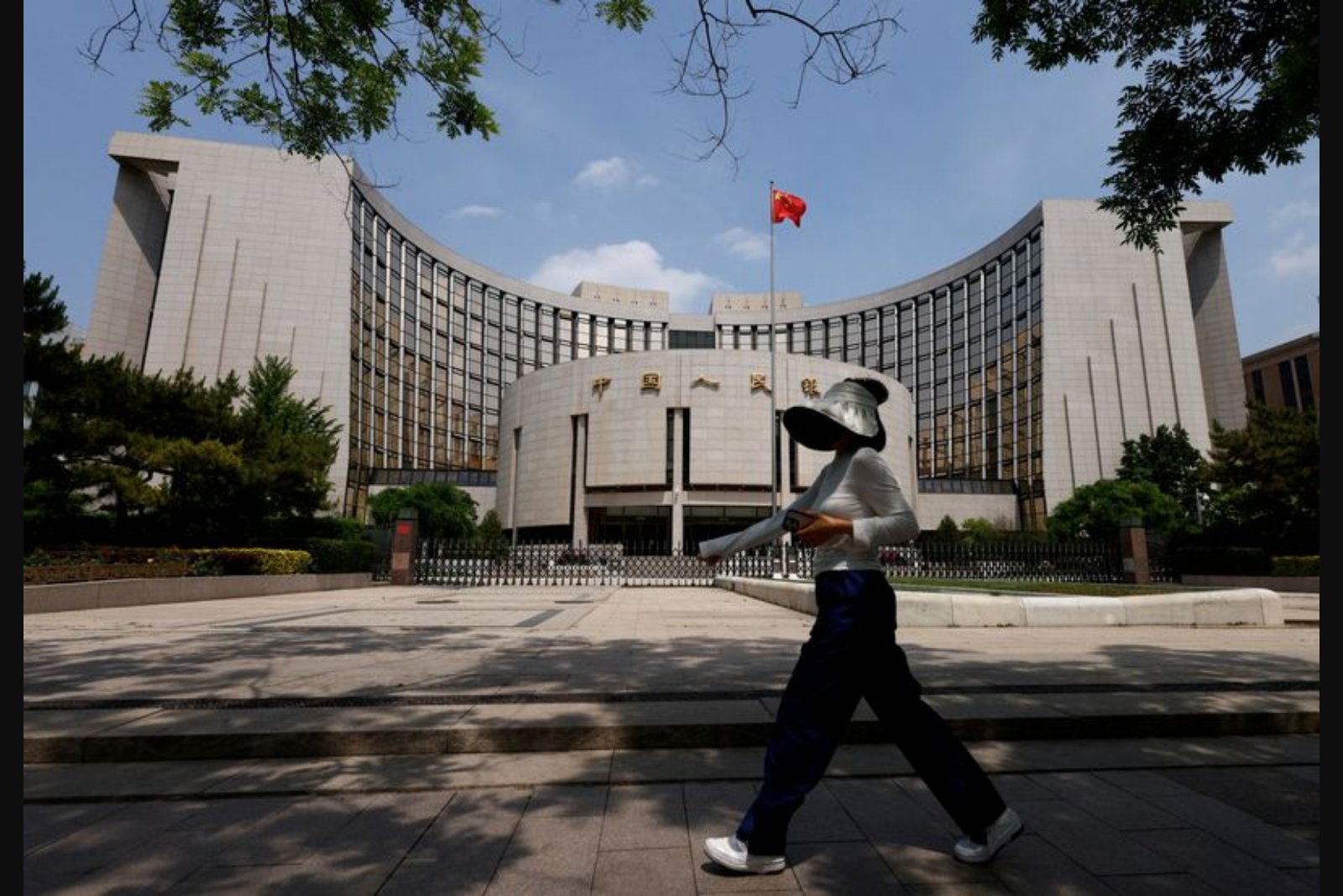
China’s banks extended 2.99 trillion yuan in new yuan loans in March, a large month-on-month increase from the 900 billion yuan recorded in February but short of the 3.4 trillion yuan analysts had expected, according to calculations based on data released by the People’s Bank of China (PBOC).
The PBOC does not publish a monthly breakdown of new lending, so the March figure has been derived by comparing the January-March aggregate to the previously released January-February total. Outstanding yuan loans expanded 5.7% year-on-year in March, decelerating from a 6.0% annual gain in February. Analysts surveyed ahead of the release had anticipated a 5.9% rate of growth.
March typically sees a rebound in lending after the seasonal slowdown around the Chinese New Year, as banks accelerate loan issuance to satisfy quarterly targets. Even so, March’s new lending total was lower than the 3.64 trillion yuan recorded in the same month a year earlier. Across the first quarter, new loans tallied 8.6 trillion yuan, lagging the 9.78 trillion yuan reported for January-March of 2025, a pattern that signals softer underlying credit demand as borrowers appear less confident about future income and growth prospects.
Broad monetary aggregates and broader financing measures nonetheless remain at levels that can sustain economic activity. M2 money supply expanded 8.5% year-on-year in March, marginally below the 8.9% forecast from analysts in the Reuters poll and down from 9% in February. The narrower M1 measure rose 5.1% in March, compared with 5.9% a month earlier.
Total social financing (TSF) - a comprehensive gauge of credit and liquidity in the economy - increased 7.9% year-on-year in March, a touch slower than February’s 8.2% rate. The report noted that any pickup in government bond issuance would tend to support a rise in TSF.
Taken together, growth in both M2 and TSF continues to outpace the government’s official economic growth target of 4.5% to 5% for the year, offering a monetary backdrop that is not immediately contractionary.
Market participants and analysts interpret the data as consistent with a central bank that is not in a hurry to loosen policy. Analysts polled saw the People’s Bank of China maintaining the benchmark one-year loan prime rate unchanged through the end of 2026, while projecting a 20 basis-point cut to banks’ weighted-average reserve requirement ratio in the third quarter.
Outlook statements in the same data release and accompanying commentary highlighted that China’s economy likely regained some momentum in the first quarter, helped by robust export performance. However, a Reuters poll cautioned that growth is expected to slow over the remainder of 2026, driven in part by the risk that the Middle East crisis could erode corporate profits and dampen overseas demand.
The country has, to date, absorbed the economic shock from the Iran war with limited disruption, officials and analysts noted, citing factors such as substantial oil reserves, a diversified energy mix and strict price controls. Still, economists cautioned that sustained higher oil prices are already increasing input costs and squeezing profit margins at a time when domestic demand remains weak. They added that China’s export sector - an important engine of growth - could weaken if the conflict persists and weighs on the global economy.
For reference, the exchange rate at the time of the data release was $1 = 6.8337 Chinese yuan renminbi.
Bottom line - March’s surge in new lending was meaningful on a monthly basis but did not meet market expectations, while monetary and financing aggregates continue to provide support for growth. The combination of these readings suggests a cautious stance from the central bank, with analysts anticipating limited near-term easing and a modest policy adjustment later in the year.