
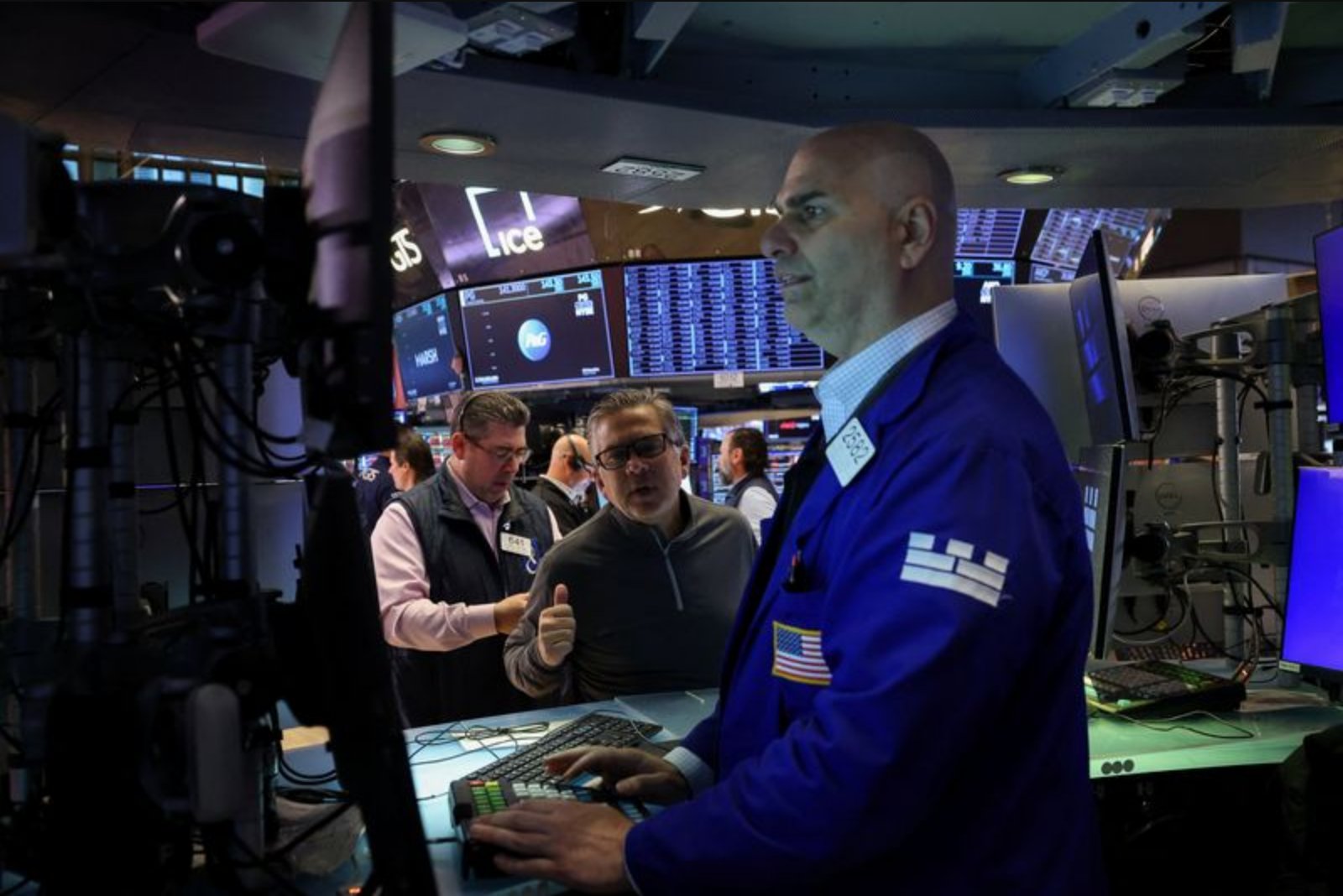
U.S. equities climbed on Thursday, with the S&P 500 and the Nasdaq registering their seventh consecutive daily advance as investors responded positively to the announcement of a fragile U.S.-Iran ceasefire and the prospect that it could expand to Israel and Lebanon. The optimism supported a broad rally even as oil prices moved higher and a set of economic indicators and corporate developments painted a mixed picture of the outlook.
Market action at a glance
- Asia traded lower, led by a 2% drop in the KOSPI.
- European and U.K. benchmarks dipped slightly.
- On Wall Street, the big three indexes rose between 0.6% and 0.8%.
Sector activity on Thursday was tilted toward cyclical and consumer areas. Nine of the 11 S&P 500 sectors advanced, with consumer discretionary, industrials and communication services among the leaders. Energy lagged, declining 1% on the day. Individual movers included Brown-Forman surging 13%, Amazon up 5.6%, Intel rising 5% and Nike gaining 2%.
Currency markets saw the dollar weaken for a fourth consecutive session. Among G10 currencies, the Australian dollar, New Zealand dollar and Norwegian krone posted the largest gains, while the Brazilian real and Chilean peso were among the stronger emerging-market performers.
In fixed income, European yields retraced only a fraction of the sharp declines seen on Wednesday, while Japanese government bond yields edged toward this week’s multi-decade highs. U.S. Treasury yields were narrowly mixed overall, and a 30-year auction went through without incident.
Commodities moved noticeably. Brent crude climbed about 1% and U.S. WTI rose roughly 3.5%, pushing oil back toward the $100 per barrel mark. Physical shipments of European and African crude reached record highs. Gold ticked up about 1% on the day.
Key themes driving markets
1) Geopolitical relief but fragile prospects
The market rally was rooted in hopes that a U.S.-Iran ceasefire might broaden to include Israel and Lebanon, a development investors saw as lowering some immediate geopolitical tail risks. The characterization of the truce as fragile underlines how contingent that relief is, and market sentiment appears to hinge on whether the pause in hostilities holds and can extend geographically.
2) Inflation pressures and growth signals
Inflation remains a central concern. Figures due on Friday were expected to show U.S. headline consumer price index inflation at an annual rate of 3.3% for last month, up sharply from 2.4% in February and the highest in nearly two years. Core goods prices were described as running hot, and the report highlighted that oil was roughly 65% more expensive than a year earlier. Given those dynamics, the commentary noted that inflation reaching 4% appeared more likely than a return to the Federal Reserve’s 2% target.
That inflation outlook sits against mixed growth signals. Some early March survey data showed resilience in economic activity, but incoming hard data was not uniformly strong. The Atlanta Fed’s GDPNow estimate for first-quarter U.S. GDP had been revised down to 1.3%, and fourth-quarter GDP was revised downward to 0.5%.
3) AI and software sector volatility
U.S. software stocks fell sharply after Anthropic decided not to proceed with a wide release of a potent AI model over concerns it could expose hidden cybersecurity vulnerabilities. The sell-off added to a difficult year for software names, which were down around 25% year-to-date versus a roughly 4% decline for the broader tech sector. Separately, comments from the International Monetary Fund’s managing director indicated research that AI could lift productivity by up to 0.8% while affecting as much as 60% of jobs in developed economies - a reminder of the disruptive potential and attendant risks.
4) Earnings season and concentration in tech
With the first-quarter reporting season beginning in earnest next week, consensus estimates from LSEG I/B/E/S called for a 14.4% rise in earnings overall, with technology expected to lead. Tech income was forecast to jump 46%, and if those projections hold, that would mean technology accounts for roughly 75% of the overall dollar increase in corporate income. The market has already priced some of that optimism in: the Nasdaq had climbed back above its pre-war level and registered its seventh straight daily rise, a streak not seen since August 2024. At the same time, observers noted that tech’s valuation premium versus the broader market had narrowed to a seven-year low.
What could move markets next
Market participants were watching a slate of data and events that could influence sentiment in the near term. These included developments in the Middle East and energy markets; social media posts by the former U.S. president; a range of economic data from New Zealand manufacturing PMI and Taiwan trade to inflation readings from China, Japan and Germany; a South Korea rate decision; remarks from a European Central Bank vice president; inflation in Brazil; Canadian unemployment; and several U.S. releases, including CPI, factory orders and the preliminary University of Michigan consumer sentiment and inflation expectations survey.
Bottom line
Thursday’s session reflected a market balancing act - stocks rallied on hopes of a broader ceasefire and solid corporate earnings expectations, even as higher oil prices and persistent inflationary signals highlighted ongoing risks. Investors appear willing to look past some immediate headwinds, but the mix of geopolitical fragility, inflation pressures and concentrated earnings expectations in technology leave the backdrop far from uniformly positive.